Tran Phong, Webster Thomas J
Physics Department, Brown University, Providence, RI 02912, USA.
Int J Nanomedicine. 2008;3(3):391-6. doi: 10.2147/ijn.s3801.
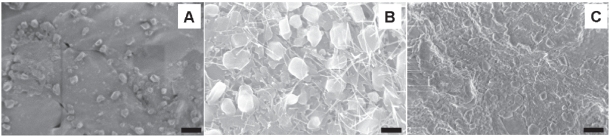
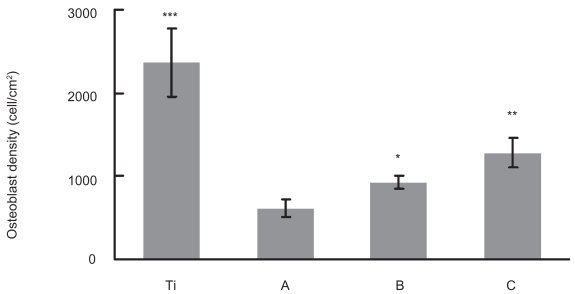
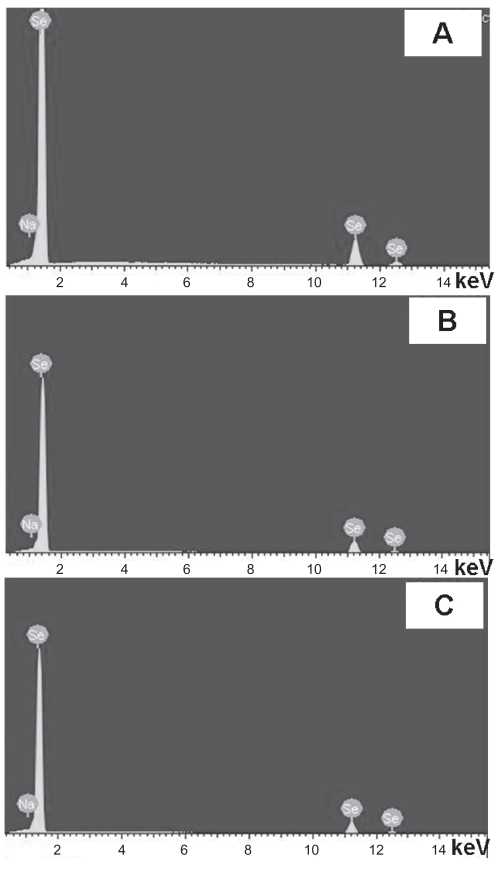
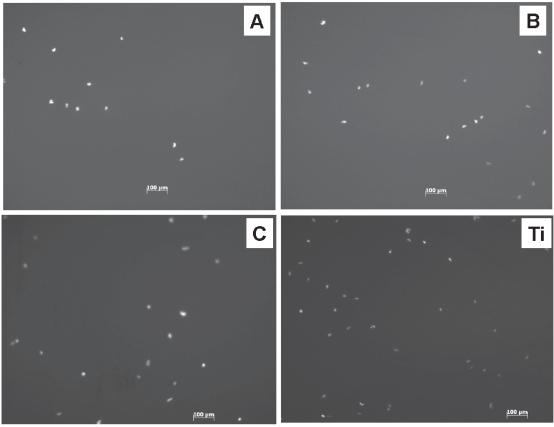
Metallic bone implants possess numerous problems limiting their long-term efficacy, such as poor prolonged osseointegration, stress shielding, and corrosion under in vivo environments. Such problems are compounded for bone cancer patients since numerous patients receive orthopedic implants after cancerous bone resection. Unfortunately, current orthopedic materials were not originally developed to simultaneously increase healthy bone growth (as in traditional orthopedic implant applications) while inhibiting cancerous bone growth. The long-term objective of the present research is to investigate the use of nano-rough selenium to prevent bone cancer from re-occurring while promoting healthy bone growth for this select group of cancer patients. Selenium is a well known anti-cancer chemical. However, what is not known is how healthy bone cells interact with selenium. To determine this, selenium, spherical or semispherical shots, were pressed into cylindrical compacts and these compacts were then etched using 1N NaOH to obtain various surface structures ranging from the micron, submicron to nano scales. Changes in surface chemistry were also analyzed. Through these etching techniques, results of this study showed that biologically inspired surface roughness values were created on selenium compacts to match that of natural bone roughness. Moreover, results showed that healthy bone cell adhesion increased with greater nanometer selenium roughness (more closely matching that of titanium). In this manner, this study suggests that nano-rough selenium should be further tested for orthopedic applications involving bone cancer treatment.
金属骨植入物存在诸多问题,限制了其长期疗效,例如在体内环境下骨整合不良、应力屏蔽和腐蚀。对于骨癌患者而言,这些问题更加复杂,因为许多患者在癌性骨切除后需要接受骨科植入物。不幸的是,目前的骨科材料最初并非为同时促进健康骨生长(如传统骨科植入物应用那样)和抑制癌性骨生长而开发。本研究的长期目标是研究使用纳米粗糙硒来预防骨癌复发,同时促进这类特定癌症患者的健康骨生长。硒是一种众所周知的抗癌化学物质。然而,尚不清楚健康骨细胞与硒是如何相互作用的。为了确定这一点,将球形或半球形的硒颗粒压制成圆柱形坯块,然后用1N氢氧化钠蚀刻这些坯块,以获得从微米、亚微米到纳米尺度的各种表面结构。还分析了表面化学的变化。通过这些蚀刻技术,本研究结果表明,在硒坯块上创造出了受生物启发的表面粗糙度值,以匹配天然骨的粗糙度。此外,结果表明,随着纳米硒粗糙度的增加(更接近钛的粗糙度),健康骨细胞的粘附增加。通过这种方式,本研究表明,纳米粗糙硒应进一步用于涉及骨癌治疗的骨科应用测试。