Lin Sun-Kai V, Bogen Daniel K, Kuna Samuel T
Department of Bioengineering, University of Pennsylvania, Philadelphia 19104, USA.
Int J Chron Obstruct Pulmon Dis. 2008;3(3):435-42. doi: 10.2147/copd.s2137.
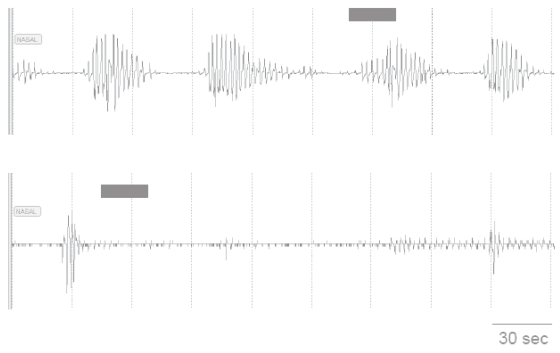
We have developed a novel oxygen adherence monitor that objectively measures patient use of long-term oxygen therapy. The monitor attaches to the oxygen source and detects whether or not the patient is wearing the nasal cannula.
The study's purpose was to validate the monitor's performance in patients with chronic obstructive pulmonary disease during wakefulness and sleep.
Ten adult males with stable chronic obstructive pulmonary disease (mean +/- SD FEV1 37.7 +/- 14.9% of predicted) on long-term continuous oxygen therapy were tested in a sleep laboratory over a 12-13 hour period that included an overnight polysomnogram.
The monitor's measurements were obtained at 4-minute intervals and compared to actual oxygen use determined by review of time-synchronized video recordings.
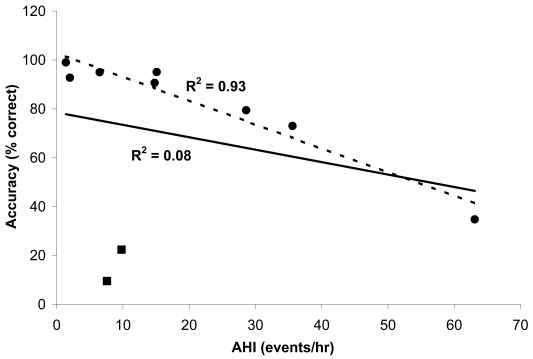
The monitor made 1504/1888 (79.7%) correct detections (unprocessed data) across all participants: 957/1,118 (85.6%) correct detections during wakefulness and 546/770 (70.9%) during sleep. All errors were false negatives, ie, the monitor failed to detect that the participant was actually wearing the cannula. Application of a majority-vote filter to the raw data improved overall detection accuracy to 84.9%.
The results demonstrate the monitor's ability to objectively measure whether or not men with chronic obstructive pulmonary disease are receiving their oxygen treatment. The ability to objectively measure oxygen delivery, rather than oxygen expended, may help improve the management of patients on long-term oxygen therapy.
我们开发了一种新型的氧气依从性监测仪,可客观地测量患者长期氧疗的使用情况。该监测仪连接到氧气源,检测患者是否佩戴鼻导管。
本研究的目的是验证该监测仪在慢性阻塞性肺疾病患者清醒和睡眠期间的性能。
10名成年男性,患有稳定的慢性阻塞性肺疾病(平均±标准差 FEV1 为预测值的37.7±14.9%),正在接受长期持续氧疗,在睡眠实验室进行了为期12 - 13小时的测试,其中包括夜间多导睡眠图。
监测仪每4分钟进行一次测量,并与通过查看时间同步视频记录确定的实际氧气使用情况进行比较。
在所有参与者中,监测仪做出了1504/1888(79.7%)的正确检测(未处理数据):清醒期间957/1118(85.6%)正确检测,睡眠期间546/770(70.9%)正确检测。所有错误均为假阴性,即监测仪未能检测到参与者实际上佩戴了鼻导管。对原始数据应用多数投票过滤器将总体检测准确率提高到84.9%。
结果证明了该监测仪能够客观地测量慢性阻塞性肺疾病男性患者是否正在接受氧疗。客观测量氧气输送而非消耗的氧气量的能力可能有助于改善长期氧疗患者的管理。