Mehraj Vikram, Hatcher Juanita, Akhtar Saeed, Rafique Ghazala, Beg Mohammad Asim
Department of Pathology & Microbiology, Aga Khan University, Karachi, Pakistan.
PLoS One. 2008;3(11):e3680. doi: 10.1371/journal.pone.0003680. Epub 2008 Nov 10.
Intestinal parasitic infections are endemic worldwide and have been described as constituting the greatest single worldwide cause of illness and disease. Poverty, illiteracy, poor hygiene, lack of access to potable water and hot and humid tropical climate are the factors associated with intestinal parasitic infections. The study aimed to estimate prevalence and identify factors associated with intestinal parasitic infections among 1 to 5 years old children residing in an urban slum of Karachi Pakistan.
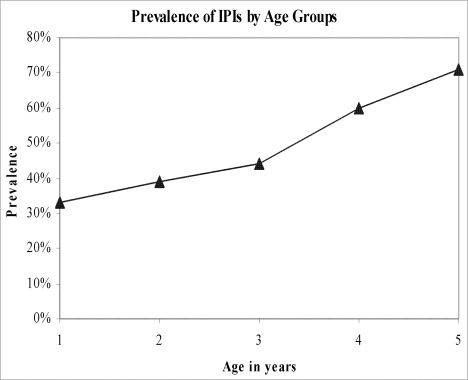
A cross sectional survey was conducted from February to June 2006 in Ghosia Colony Gulshan Town Karachi, Pakistan. A simple random sample of 350 children aged 1-5 years was collected. The study used structured pre-tested questionnaire, anthropometric tools and stool tests to obtain epidemiological and disease data. Data were analyzed using appropriate descriptive, univariate and multivariable logistic regression methods. The mean age of participants was 2.8 years and 53% were male. The proportions of wasted, stunted and underweight children were 10.4%, 58.9% and 32.7% respectively. The prevalence of Intestinal parasitic infections was estimated to be 52.8% (95% CI: 46.1; 59.4). Giardia lamblia was the most common parasite followed by Ascaris lumbricoides, Blastocystis hominis and Hymenolepis nana. About 43% children were infected with single parasite and 10% with multiple parasites. Age {Adjusted Odds Ratio (aOR) = 1.5; 95% CI: 1.1; 1.9}, living in rented households (aOR = 2.0; 95% CI: 1.0; 3.9) and history of excessive crying (aOR = 1.9; 95% CI: 1.0; 3.4) were significantly associated with intestinal parasitic infections.
Intestinal parasites are highly prevalent in this setting and poverty was implicated as an important risk factor for infection. Effective poverty reduction programmes and promotion of deworming could reduce intestinal parasite carriage. There is a need for mass scale campaigns to create awareness about health and hygiene.
肠道寄生虫感染在全球范围内流行,被认为是全球单一最大的致病原因。贫困、文盲、卫生条件差、缺乏安全饮用水以及炎热潮湿的热带气候是与肠道寄生虫感染相关的因素。本研究旨在估计巴基斯坦卡拉奇一个城市贫民窟中1至5岁儿童肠道寄生虫感染的患病率,并确定与之相关的因素。
2006年2月至6月在巴基斯坦卡拉奇古尔山镇戈西亚殖民地进行了一项横断面调查。收集了350名1至5岁儿童的简单随机样本。该研究使用经过预测试的结构化问卷、人体测量工具和粪便检测来获取流行病学和疾病数据。数据采用适当的描述性、单变量和多变量逻辑回归方法进行分析。参与者的平均年龄为2.8岁,53%为男性。消瘦、发育迟缓及体重不足儿童的比例分别为10.4%、58.9%和32.7%。肠道寄生虫感染的患病率估计为52.8%(95%置信区间:46.1;59.4)。蓝氏贾第鞭毛虫是最常见的寄生虫,其次是蛔虫、人芽囊原虫和微小膜壳绦虫。约43%的儿童感染单一寄生虫,10%感染多种寄生虫。年龄(调整优势比[aOR]=1.5;95%置信区间:1.1;1.9)、居住在出租房(aOR=2.0;95%置信区间:1.0;3.9)以及过度哭闹史(aOR=1.9;95%置信区间:1.0;3.4)与肠道寄生虫感染显著相关。
在这种环境下肠道寄生虫高度流行,贫困被认为是感染的一个重要风险因素。有效的减贫计划和驱虫推广可以减少肠道寄生虫携带。需要开展大规模宣传活动以提高对健康和卫生的认识。