Department of Chemical Engineering, University of Rhode Island, Kingston, RI, 02881, USA.
J Nanobiotechnology. 2008 Nov 12;6:13. doi: 10.1186/1477-3155-6-13.
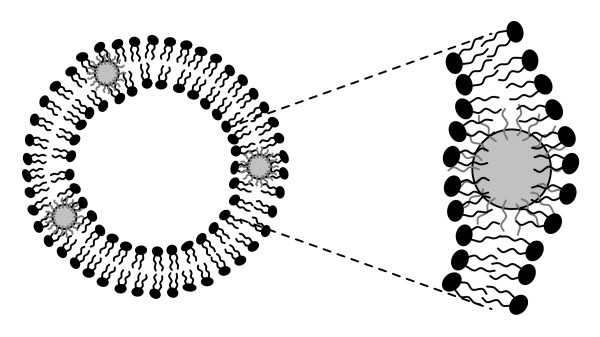
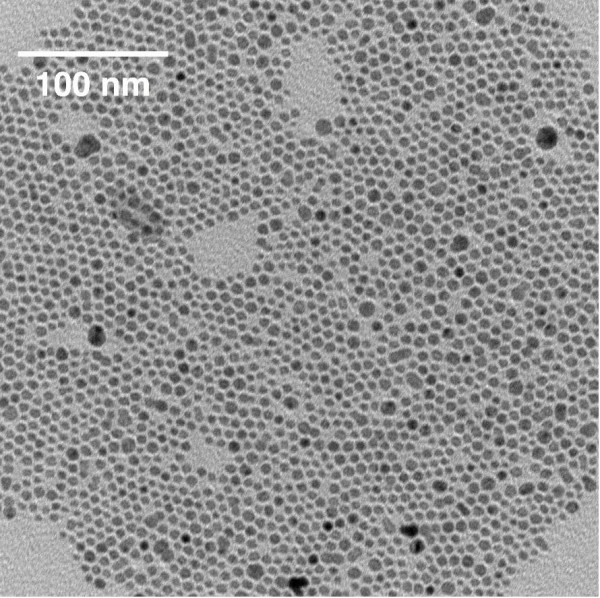
Lipid-based dispersion of nanoparticles provides a biologically inspired route to designing therapeutic agents and a means of reducing nanoparticle toxicity. Little is currently known on how the presence of nanoparticles influences lipid vesicle stability and bilayer phase behavior. In this work, the formation of aqueous lipid/nanoparticle assemblies (LNAs) consisting of hydrophobic silver-decanethiol particles (5.7 +/- 1.8 nm) embedded within 1,2-dipalmitoyl-sn-glycero-3-phosphocholine (DPPC) bilayers is demonstrated as a function of the DPPC/Ag nanoparticle (AgNP) ratio. The effect of nanoparticle loading on the size distribution, bilayer phase behavior, and bilayer fluidity is determined. Concomitantly, the effect of bilayer incorporation on the optical properties of the AgNPs is also examined.
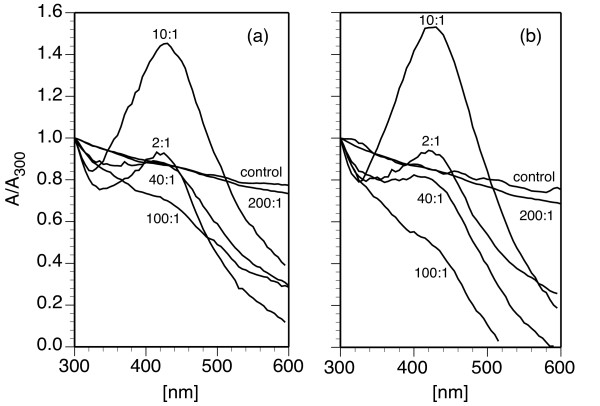
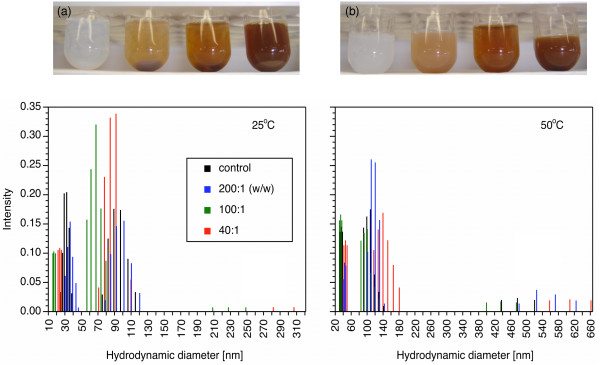
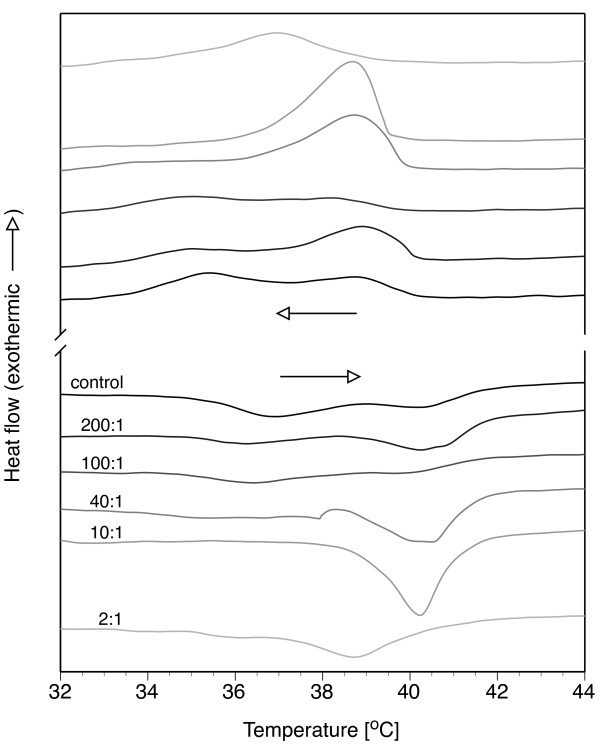
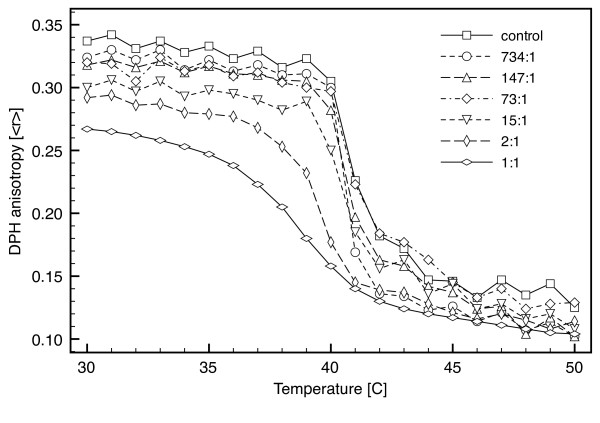
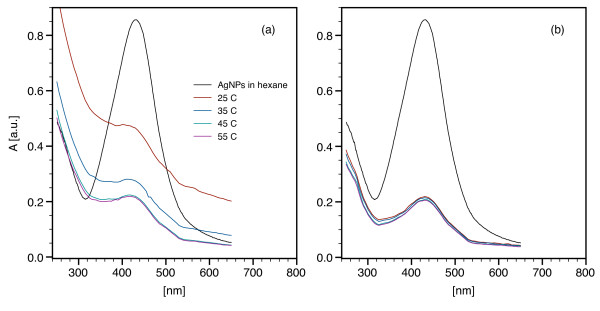
The dispersions were stable at 50 degrees C where the bilayers existed in a liquid crystalline state, but phase separated at 25 degrees C where the bilayers were in a gel state, consistent with vesicle aggregation below the lipid melting temperature. Formation of bilayer-embedded nanoparticles was confirmed by differential scanning calorimetry and fluorescence anisotropy, where increasing nanoparticle concentration suppressed the lipid pretransition temperature, reduced the melting temperature, and disrupted gel phase bilayers. The characteristic surface plasmon resonance (SPR) wavelength of the embedded nanoparticles was independent of the bilayer phase; however, the SPR absorbance was dependent on vesicle aggregation.
These results suggest that lipid bilayers can distort to accommodate large hydrophobic nanoparticles, relative to the thickness of the bilayer, and may provide insight into nanoparticle/biomembrane interactions and the design of multifunctional liposomal carriers.
纳米粒子的脂质分散体为设计治疗剂提供了一种仿生途径,也是降低纳米粒子毒性的一种手段。目前人们对纳米粒子的存在如何影响脂质囊泡的稳定性和双层相行为知之甚少。在这项工作中,展示了由嵌入 1,2-二棕榈酰基-sn-甘油-3-磷酸胆碱 (DPPC) 双层中的疏水性银-癸硫醇颗粒(5.7 ± 1.8nm)组成的水性脂质/纳米颗粒组装体 (LNA) 的形成作为 DPPC/Ag 纳米颗粒 (AgNP) 比的函数。确定了纳米颗粒负载对粒径分布、双层相行为和双层流动性的影响。同时,还研究了双层掺入对 AgNPs 光学性质的影响。
在双层处于液晶态的 50°C 下,分散体稳定,但在双层处于凝胶态的 25°C 下相分离,这与低于脂质熔融温度的囊泡聚集一致。通过差示扫描量热法和荧光各向异性证实了双层嵌入纳米颗粒的形成,其中纳米颗粒浓度的增加抑制了脂质预转变温度,降低了熔融温度,并破坏了凝胶相双层。嵌入纳米颗粒的特征表面等离子体共振 (SPR) 波长与双层相无关;然而,SPR 吸光度取决于囊泡聚集。
这些结果表明,与双层的厚度相比,脂质双层可以扭曲以容纳大的疏水性纳米颗粒,这可能为纳米颗粒/生物膜相互作用和多功能脂质体载体的设计提供了新的思路。