Manvelyan Marina, Hunstig Friederike, Bhatt Samarth, Mrasek Kristin, Pellestor Franck, Weise Anja, Simonyan Isabella, Aroutiounian Rouben, Liehr Thomas
Department of Genetic and Laboratory of Cytogenetics, State University, Yerevan, Armenia.
Mol Cytogenet. 2008 Nov 14;1:25. doi: 10.1186/1755-8166-1-25.
Nuclear architecture studies in human sperm are sparse. By now performed ones were practically all done on flattened nuclei. Thus, studies close at the in vivo state of sperm, i.e. on three-dimensionally conserved interphase cells, are lacking by now. Only the position of 14 chromosomes in human sperm was studied.
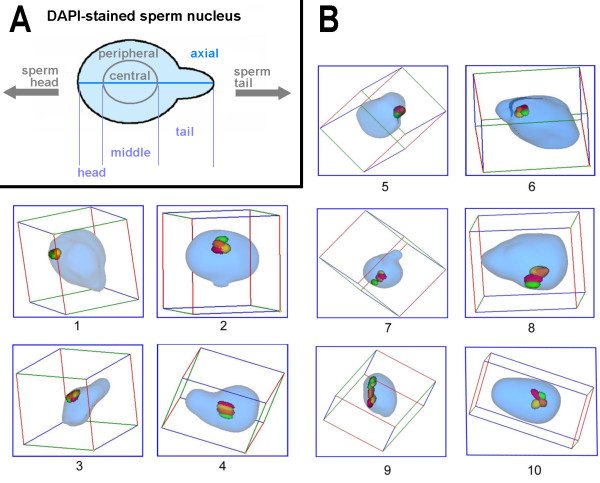
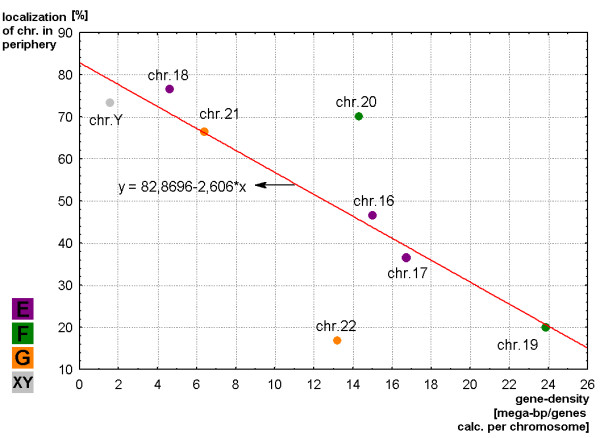
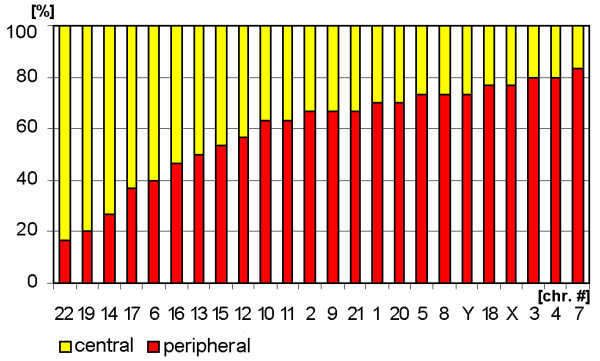
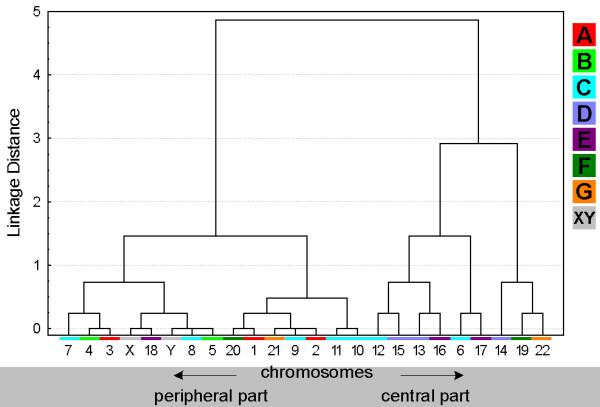
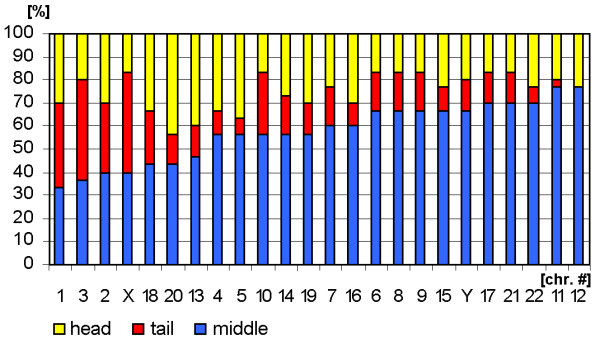
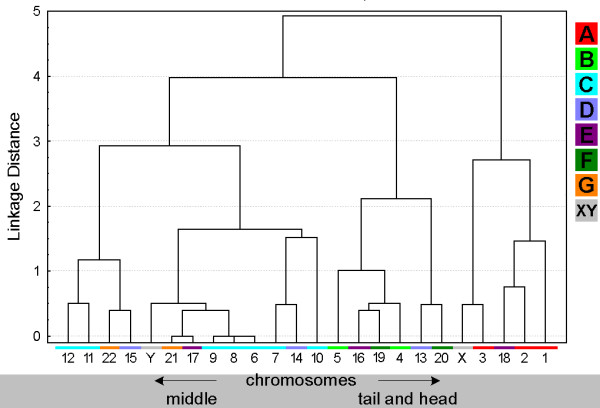
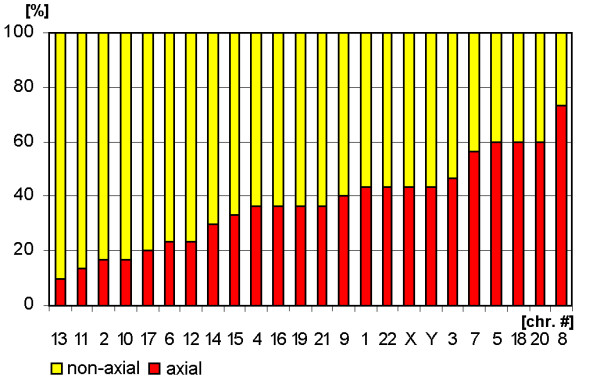
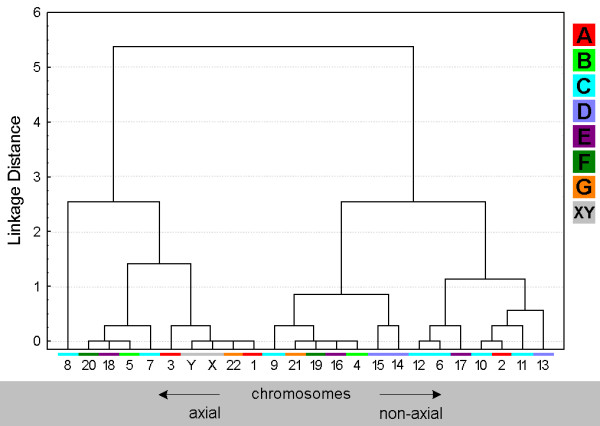
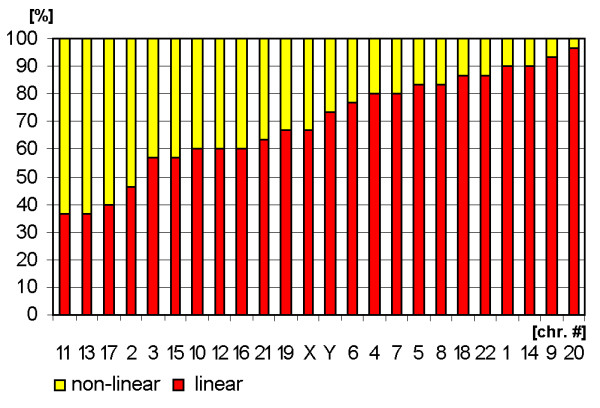
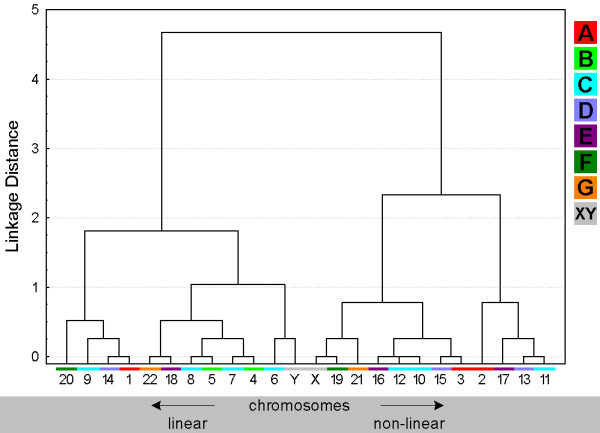
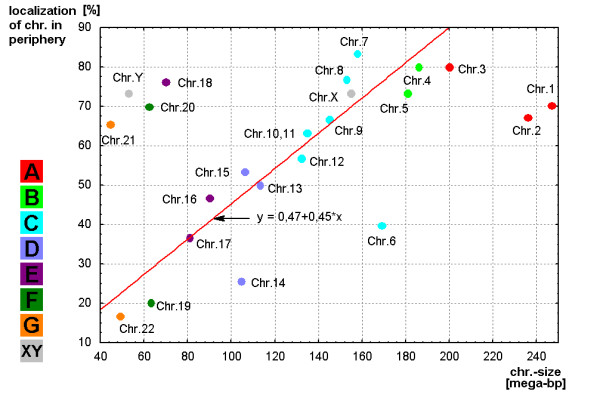
Here for the first time a combination of multicolor banding (MCB) and three-dimensional analysis of interphase cells was used to characterize the position and orientation of all human chromosomes in sperm cells of a healthy donor. The interphase nuclei of human sperm are organized in a non-random way, driven by the gene density and chromosome size.
Here we present the first comprehensive results on the nuclear architecture of normal human sperm. Future studies in this tissue type, e.g. also in male patients with unexplained fertility problems, may characterize yet unknown mechanisms of infertility.
关于人类精子核结构的研究较少。目前已开展的研究几乎都是在扁平细胞核上进行的。因此,目前缺乏对精子体内状态,即在三维结构保持完整的间期细胞上的研究。目前仅对人类精子中14条染色体的位置进行了研究。
在此,首次将多色带技术(MCB)与间期细胞的三维分析相结合,以表征健康供体精子细胞中所有人类染色体的位置和方向。人类精子的间期核以非随机方式组织,由基因密度和染色体大小驱动。
在此,我们展示了关于正常人类精子核结构的首个全面研究结果。对该组织类型的未来研究,例如对患有不明原因生育问题的男性患者的研究,可能会揭示尚未知晓的不孕机制。