Pruenster Monika, Mudde Liesbeth, Bombosi Paula, Dimitrova Svetla, Zsak Marion, Middleton Jim, Richmond Ann, Graham Gerard J, Segerer Stephan, Nibbs Robert J B, Rot Antal
Experimental Pathology, Novartis Institutes for BioMedical Research, Vienna A-1230, Austria.
Nat Immunol. 2009 Jan;10(1):101-8. doi: 10.1038/ni.1675. Epub 2008 Dec 7.
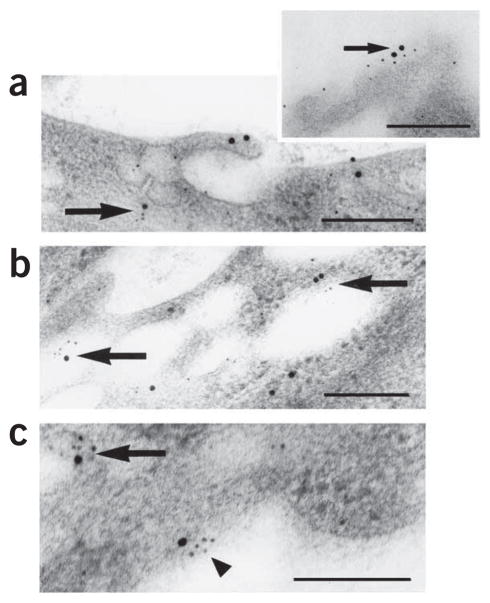
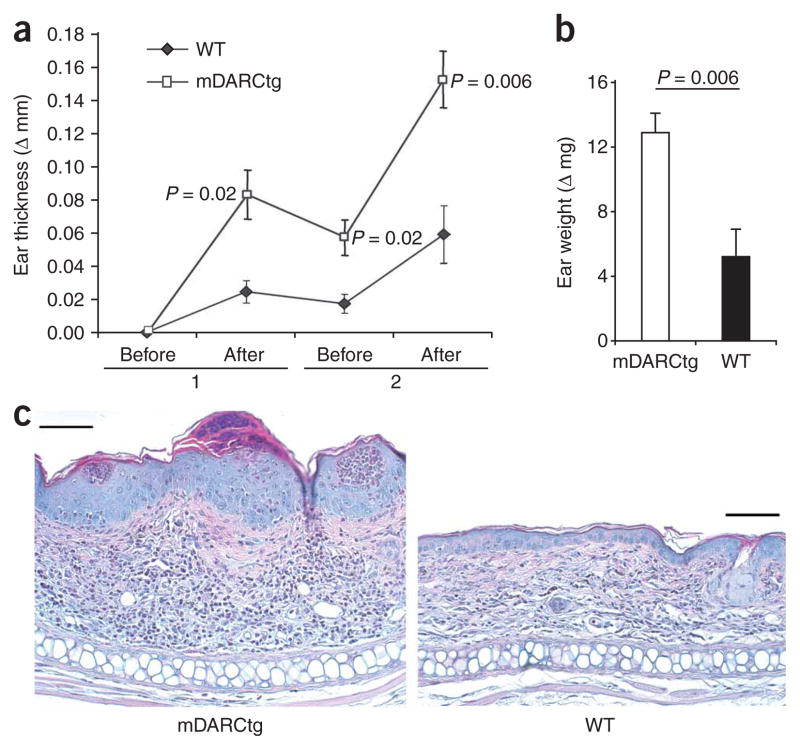
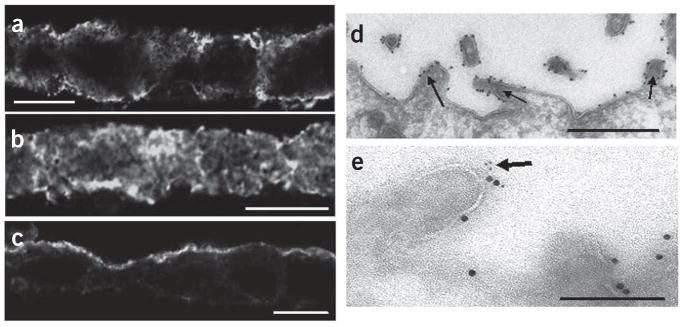
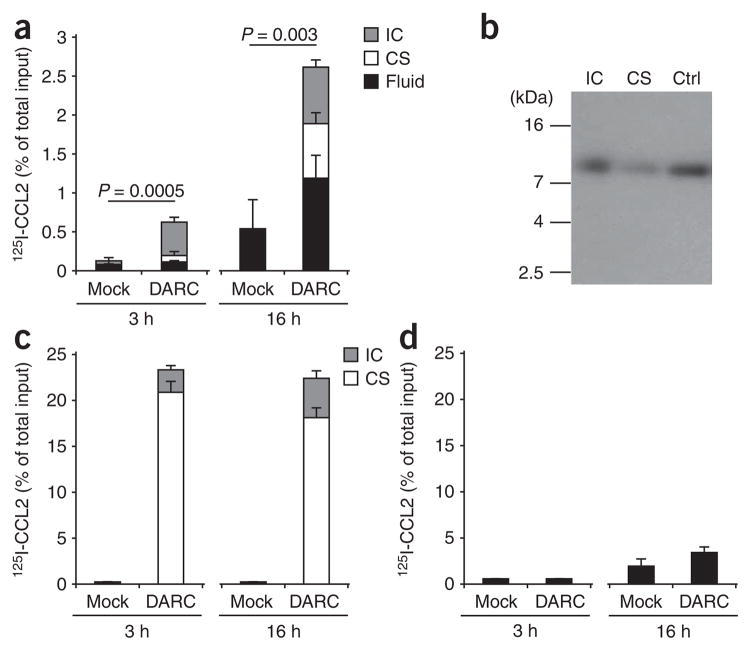
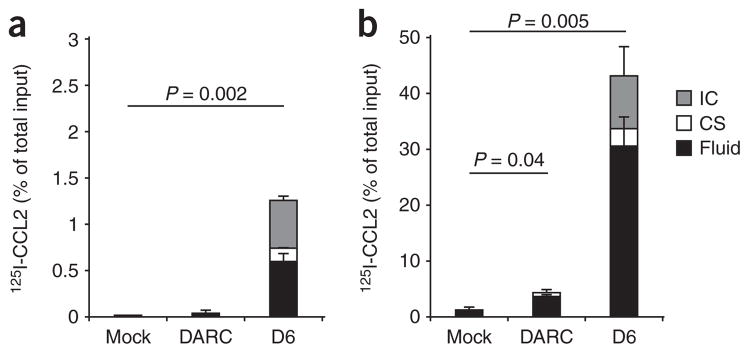
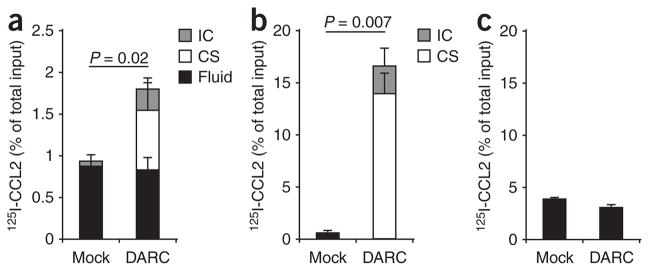
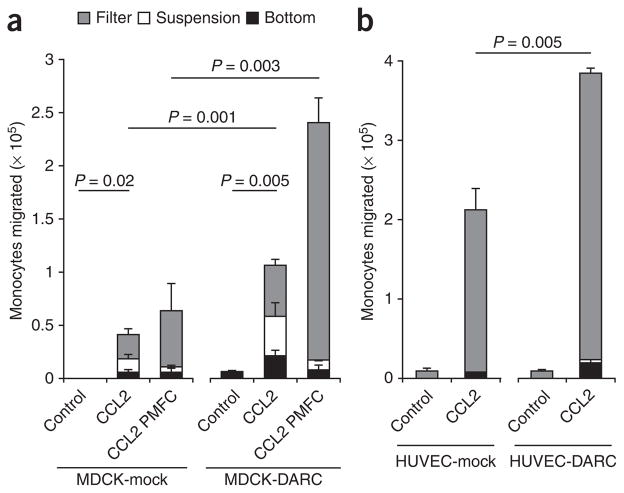
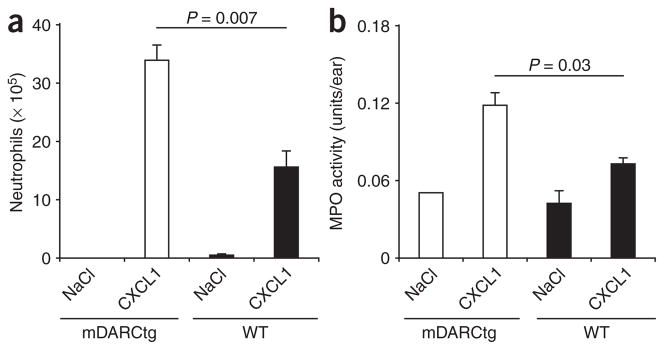
The Duffy antigen receptor for chemokines (DARC) belongs to a family of 'silent' heptahelical chemokine receptors that do not couple to G proteins and fail to transmit measurable intracellular signals. DARC binds most inflammatory chemokines and is prominently expressed on venular endothelial cells, where its function has remained contentious. Here we show that DARC, like other silent receptors, internalized chemokines but did not effectively scavenge them. Instead, DARC mediated chemokine transcytosis, which led to apical retention of intact chemokines and more leukocyte migration across monolayers expressing DARC. Mice overexpressing DARC on blood vessel endothelium had enhanced chemokine-induced leukocyte extravasation and contact-hypersensitivity reactions. Thus, interactions of chemokines with DARC support their activity on apposing leukocytes in vitro and in vivo.
趋化因子的达菲抗原受体(DARC)属于一类“沉默”的七螺旋趋化因子受体家族,这类受体不与G蛋白偶联,也无法传递可测量的细胞内信号。DARC能结合大多数炎性趋化因子,在小静脉内皮细胞上有显著表达,其功能一直存在争议。我们在此表明,与其他沉默受体一样,DARC能内化趋化因子,但不能有效地清除它们。相反,DARC介导趋化因子的转胞吞作用,导致完整趋化因子在顶端滞留,并使更多白细胞穿过表达DARC的单层细胞迁移。在血管内皮上过度表达DARC的小鼠,趋化因子诱导的白细胞渗出和接触性超敏反应增强。因此,趋化因子与DARC的相互作用在体外和体内均支持它们对相邻白细胞的活性。