Skenderian Jessica J, Siegel Jason T, Crano William D, Alvaro Eusebio E, Lac Andrew
School of Behavioral and Organizational Sciences, Claremont Graduate University, CA 91711, USA.
Psychol Addict Behav. 2008 Dec;22(4):563-9. doi: 10.1037/a0013020.
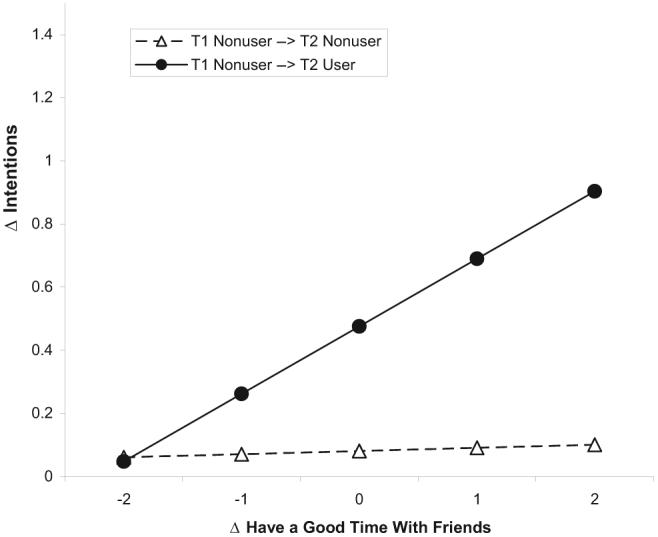
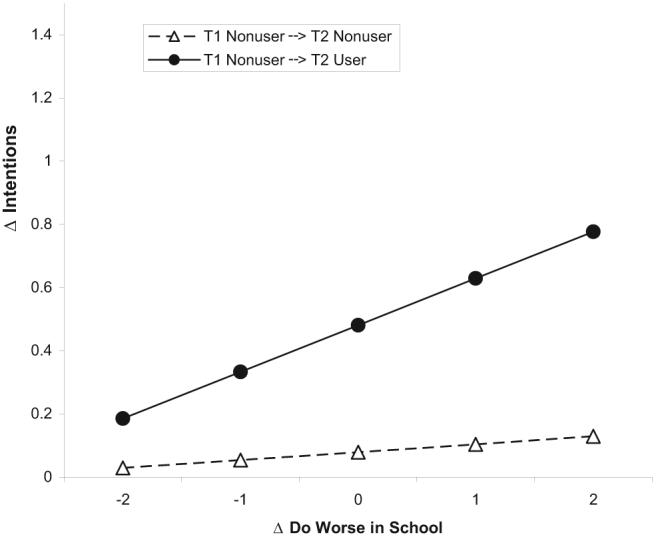
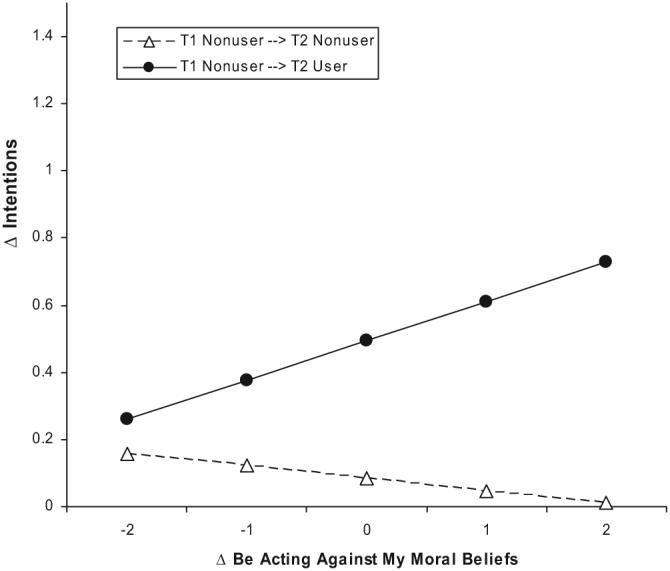
Drug prevention campaigns commonly seek to change outcome expectancies associated with substance use, but the effects of violating such expectancies are rarely considered. This study details an application of the expectancy violation framework in a real world context by investigating whether changes in marijuana expectations are associated with subsequent future marijuana intentions. A cohort of adolescents (N = 1,344; age range = 12-18 years) from the National Survey of Parents and Youth was analyzed via secondary analysis. Nonusers at baseline were assessed 1 year later. Changes in expectancies were significantly associated with changes in intentions (p < .001). Moreover, in most cases, changes in expectancies and intentions had the strongest relationship among those who became users. The final model accounted for 31% of the variance (p < .001). Consistent with laboratory studies, changes in marijuana expectancies were predictive of changes in marijuana intentions. These results counsel caution when describing negative outcomes of marijuana initiation. If adolescents conclude that the harms of marijuana use are not as grave as they had been led to expect, intentions to use might intensify.
药物预防运动通常试图改变与物质使用相关的结果预期,但违反这些预期的影响却很少被考虑。本研究通过调查大麻预期的变化是否与随后的未来大麻使用意图相关,详细阐述了预期违反框架在现实世界中的应用。对来自全国父母与青少年调查的一组青少年(N = 1344;年龄范围 = 12 - 18岁)进行了二次分析。对基线时的非使用者在1年后进行了评估。预期的变化与意图的变化显著相关(p <.001)。此外,在大多数情况下,预期和意图的变化在成为使用者的人群中关系最为密切。最终模型解释了31%的方差(p <.001)。与实验室研究一致,大麻预期的变化可预测大麻意图的变化。这些结果表明,在描述开始使用大麻的负面后果时应谨慎。如果青少年得出结论认为大麻使用的危害不像他们之前预期的那么严重,那么使用大麻的意图可能会增强。