Söker Torben, Dalke Claudia, Puk Oliver, Floss Thomas, Becker Lore, Bolle Ines, Favor Jack, Hans Wolfgang, Hölter Sabine M, Horsch Marion, Kallnik Magdalena, Kling Eva, Moerth Corinna, Schrewe Anja, Stigloher Christian, Topp Stefanie, Gailus-Durner Valerie, Naton Beatrix, Beckers Johannes, Fuchs Helmut, Ivandic Boris, Klopstock Thomas, Schulz Holger, Wolf Eckhard, Wurst Wolfgang, Bally-Cuif Laure, de Angelis Martin Hrabé, Graw Jochen
Helmholtz Center Munich, German Research Center for Environmental Health, Institute of Developmental Genetics, Neuherberg, Germany.
BMC Dev Biol. 2008 Dec 22;8:118. doi: 10.1186/1471-213X-8-118.
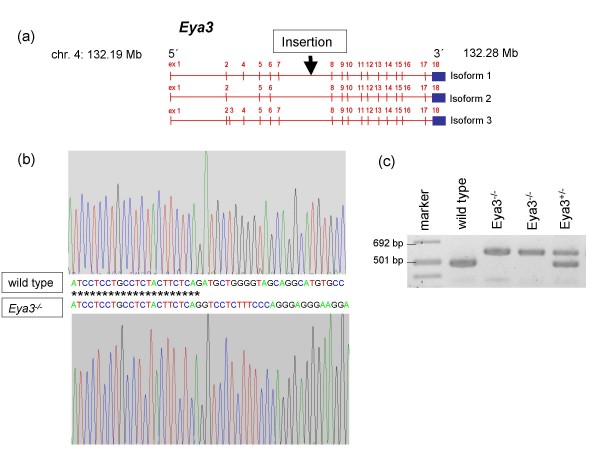
In Drosophila, mutations in the gene eyes absent (eya) lead to severe defects in eye development. The functions of its mammalian orthologs Eya1-4 are only partially understood and no mouse model exists for Eya3. Therefore, we characterized the phenotype of a new Eya3 knockout mouse mutant.
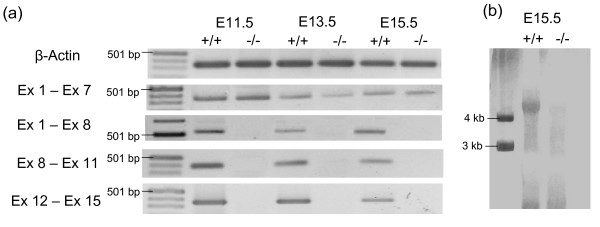
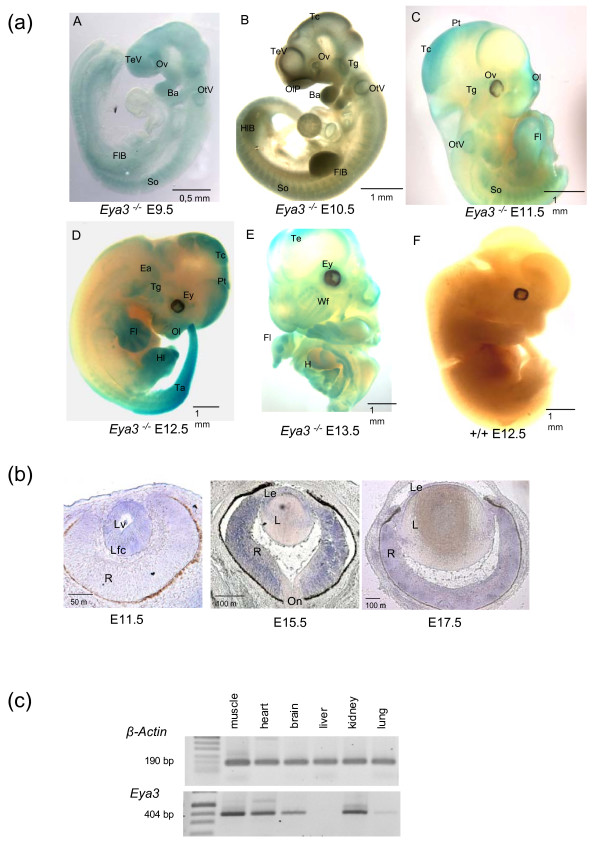
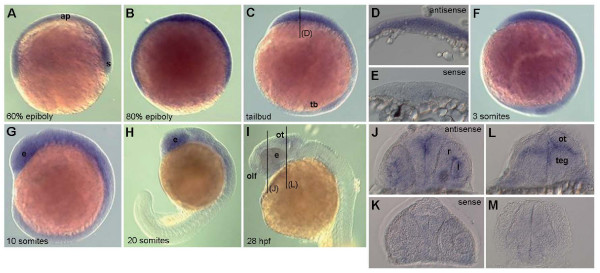
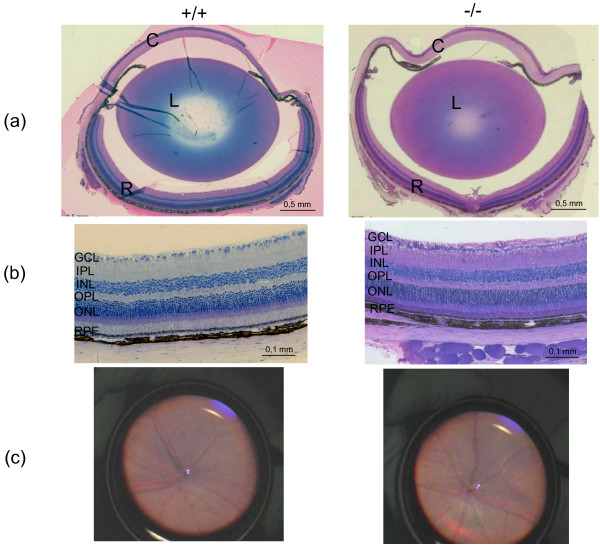
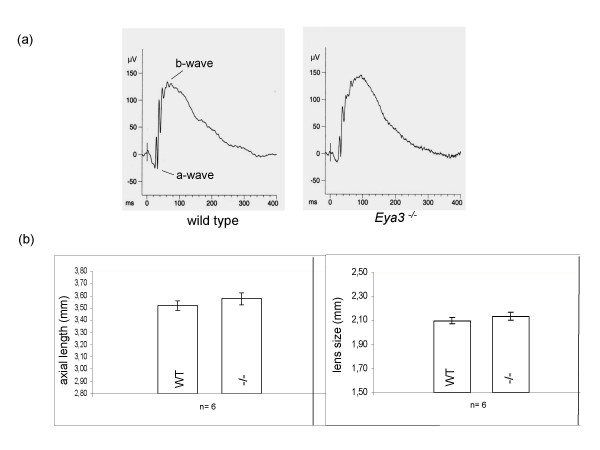
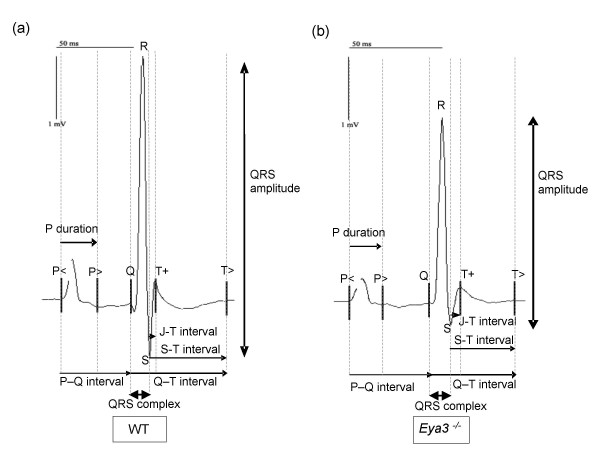
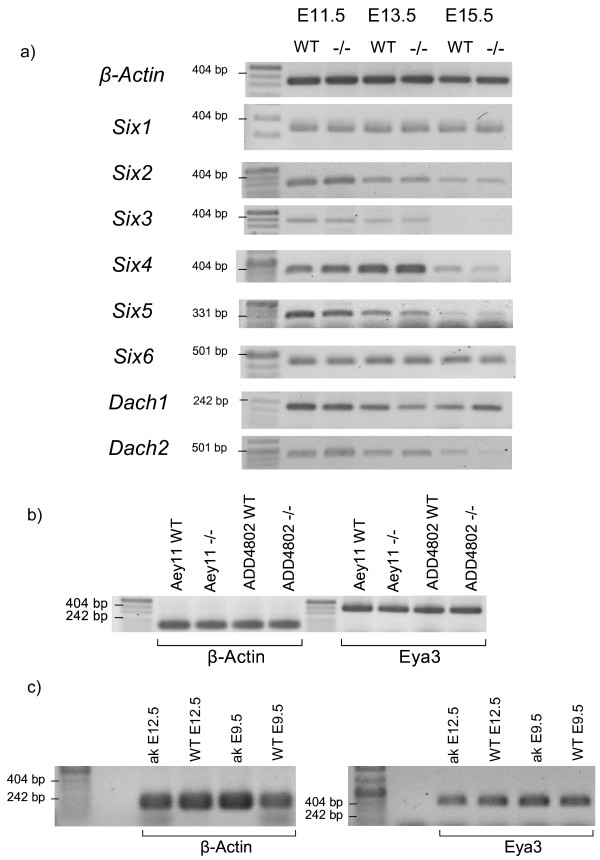
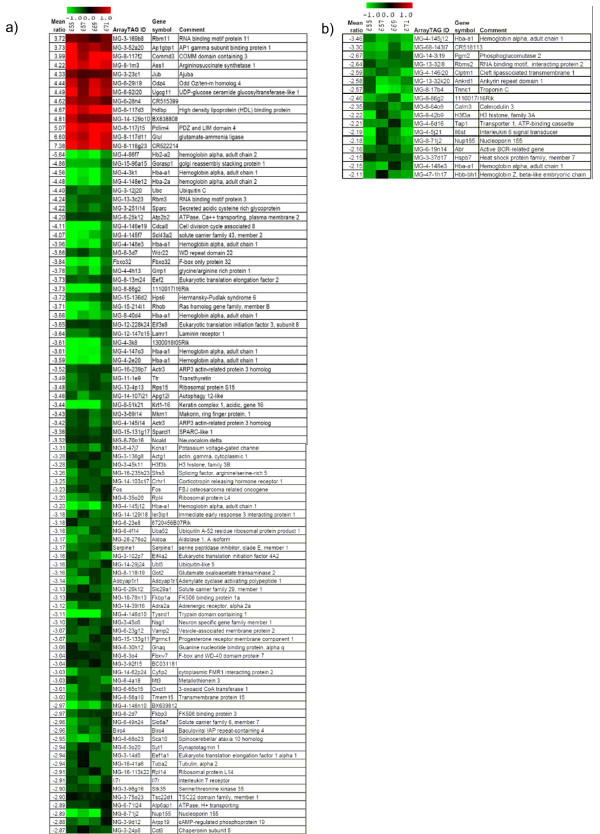
Expression analysis of Eya3 by in-situ hybridizations and beta-Gal-staining of Eya3 mutant mice revealed abundant expression of the gene throughout development, e.g. in brain, eyes, heart, somites and limbs suggesting pleiotropic effects of the mutated gene. A similar complex expression pattern was observed also in zebrafish embryos. The phenotype of young adult Eya3 mouse mutants was systematically analyzed within the German Mouse Clinic. There was no obvious defect in the eyes, ears and kidneys of Eya3 mutant mice. Homozygous mutants displayed decreased bone mineral content and shorter body length. In the lung, the tidal volume at rest was decreased, and electrocardiography showed increased JT- and PQ intervals as well as decreased QRS amplitude. Behavioral analysis of the mutants demonstrated a mild increase in exploratory behavior, but decreased locomotor activity and reduced muscle strength. Analysis of differential gene expression revealed 110 regulated genes in heart and brain. Using real-time PCR, we confirmed Nup155 being down regulated in both organs.
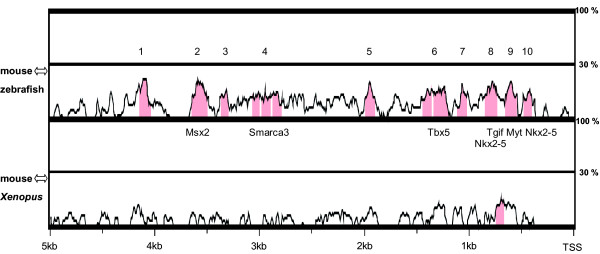
The loss of Eya3 in the mouse has no apparent effect on eye development. The wide-spread expression of Eya3 in mouse and zebrafish embryos is in contrast to the restricted expression pattern in Xenopus embryos. The loss of Eya3 in mice leads to a broad spectrum of minor physiological changes. Among them, the mutant mice move less than the wild-type mice and, together with the effects on respiratory, muscle and heart function, the mutation might lead to more severe effects when the mice become older. Therefore, future investigations of Eya3 function should focus on aging mice.
在果蝇中,无眼基因(eya)的突变会导致眼睛发育出现严重缺陷。其哺乳动物直系同源基因Eya1 - 4的功能仅得到部分了解,且尚无Eya3的小鼠模型。因此,我们对一种新的Eya3基因敲除小鼠突变体的表型进行了表征。
通过原位杂交对Eya3进行表达分析以及对Eya3突变小鼠进行β - 半乳糖苷酶染色,结果显示该基因在整个发育过程中均有丰富表达,例如在脑、眼、心脏、体节和四肢中,这表明该突变基因具有多效性。在斑马鱼胚胎中也观察到了类似的复杂表达模式。在德国小鼠诊所对年轻成年Eya3小鼠突变体的表型进行了系统分析。Eya3突变小鼠的眼睛、耳朵和肾脏没有明显缺陷。纯合突变体的骨矿物质含量降低,体长缩短。在肺部,静息时的潮气量降低,心电图显示JT间期和PQ间期延长,QRS波幅降低。对突变体的行为分析表明,其探索行为略有增加,但运动活性降低,肌肉力量减弱。差异基因表达分析揭示了心脏和脑中110个受调控的基因。通过实时PCR,我们证实核孔蛋白155(Nup155)在这两个器官中均下调。
小鼠中Eya3的缺失对眼睛发育没有明显影响。Eya3在小鼠和斑马鱼胚胎中的广泛表达与非洲爪蟾胚胎中有限的表达模式形成对比。小鼠中Eya3的缺失导致了一系列轻微的生理变化。其中,突变小鼠的活动量比野生型小鼠少,并且连同对呼吸、肌肉和心脏功能的影响,当小鼠变老时,这种突变可能会导致更严重的影响。因此,未来对Eya3功能的研究应聚焦于老年小鼠。