Koay Cheng Guan, Ozarslan Evren, Basser Peter J
Section on Tissue Biophysics and Biomimetics, Eunice Kennedy Shriver National Institute of Child Health and Human Development, National Institutes of Health, Bethesda, MD 20892, USA.
J Magn Reson. 2009 Apr;197(2):108-19. doi: 10.1016/j.jmr.2008.11.015. Epub 2008 Dec 6.
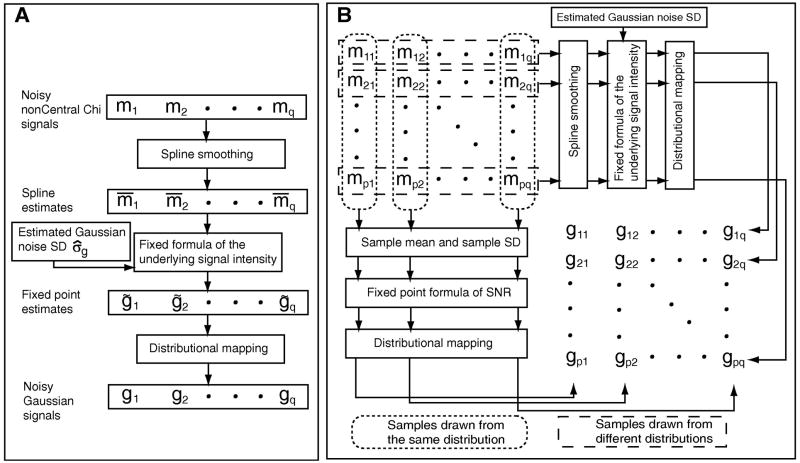
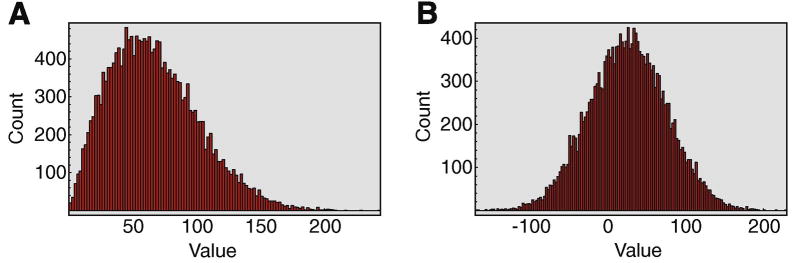
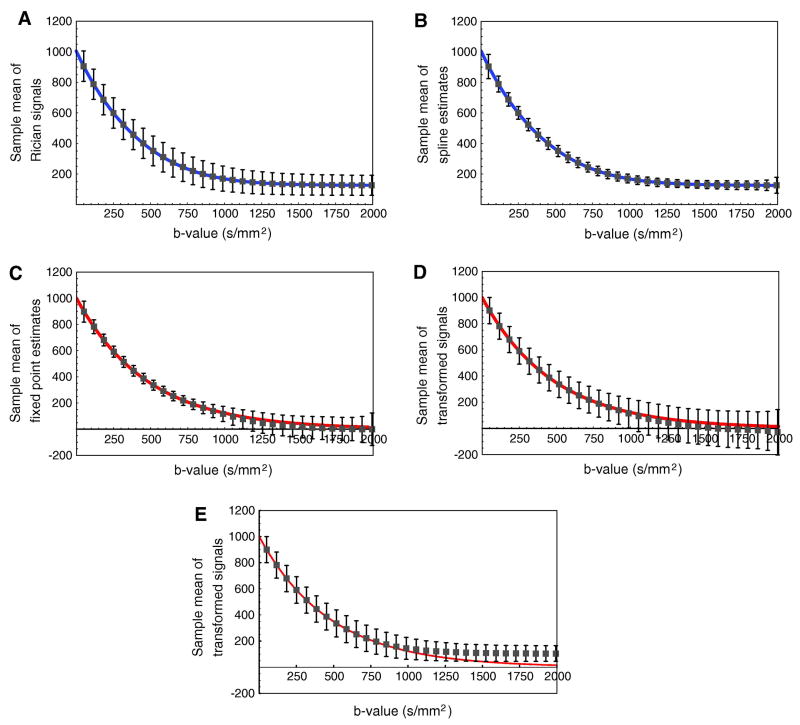
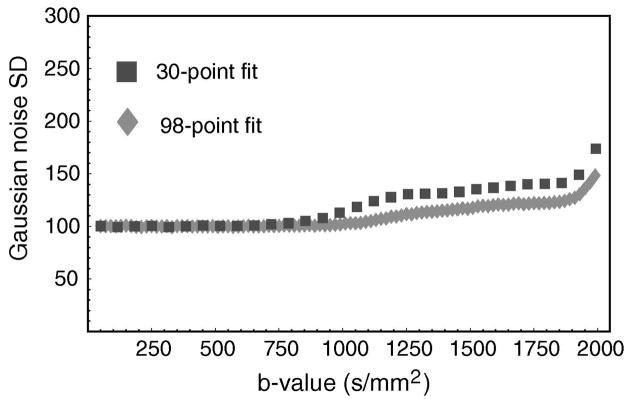
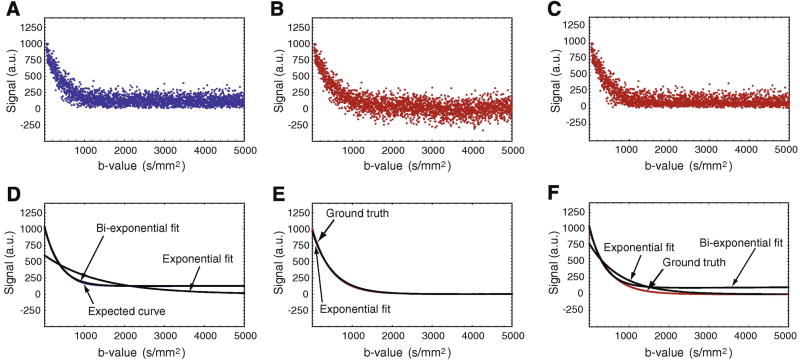
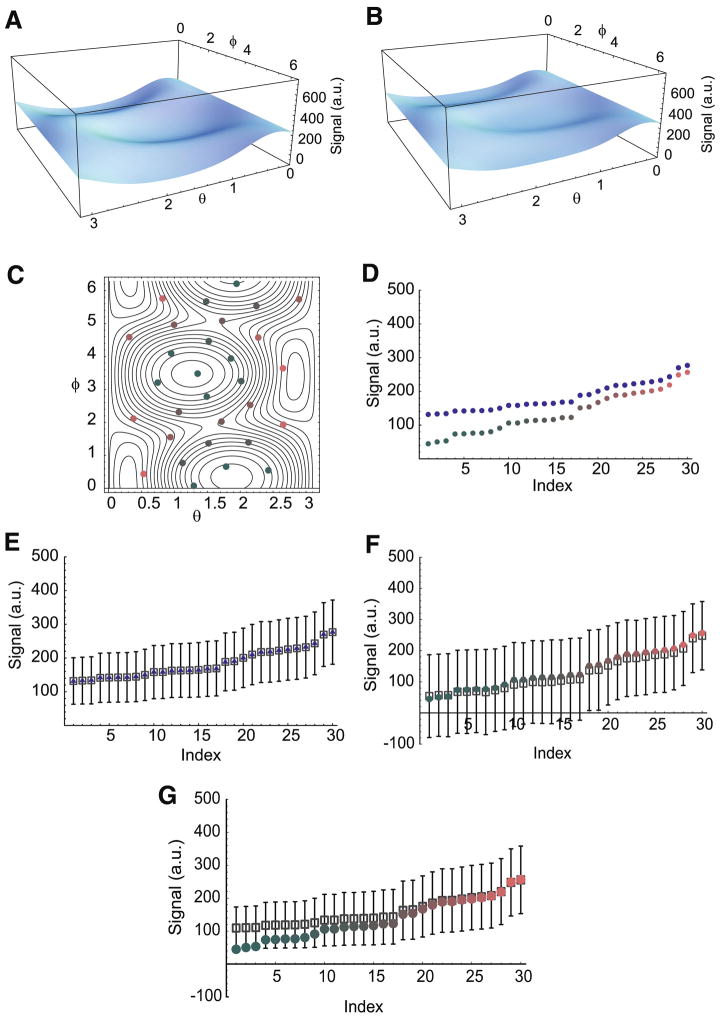
A long-standing problem in magnetic resonance imaging (MRI) is the noise-induced bias in the magnitude signals. This problem is particularly pressing in diffusion MRI at high diffusion-weighting. In this paper, we present a three-stage scheme to solve this problem by transforming noisy nonCentral Chi signals to noisy Gaussian signals. A special case of nonCentral Chi distribution is the Rician distribution. In general, the Gaussian-distributed signals are of interest rather than the Gaussian-derived (e.g., Rayleigh, Rician, and nonCentral Chi) signals because the Gaussian-distributed signals are generally more amenable to statistical treatment through the principle of least squares. Monte Carlo simulations were used to validate the statistical properties of the proposed framework. This scheme opens up the possibility of investigating the low signal regime (or high diffusion-weighting regime in the case of diffusion MRI) that contains potentially important information about biophysical processes and structures of the brain.
磁共振成像(MRI)中一个长期存在的问题是幅度信号中由噪声引起的偏差。在高扩散加权的扩散MRI中,这个问题尤为突出。在本文中,我们提出了一种三阶段方案,通过将有噪声的非中心卡方信号转换为有噪声的高斯信号来解决这个问题。非中心卡方分布的一个特殊情况是莱斯分布。一般来说,高斯分布的信号比高斯派生的(如瑞利、莱斯和非中心卡方)信号更受关注,因为高斯分布的信号通常通过最小二乘法原则更易于进行统计处理。蒙特卡罗模拟用于验证所提出框架的统计特性。该方案为研究包含有关大脑生物物理过程和结构潜在重要信息的低信号区域(或扩散MRI情况下的高扩散加权区域)开辟了可能性。