Ghosh Anil K, Devenport Martin, Jethwaney Deepa, Kalume Dario E, Pandey Akhilesh, Anderson Vernon E, Sultan Ali A, Kumar Nirbhay, Jacobs-Lorena Marcelo
Department of Molecular Microbiology and Immunology and Malaria Research Institute, Johns Hopkins School of Public Health, Baltimore, Maryland, United States of America.
PLoS Pathog. 2009 Jan;5(1):e1000265. doi: 10.1371/journal.ppat.1000265. Epub 2009 Jan 16.
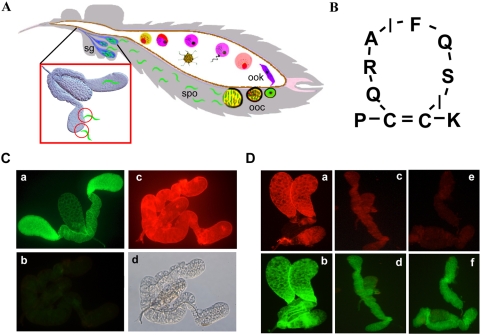
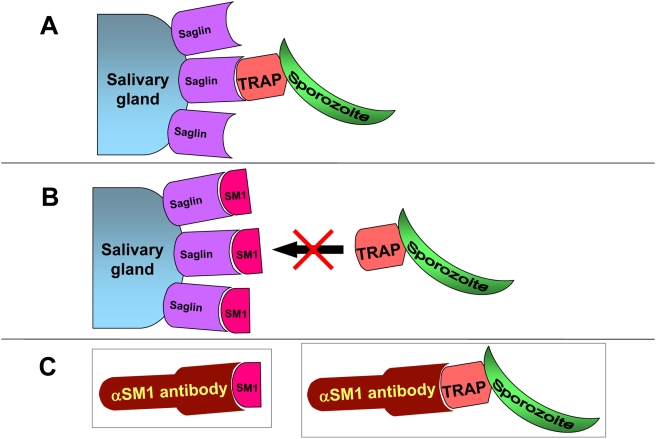
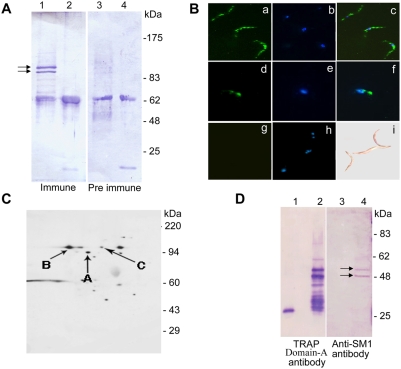
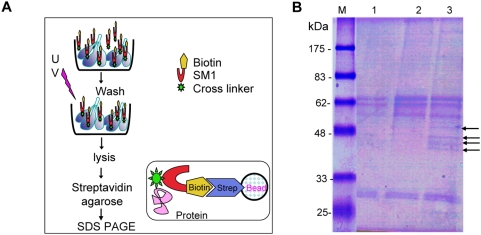
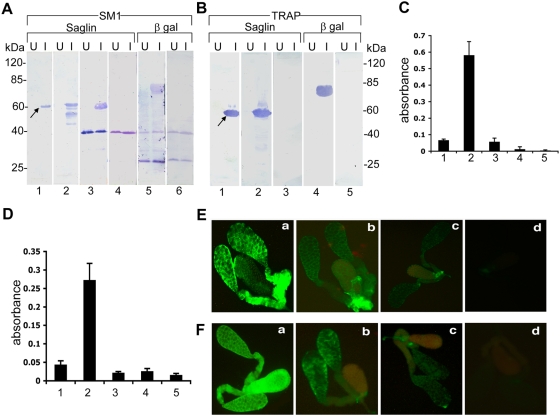
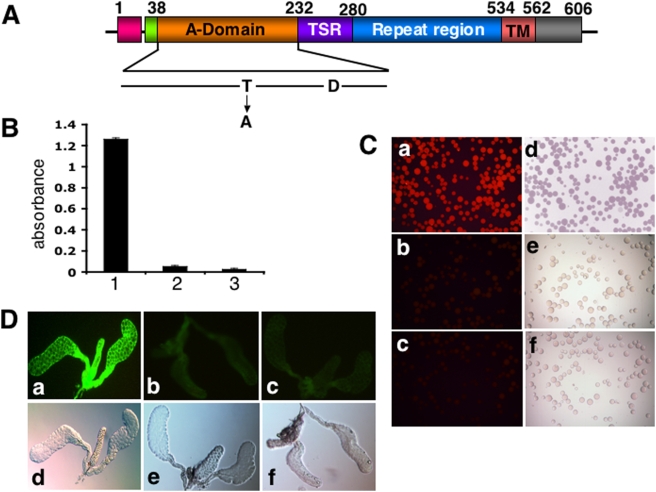
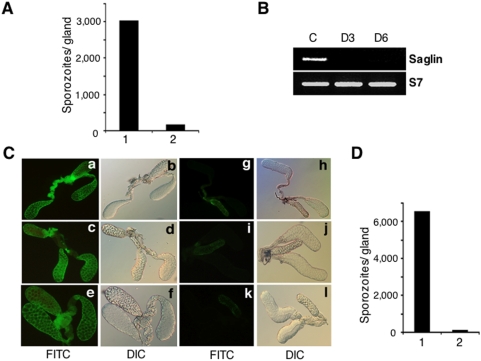
SM1 is a twelve-amino-acid peptide that binds tightly to the Anopheles salivary gland and inhibits its invasion by Plasmodium sporozoites. By use of UV-crosslinking experiments between the peptide and its salivary gland target protein, we have identified the Anopheles salivary protein, saglin, as the receptor for SM1. Furthermore, by use of an anti-SM1 antibody, we have determined that the peptide is a mimotope of the Plasmodium sporozoite Thrombospondin Related Anonymous Protein (TRAP). TRAP binds to saglin with high specificity. Point mutations in TRAP's binding domain A abrogate binding, and binding is competed for by the SM1 peptide. Importantly, in vivo down-regulation of saglin expression results in strong inhibition of salivary gland invasion. Together, the results suggest that saglin/TRAP interaction is crucial for salivary gland invasion by Plasmodium sporozoites.
SM1是一种由十二个氨基酸组成的肽,它能紧密结合按蚊唾液腺,并抑制疟原虫子孢子对其的入侵。通过肽与其唾液腺靶蛋白之间的紫外线交联实验,我们已确定按蚊唾液蛋白saglin为SM1的受体。此外,通过使用抗SM1抗体,我们已确定该肽是疟原虫子孢子血小板反应蛋白相关无名蛋白(TRAP)的模拟表位。TRAP以高特异性结合saglin。TRAP结合域A中的点突变消除了结合,且SM1肽可竞争结合。重要的是,体内saglin表达的下调会强烈抑制唾液腺入侵。这些结果共同表明,saglin/TRAP相互作用对于疟原虫子孢子入侵唾液腺至关重要。