Cournac Axel, Sepulchre Jacques-Alexandre
Institut Non Linéaire de Nice, Université de Nice Sophia-Antipolis, CNRS, Valbonne, France.
BMC Syst Biol. 2009 Mar 3;3:29. doi: 10.1186/1752-0509-3-29.
Bacteria or cells receive many signals from their environment and from other organisms. In order to process this large amount of information, Systems Biology shows that a central role is played by regulatory networks composed of genes and proteins. The objective of this paper is to present and to discuss simple regulatory network motifs having the property to maximize their responses under time-periodic stimulations. In elucidating the mechanisms underlying these responses through simple networks the goal is to pinpoint general principles which optimize the oscillatory responses of molecular networks.
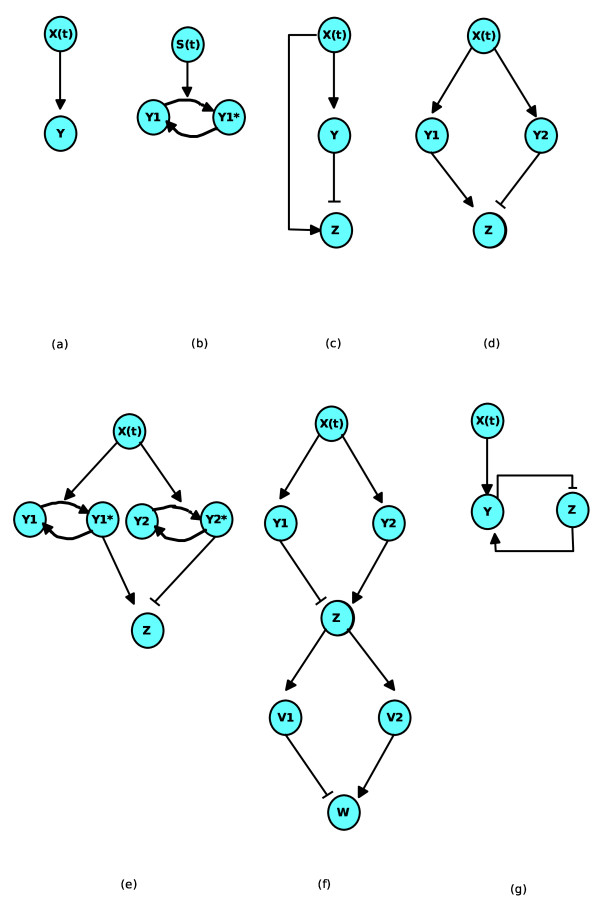
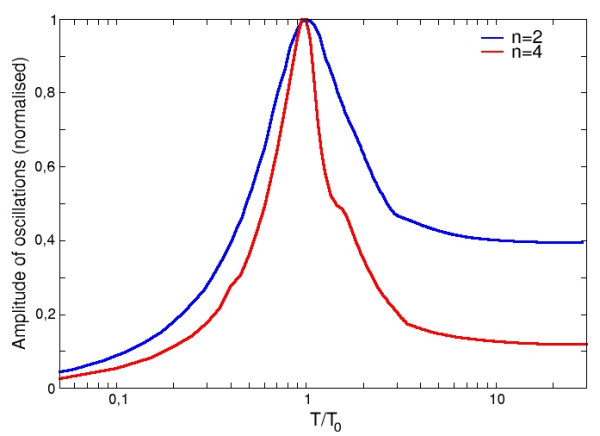
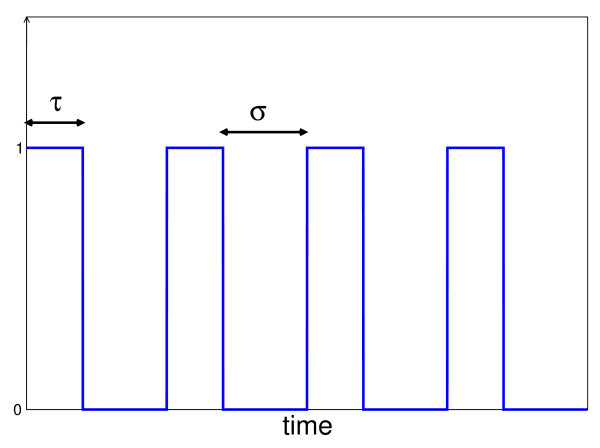
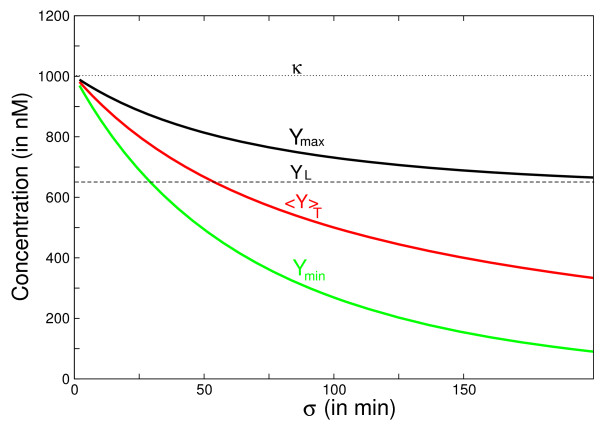
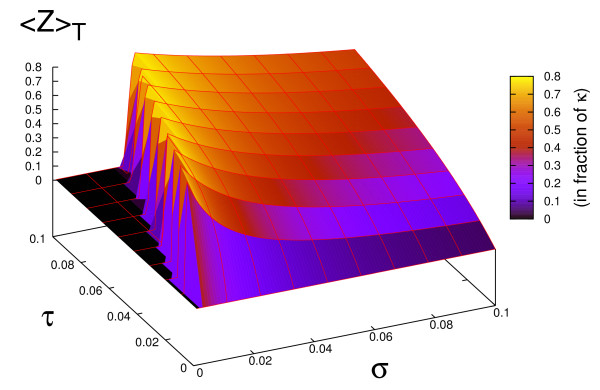
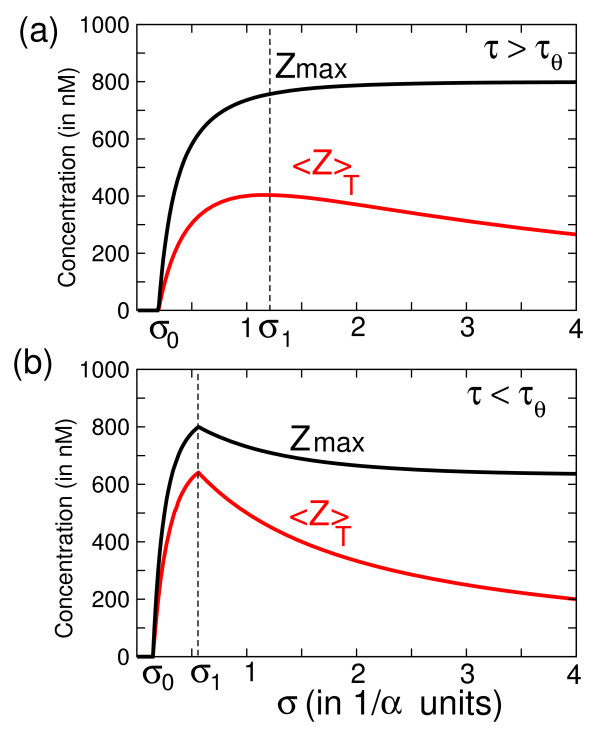
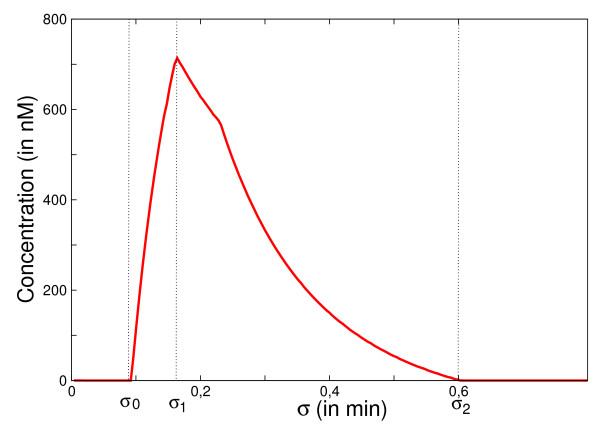
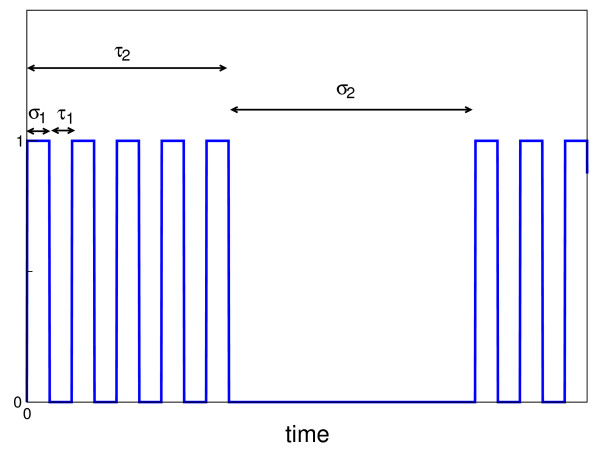
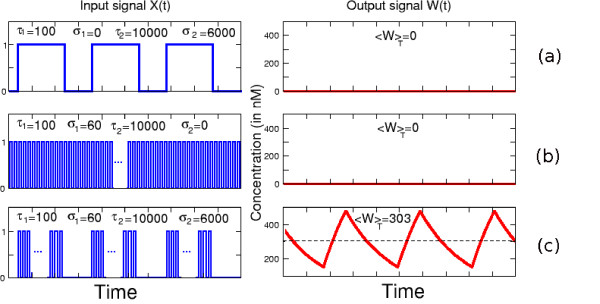
We took a look at basic network motifs studied in the literature such as the Incoherent Feedforward Loop (IFFL) or the interlerlocked negative feedback loop. The former is also generalized to a diamond pattern, with network components being either purely genetic or combining genetic and signaling pathways. Using standard mathematics and numerical simulations, we explain the types of responses exhibited by the IFFL with respect to a train of periodic pulses. We show that this system has a non-vanishing response only if the inter-pulse interval is above a threshold. A slight generalisation of the IFFL (the diamond) is shown to work as an ideal pass-band filter. We next show a mechanism by which average of oscillatory response can be maximized by bursting temporal patterns. Finally we study the interlerlocked negative feedback loop, i.e. a 2-gene motif forming a loop where the nodes respectively activate and repress each other, and show situations where this system possesses a resonance under periodic stimulation.
We present several simple motif designs of molecular networks producing optimal output in response to periodic stimulations of the system. The identified mechanisms are simple and based on known network motifs in the literature, so that that they could be embodied in existing organisms, or easily implementable by means of synthetic biology. Moreover we show that these designs can be studied in different contexts of molecular biology, as for example in genetic networks or in signaling pathways.
细菌或细胞会从其环境以及其他生物体接收许多信号。为了处理如此大量的信息,系统生物学表明由基因和蛋白质组成的调控网络发挥着核心作用。本文的目的是呈现并讨论具有在周期性刺激下最大化其响应特性的简单调控网络基序。通过简单网络阐明这些响应背后的机制,目标是找出优化分子网络振荡响应的一般原则。
我们研究了文献中所研究的基本网络基序,如非相干前馈环(IFFL)或互锁负反馈环。前者还被推广到菱形模式,网络组件可以是纯遗传的,也可以是遗传和信号通路相结合的。使用标准数学和数值模拟,我们解释了IFFL对于一系列周期性脉冲所表现出的响应类型。我们表明,只有当脉冲间隔高于阈值时,该系统才会有非零响应。IFFL(菱形)的轻微推广被证明可作为理想的带通滤波器。接下来我们展示了一种通过突发时间模式使振荡响应平均值最大化的机制。最后我们研究互锁负反馈环,即由两个基因组成的形成环的基序,其中节点分别相互激活和抑制,并展示了该系统在周期性刺激下具有共振的情况。
我们提出了几种分子网络的简单基序设计,它们在系统受到周期性刺激时能产生最优输出。所确定的机制很简单,基于文献中已知的网络基序,因此它们可以体现在现有生物体中,或者通过合成生物学很容易实现。此外,我们表明这些设计可以在分子生物学的不同背景下进行研究,例如在遗传网络或信号通路中。