Somers Joanna, Owen-Hughes Tom
Wellcome Trust Centre for Gene Regulation and Expression, School of Life Sciences, University of Dundee, Dundee DD1 5EH, UK.
Nucleic Acids Res. 2009 May;37(8):2504-13. doi: 10.1093/nar/gkp114. Epub 2009 Mar 5.
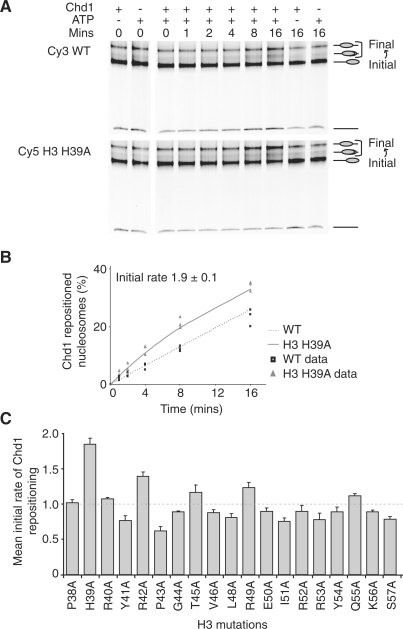
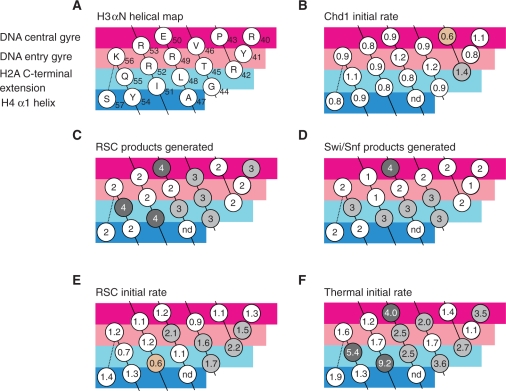
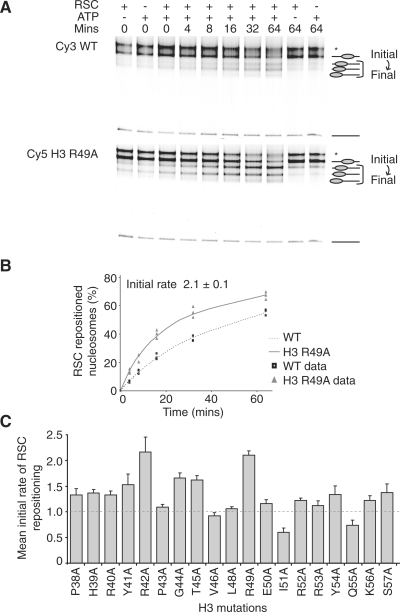
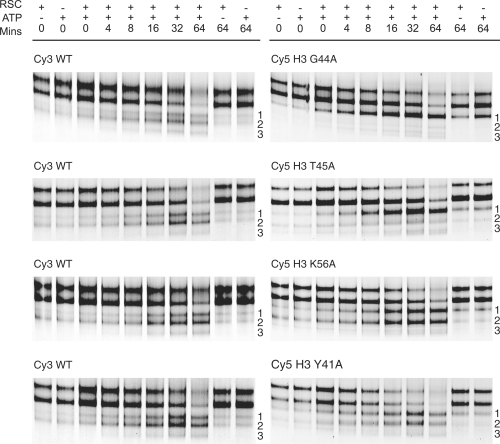
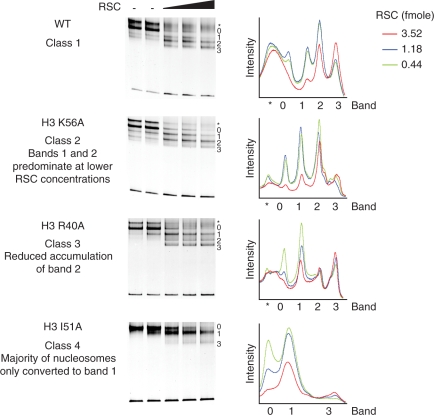
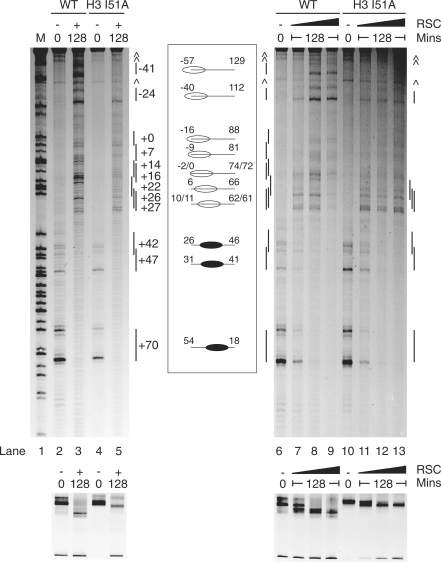
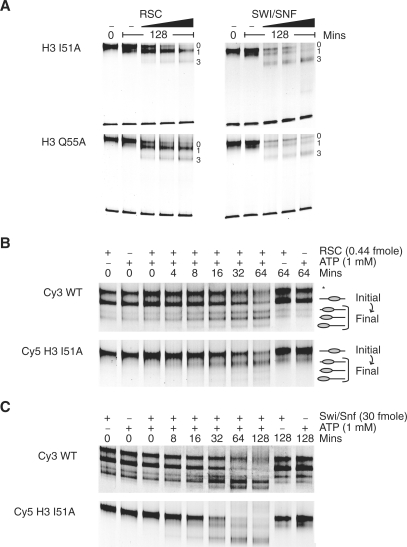
Mutational analysis of the histone H3 N-terminal region has shown it to play an important role both in chromatin function in vivo and nucleosome dynamics in vitro. Here we use a library of mutations in the H3 N-terminal region to investigate the contribution of this region to the action of the ATP-dependent remodelling enzymes Chd1, RSC and SWI/SNF. All of the enzymes were affected differently by the mutations with Chd1 being affected the least and RSC being most sensitive. In addition to affecting the rate of remodelling by RSC, some mutations prevented RSC from moving nucleosomes to locations in which DNA was unravelled. These observations illustrate that the mechanisms by which different ATP-dependent remodelling enzymes act are sensitive to different features of nucleosome structure. They also show how alterations to histones can affect the products generated as a result of ATP-dependent remodelling reactions.
组蛋白H3 N端区域的突变分析表明,它在体内染色质功能和体外核小体动力学中均发挥重要作用。在此,我们利用H3 N端区域的一系列突变来研究该区域对ATP依赖的重塑酶Chd1、RSC和SWI/SNF作用的贡献。所有这些酶受突变的影响各不相同,其中Chd1受影响最小,RSC最为敏感。除了影响RSC的重塑速率外,一些突变还阻止RSC将核小体移动到DNA解开的位置。这些观察结果表明,不同的ATP依赖的重塑酶的作用机制对核小体结构的不同特征敏感。它们还展示了组蛋白的改变如何影响ATP依赖的重塑反应所产生的产物。