Lee Tin-Lap, Pang Alan Lap-Yin, Rennert Owen M, Chan Wai-Yee
Section on Developmental Genomics, Laboratory of Clinical Genomics, Eunice Kennedy Shriver National Institute of Child Health and Human Development, National Institutes of Health, Bethesda, Maryland 20892-4429, USA.
Birth Defects Res C Embryo Today. 2009 Mar;87(1):43-63. doi: 10.1002/bdrc.20147.
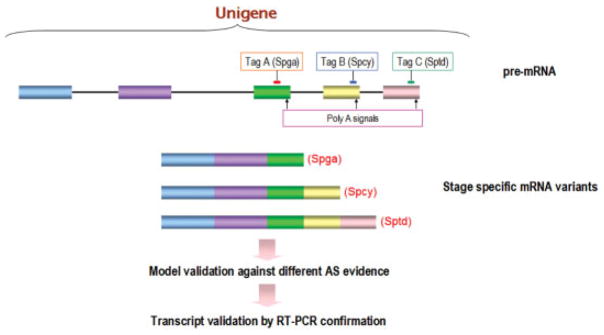
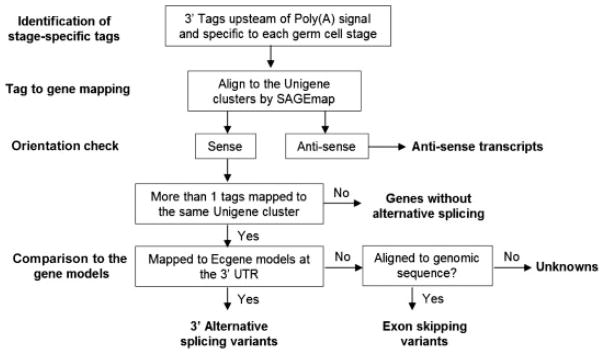
Spermatogenesis is a highly orchestrated developmental process by which spermatogonia develop into mature spermatozoa. This process involves many testis- or male germ cell-specific gene products whose expressions are strictly regulated. In the past decade the advent of high-throughput gene expression analytical techniques has made functional genomic studies of this process, particularly in model animals such as mice and rats, feasible and practical. These studies have just begun to reveal the complexity of the genomic landscape of the developing male germ cells. Over 50% of the mouse and rat genome are expressed during testicular development. Among transcripts present in germ cells, 40% - 60% are uncharacterized. A number of genes, and consequently their associated biological pathways, are differentially expressed at different stages of spermatogenesis. Developing male germ cells present a rich repertoire of genetic processes. Tissue-specific as well as spermatogenesis stage-specific alternative splicing of genes exemplifies the complexity of genome expression. In addition to this layer of control, discoveries of abundant presence of antisense transcripts, expressed psuedogenes, non-coding RNAs (ncRNA) including long ncRNAs, microRNAs (miRNAs) and Piwi-interacting RNAs (piRNAs), and retrogenes all point to the presence of multiple layers of expression and functional regulation in male germ cells. It is anticipated that application of systems biology approaches will further our understanding of the regulatory mechanism of spermatogenesis.
精子发生是一个高度协调的发育过程,通过这个过程精原细胞发育成成熟的精子。这个过程涉及许多睾丸或雄性生殖细胞特异性的基因产物,其表达受到严格调控。在过去十年中,高通量基因表达分析技术的出现使得对这个过程进行功能基因组研究成为可能且切实可行,特别是在小鼠和大鼠等模式动物中。这些研究刚刚开始揭示发育中的雄性生殖细胞基因组格局的复杂性。超过50%的小鼠和大鼠基因组在睾丸发育过程中表达。在生殖细胞中存在的转录本中,40% - 60%是未被表征的。许多基因及其相关的生物学途径在精子发生的不同阶段差异表达。发育中的雄性生殖细胞呈现出丰富的遗传过程。基因的组织特异性以及精子发生阶段特异性可变剪接体现了基因组表达的复杂性。除了这一层控制外,反义转录本、表达的假基因、包括长链非编码RNA、微小RNA(miRNA)和Piwi相互作用RNA(piRNA)在内的非编码RNA(ncRNA)以及反转录基因的大量存在都表明雄性生殖细胞中存在多层表达和功能调控。预计系统生物学方法的应用将进一步加深我们对精子发生调控机制的理解。