Jones Adam C, Gu Liangcai, Sorrels Carla M, Sherman David H, Gerwick William H
Scripps Institution of Oceanography and Skaggs School of Pharmacy and Pharmaceutical Sciences, University of California San Diego, La Jolla, CA 92093, USA.
Curr Opin Chem Biol. 2009 Apr;13(2):216-23. doi: 10.1016/j.cbpa.2009.02.019. Epub 2009 Mar 21.
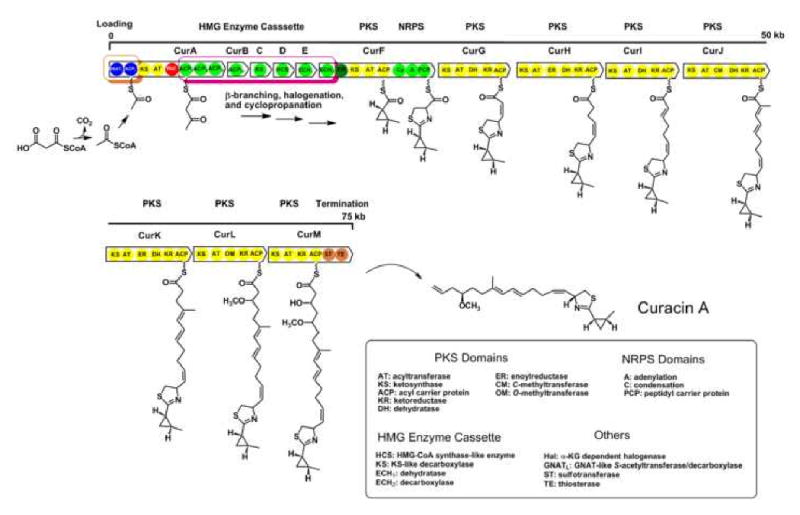
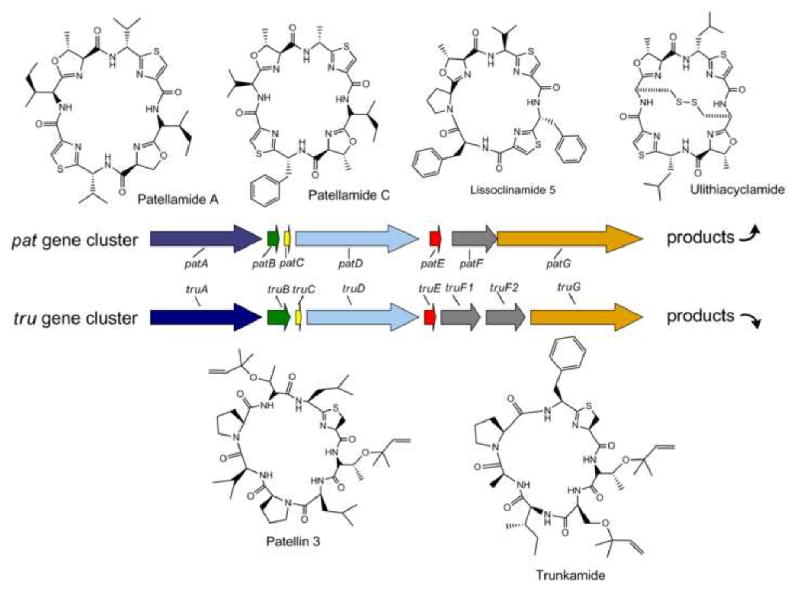
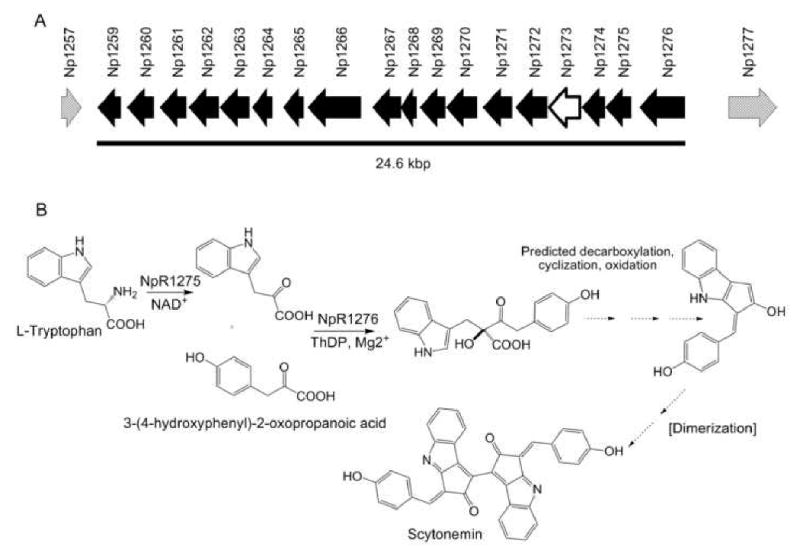
Cyanobacteria, among Earth's oldest organisms, have evolved sophisticated biosynthetic pathways to produce a rich arsenal of bioactive natural products. In consequence, cyanobacterial secondary metabolites have been an incredibly fruitful source of lead compounds in drug discovery efforts. Investigations into the biochemistry responsible for the creation of these compounds, complemented by genome sequencing efforts, are revealing unique enzymatic mechanisms not described or rarely described elsewhere in the natural world. Herein, we discuss recent advances in understanding the biosynthesis of three cyanobacterial classes of natural product: mixed polyketide synthase/non ribosomal peptide synthetase (PKS/NRPS) metabolites, aromatic amino acid-derived alkaloids, and ribosomally encoded cyclic peptides. The unique biosynthetic mechanisms employed by cyanobacteria are inspiring new developments in heterologous gene expression and biotechnology.
蓝细菌是地球上最古老的生物之一,它们进化出了复杂的生物合成途径,以产生丰富多样的生物活性天然产物。因此,蓝细菌次生代谢产物一直是药物研发中极为丰富的先导化合物来源。对负责这些化合物合成的生物化学过程的研究,辅以基因组测序工作,正在揭示自然界其他地方未描述或很少描述的独特酶促机制。在此,我们讨论了在理解三类蓝细菌天然产物生物合成方面的最新进展:混合聚酮合酶/非核糖体肽合成酶(PKS/NRPS)代谢产物、芳香族氨基酸衍生生物碱和核糖体编码的环肽。蓝细菌所采用的独特生物合成机制正在激发异源基因表达和生物技术方面的新进展。