Py Bénédicte, Basmaciogullari Stéphane, Bouchet Jérôme, Zarka Marion, Moura Ivan C, Benhamou Marc, Monteiro Renato C, Hocini Hakim, Madrid Ricardo, Benichou Serge
Institut Cochin, Université Paris-Descartes, CNRS, UMR 8104, Paris, France.
PLoS One. 2009;4(3):e5006. doi: 10.1371/journal.pone.0005006. Epub 2009 Mar 31.
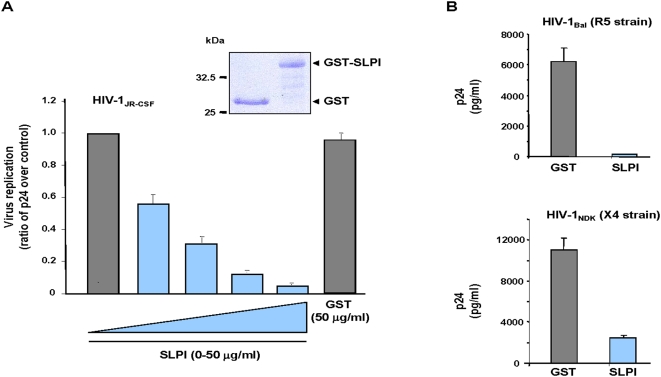
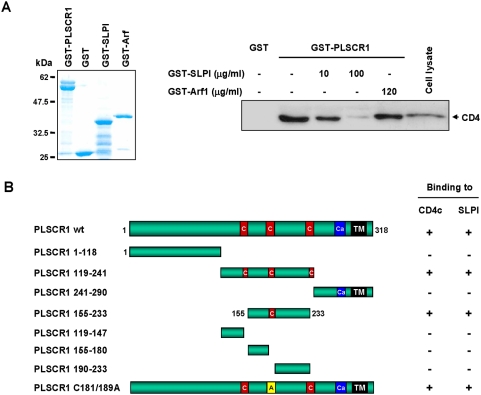
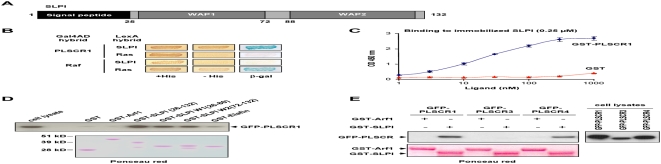
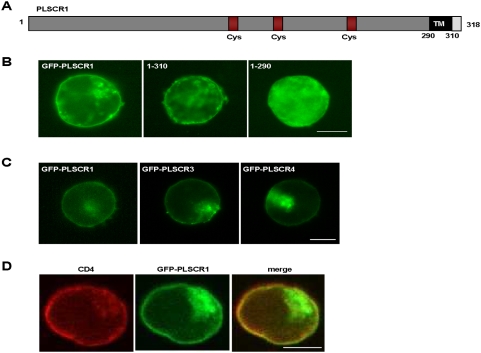
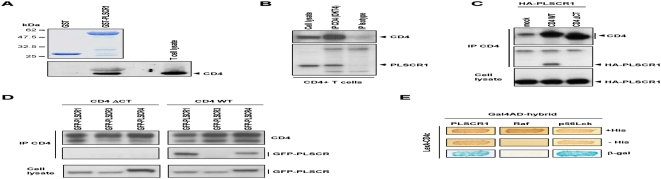
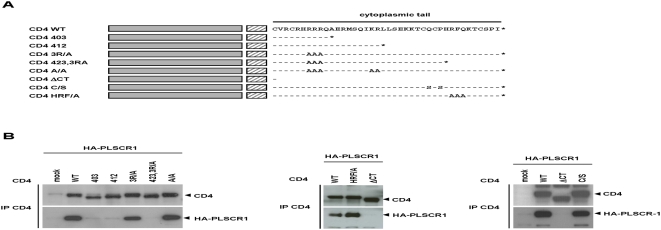
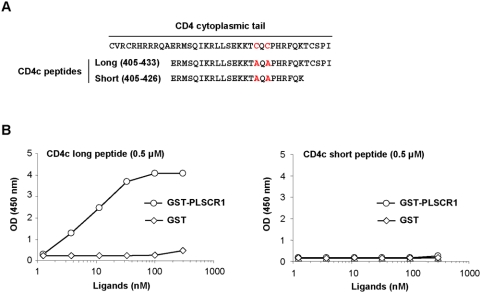
Secretory leukocyte protease inhibitor (SLPI) is secreted by epithelial cells in all the mucosal fluids such as saliva, cervical mucus, as well in the seminal liquid. At the physiological concentrations found in saliva, SLPI has a specific antiviral activity against HIV-1 that is related to the perturbation of the virus entry process at a stage posterior to the interaction of the viral surface glycoprotein with the CD4 receptor. Here, we confirm that recombinant SLPI is able to inhibit HIV-1 infection of primary T lymphocytes, and show that SLPI can also inhibit the transfer of HIV-1 virions from primary monocyte-derived dendritic cells to autologous T lymphocytes. At the molecular level, we show that SLPI is a ligand for the phospholipid scramblase 1 (PLSCR1) and PLSCR4, membrane proteins that are involved in the regulation of the movements of phospholipids between the inner and outer leaflets of the plasma membrane. Interestingly, we reveal that PLSCR1 and PLSCR4 also interact directly with the CD4 receptor at the cell surface of T lymphocytes. We find that the same region of the cytoplasmic domain of PLSCR1 is involved in the binding to CD4 and SLPI. Since SLPI was able to disrupt the association between PLSCR1 and CD4, our data suggest that SLPI inhibits HIV-1 infection by modulating the interaction of the CD4 receptor with PLSCRs. These interactions may constitute new targets for antiviral intervention.
分泌型白细胞蛋白酶抑制剂(SLPI)由上皮细胞分泌至所有黏膜液中,如唾液、宫颈黏液以及精液。在唾液中发现的生理浓度下,SLPI对HIV-1具有特异性抗病毒活性,这与病毒进入过程在病毒表面糖蛋白与CD4受体相互作用后的一个阶段受到干扰有关。在此,我们证实重组SLPI能够抑制原代T淋巴细胞的HIV-1感染,并表明SLPI还能抑制HIV-1病毒颗粒从原代单核细胞衍生的树突状细胞向自体T淋巴细胞的转移。在分子水平上,我们表明SLPI是磷脂翻转酶1(PLSCR1)和PLSCR4的配体,这两种膜蛋白参与调节质膜内外小叶之间磷脂的运动。有趣的是,我们发现PLSCR1和PLSCR4也在T淋巴细胞的细胞表面直接与CD4受体相互作用。我们发现PLSCR1胞质结构域的同一区域参与与CD4和SLPI的结合。由于SLPI能够破坏PLSCR1与CD4之间的关联,我们的数据表明SLPI通过调节CD4受体与PLSCRs的相互作用来抑制HIV-1感染。这些相互作用可能构成抗病毒干预的新靶点。