BioSciences Division, Oak Ridge National Laboratory, Oak Ridge, TN 37831-6226, USA.
Biotechnol Biofuels. 2009 Apr 1;2(1):7. doi: 10.1186/1754-6834-2-7.
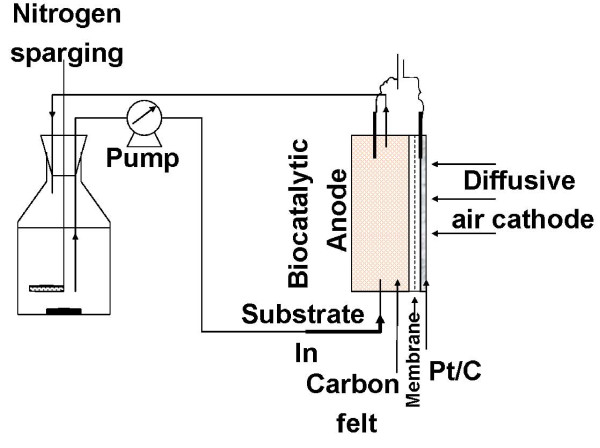
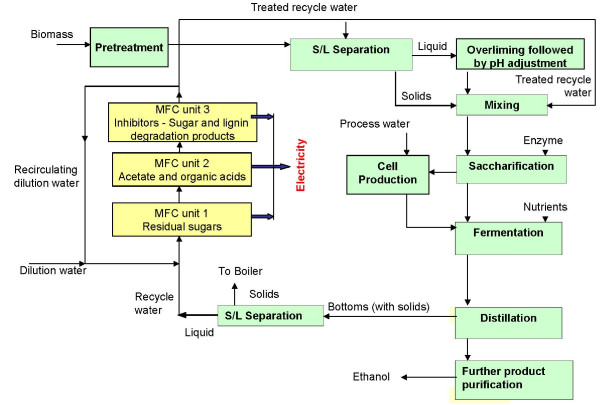
Microbial fuel cells (MFC) and microbial electrolysis cells are electrical devices that treat water using microorganisms and convert soluble organic matter into electricity and hydrogen, respectively. Emerging cellulosic biorefineries are expected to use large amounts of water during production of ethanol. Pretreatment of cellulosic biomass results in production of fermentation inhibitors which accumulate in process water and make the water recycle process difficult. Use of MFCs to remove the inhibitory sugar and lignin degradation products from recycle water is investigated in this study.
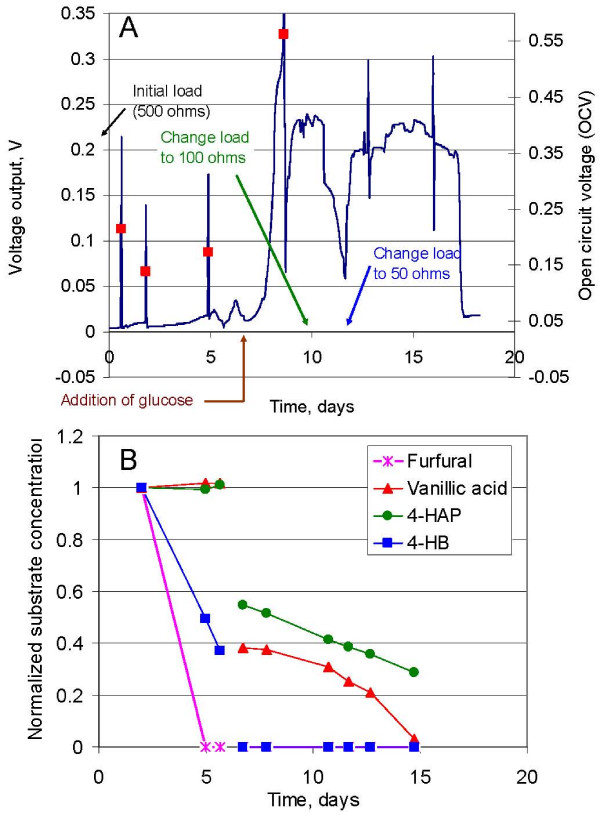
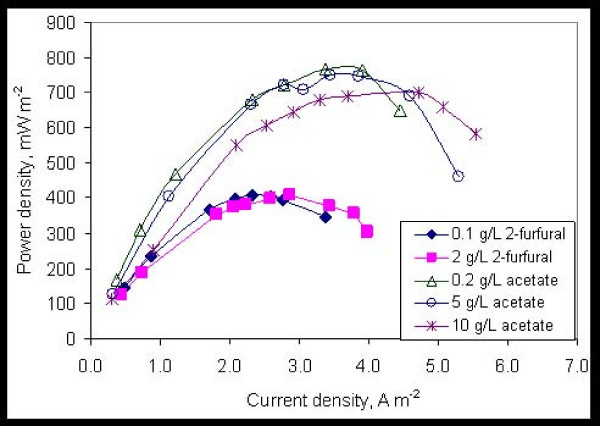
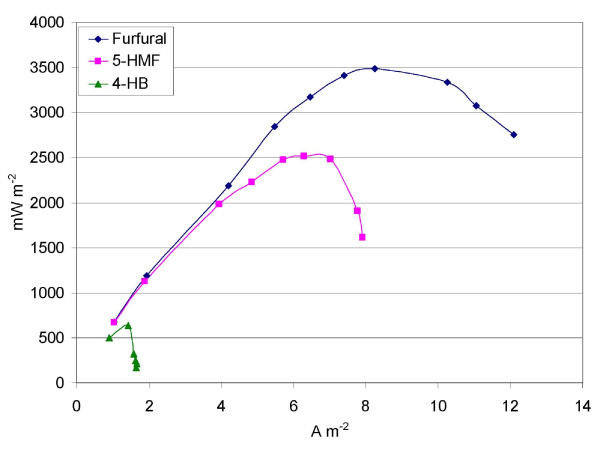
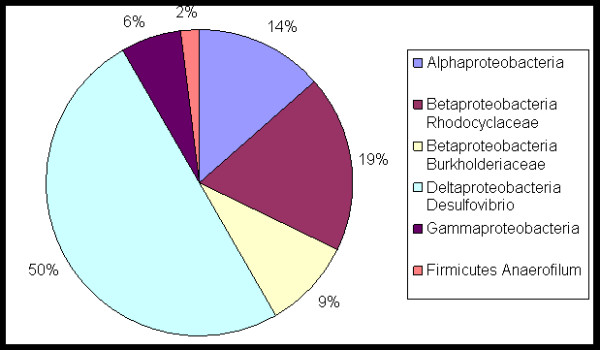
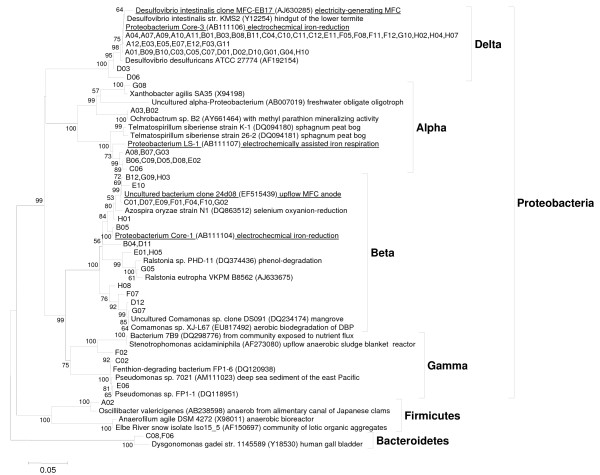
Use of an MFC to reduce the levels of furfural, 5-hydroxymethylfurfural, vanillic acid, 4-hydroxybenzaldehyde and 4-hydroxyacetophenone while simultaneously producing electricity is demonstrated here. An integrated MFC design approach was used which resulted in high power densities for the MFC, reaching up to 3700 mW/m2 (356 W/m3 net anode volume) and a coulombic efficiency of 69%. The exoelectrogenic microbial consortium enriched in the anode was characterized using a 16S rRNA clone library method. A unique exoelectrogenic microbial consortium dominated by delta-Proteobacteria (50%), along with beta-Proteobacteria (28%), alpha-Proteobacteria (14%), gamma-Proteobacteria (6%) and others was identified. The consortium demonstrated broad substrate specificity, ability to handle high inhibitor concentrations (5 to 20 mM) with near complete removal, while maintaining long-term stability with respect to power production.
Use of MFCs for removing fermentation inhibitors has implications for: 1) enabling higher ethanol yields at high biomass loading in cellulosic ethanol biorefineries, 2) improved water recycle and 3) electricity production up to 25% of total biorefinery power needs.
微生物燃料电池(MFC)和微生物电解池是利用微生物处理水的电气设备,分别将可溶性有机物转化为电能和氢气。新兴的纤维素生物精炼厂预计在生产乙醇过程中会使用大量的水。纤维素生物质的预处理会导致发酵抑制剂的产生,这些抑制剂会在工艺水中积累,使水的循环利用过程变得困难。本研究考察了使用 MFC 从循环水中去除抑制性糖和木质素降解产物。
本研究证明了使用 MFC 降低糠醛、5-羟甲基糠醛、香草酸、4-羟基苯甲醛和 4-乙酰基苯甲酮的水平,同时产生电能。采用集成的 MFC 设计方法,使 MFC 的功率密度达到 3700 mW/m2(356 W/m3 净阳极体积),库仑效率达到 69%。采用 16S rRNA 克隆文库方法对富集在阳极的外生微生物群落进行了表征。鉴定出一种以δ-变形菌(50%)为主,β-变形菌(28%)、α-变形菌(14%)、γ-变形菌(6%)和其他菌为辅的独特外生微生物群落。该群落表现出广泛的底物特异性,能够处理高浓度的抑制剂(5 至 20 mM),几乎完全去除,同时保持长期的稳定性,实现电力生产。
使用 MFC 去除发酵抑制剂对以下方面具有重要意义:1)在高生物质负荷下提高纤维素乙醇生物精炼厂的乙醇产量,2)改善水的循环利用,3)电力生产达到生物精炼厂总电力需求的 25%。