
从海绵到纳米的胶原蛋白基质:骨骼肌组织工程的新视角
Collagen matrices from sponge to nano: new perspectives for tissue engineering of skeletal muscle.
作者信息
Beier Justus P, Klumpp Dorothee, Rudisile Markus, Dersch Roland, Wendorff Joachim H, Bleiziffer Oliver, Arkudas Andreas, Polykandriotis Elias, Horch Raymund E, Kneser Ulrich
机构信息
Department of Plastic and Hand Surgery, University Hospital of Erlangen, 91054 Erlangen, Germany.
出版信息
BMC Biotechnol. 2009 Apr 15;9:34. doi: 10.1186/1472-6750-9-34.
BACKGROUND
Tissue engineering of vascularised skeletal muscle is a promising method for the treatment of soft tissue defects in reconstructive surgery. In this study we explored the characteristics of novel collagen and fibrin matrices for skeletal muscle tissue engineering. We analyzed the characteristics of newly developed hybrid collagen-I-fibrin-gels and collagen nanofibers as well as collagen sponges and OPLA-scaffolds. Collagen-fibrin gels were also tested with genipin as stabilizing substitute for aprotinin.
RESULTS
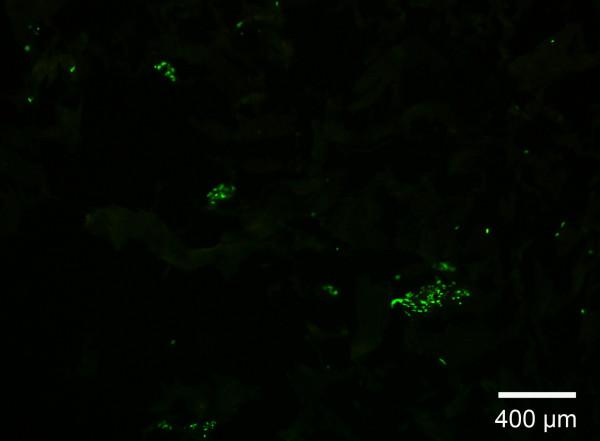
Whereas rapid lysis and contraction of pure collagen I- or fibrin-matrices have been great problems in the past, the latter could be overcome by combining both materials. Significant proliferation of cultivated myoblasts was detected in collagen-I-fibrin matrices and collagen nanofibers. Seeding cells on parallel orientated nanofibers resulted in strongly aligned myoblasts. In contrast, common collagen sponges and OPLA-scaffolds showed less cell proliferation and in collagen sponges an increased apoptosis rate was evident. The application of genipin caused deleterious effects on primary myoblasts.
CONCLUSION
Collagen I-fibrin mixtures as well as collagen nanofibers yield good proliferation rates and myogenic differentiation of primary rat myoblasts in vitro In addition, parallel orientated nanofibers enable the generation of aligned cell layers and therefore represent the most promising step towards successful engineering of skeletal muscle tissue.
背景
血管化骨骼肌组织工程是重建外科治疗软组织缺损的一种有前景的方法。在本研究中,我们探索了用于骨骼肌组织工程的新型胶原蛋白和纤维蛋白基质的特性。我们分析了新开发的I型胶原蛋白-纤维蛋白混合凝胶、胶原蛋白纳米纤维以及胶原蛋白海绵和OPLA支架的特性。还测试了用京尼平作为抑肽酶的稳定替代物的胶原蛋白-纤维蛋白凝胶。
结果
过去,纯I型胶原蛋白或纤维蛋白基质的快速溶解和收缩一直是大问题,但通过将两种材料结合可以克服这些问题。在I型胶原蛋白-纤维蛋白基质和胶原蛋白纳米纤维中检测到培养的成肌细胞有显著增殖。将细胞接种在平行排列的纳米纤维上会导致成肌细胞强烈排列。相比之下,普通的胶原蛋白海绵和OPLA支架显示出较少的细胞增殖,并且在胶原蛋白海绵中细胞凋亡率明显增加。京尼平的应用对原代成肌细胞产生了有害影响。
结论
I型胶原蛋白-纤维蛋白混合物以及胶原蛋白纳米纤维在体外能使原代大鼠成肌细胞产生良好的增殖率和肌源性分化。此外,平行排列的纳米纤维能够生成排列整齐的细胞层,因此代表了骨骼肌组织成功工程化最有前景的进展。




 Zotero 插件