Hashemi Seyed M, Hund Thomas J, Mohler Peter J
Department of Internal Medicine, University of Iowa Carver College of Medicine, Iowa City, IA, USA.
J Mol Cell Cardiol. 2009 Aug;47(2):203-9. doi: 10.1016/j.yjmcc.2009.04.010. Epub 2009 Apr 24.
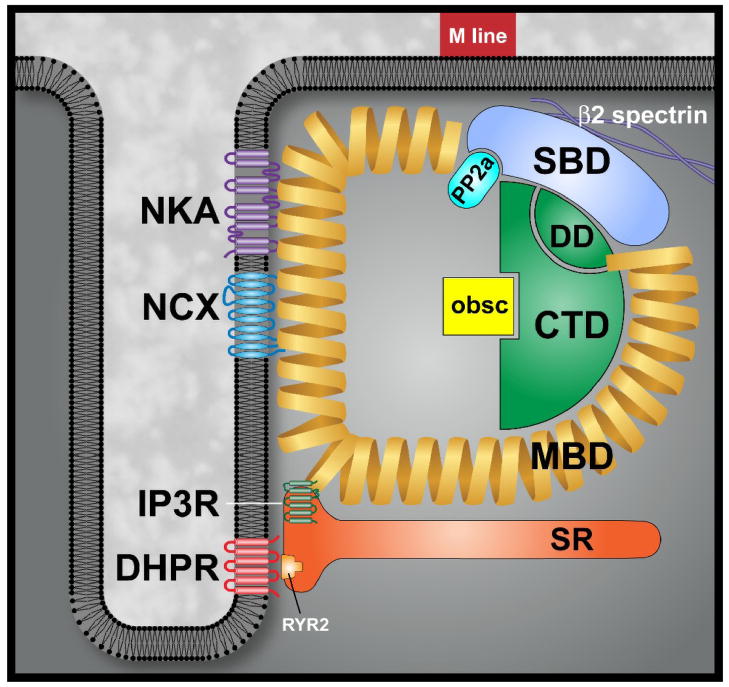
Ankyrins are critical components of ion channel and transporter signaling complexes in the cardiovascular system. Over the past 5 years, ankyrin dysfunction has been linked with abnormal ion channel and transporter membrane organization and fatal human arrhythmias. Loss-of-function variants in the ankyrin-B gene (ANK2) cause "ankyrin-B syndrome" (previously called type 4 long QT syndrome), manifested by a complex cardiac phenotype including ventricular arrhythmias and sudden cardiac death. More recently, dysfunction in the ankyrin-B-based targeting pathway has been linked with a highly penetrant and severe form of human sinus node disease. Ankyrin-G (a second ankyrin gene product) is required for normal expression, membrane localization, and biophysical function of the primary cardiac voltage-gated sodium channel, Na(v)1.5. Loss of the ankyrin-G/Na(v)1.5 interaction is associated with human cardiac arrhythmia (Brugada syndrome). Finally, in the past year ankyrin dysfunction has been associated with more common arrhythmia and cardiovascular disease phenotypes. Specifically, large animal studies reveal striking remodeling of ankyrin-B and associated proteins following myocardial infarction. Additionally, the ANK2 locus has been linked with QT(c) interval variability in the general human population. Together, these findings identify a host of unanticipated and exciting roles for ankyrin polypeptides in cardiac function. More broadly, these findings illustrate the importance of local membrane organization for normal cardiac physiology.
锚蛋白是心血管系统中离子通道和转运体信号复合物的关键组成部分。在过去5年里,锚蛋白功能障碍与离子通道和转运体膜组织异常以及致命的人类心律失常有关。锚蛋白B基因(ANK2)的功能丧失变异会导致“锚蛋白B综合征”(以前称为4型长QT综合征),表现为包括室性心律失常和心源性猝死在内的复杂心脏表型。最近,基于锚蛋白B的靶向途径功能障碍与一种高度显性和严重形式的人类窦房结疾病有关。锚蛋白G(另一种锚蛋白基因产物)是心脏主要电压门控钠通道Na(v)1.5正常表达、膜定位和生物物理功能所必需的。锚蛋白G/Na(v)1.5相互作用的丧失与人类心律失常(Brugada综合征)有关。最后,在过去一年里,锚蛋白功能障碍与更常见的心律失常和心血管疾病表型有关。具体而言,大型动物研究显示心肌梗死后锚蛋白B和相关蛋白发生显著重塑。此外,ANK2基因座与普通人群的QT(c)间期变异性有关。总之,这些发现确定了锚蛋白多肽在心脏功能中一系列意想不到且令人兴奋的作用。更广泛地说,这些发现说明了局部膜组织对正常心脏生理的重要性。