Node Koichi, Inoue Teruo
Department of Cardiovascular and Renal Medicine, Saga University Faculty of Medicine, Saga, Japan.
Cardiovasc Diabetol. 2009 Apr 29;8:23. doi: 10.1186/1475-2840-8-23.
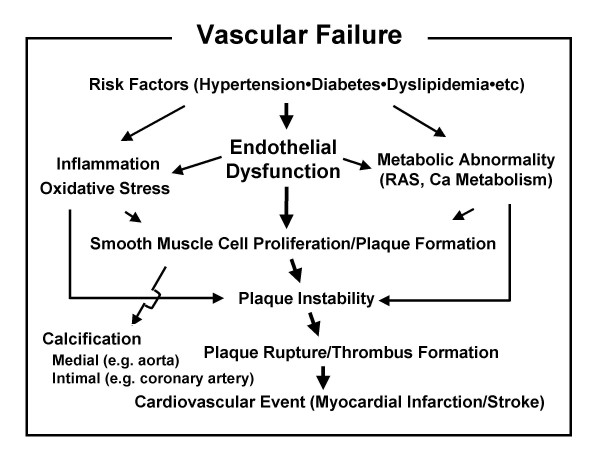
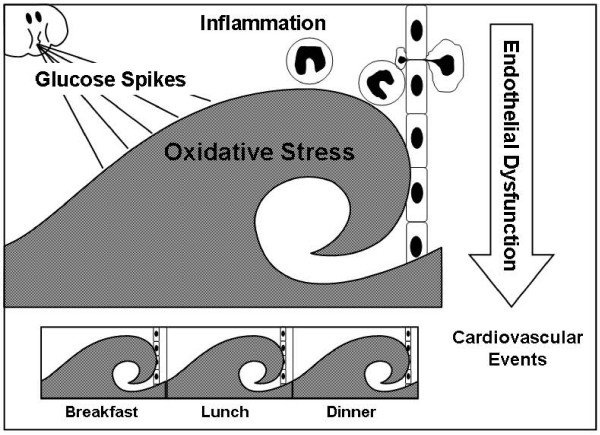
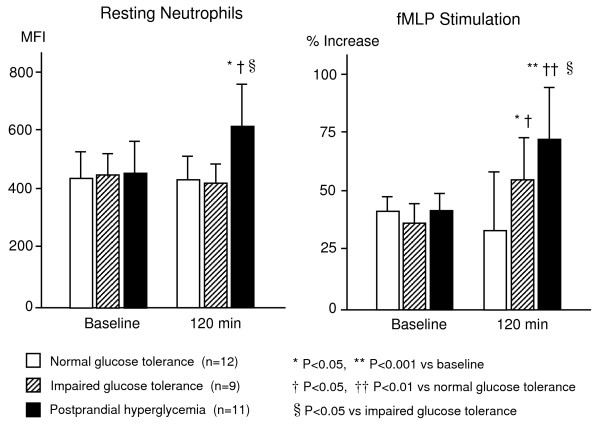
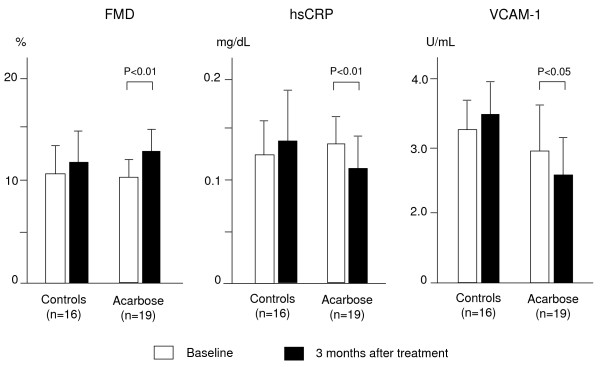
Postprandial hyperglycemia is characterized by hyperglycemic spikes that induce endothelial dysfunction, inflammatory reactions and oxidative stress, which may lead to progression of atherosclerosis and occurrence of cardiovascular events. Emerging data indicate that postprandial hyperglycemia or even impaired glucose tolerance may predispose to progression of atherosclerosis and cardiovascular events. There is evidence that postprandial hyperglycemia, but not fasting hyperglycemia, independently predicts the occurrence of cardiovascular events. We proposed a concept of 'vascular failure' as a comprehensive syndrome of vascular dysfunction extending from risk factors to advanced atherosclerotic disease. Postprandial hyperglycemia is therefore one of the very important pathophysiological states contributing to vascular failure. Accordingly, controlling postprandial hyperglycemia should be the focus of future clinical investigation as a potential target for preventing vascular failure.
餐后高血糖的特征是血糖峰值升高,可诱发内皮功能障碍、炎症反应和氧化应激,这可能导致动脉粥样硬化进展和心血管事件的发生。新出现的数据表明,餐后高血糖甚至糖耐量受损可能易导致动脉粥样硬化进展和心血管事件。有证据表明,餐后高血糖而非空腹高血糖可独立预测心血管事件的发生。我们提出了“血管功能衰竭”的概念,将其作为一种从危险因素到晚期动脉粥样硬化疾病的血管功能障碍综合综合征。因此,餐后高血糖是导致血管功能衰竭的非常重要的病理生理状态之一。相应地,控制餐后高血糖应成为未来临床研究的重点,作为预防血管功能衰竭的潜在靶点。