Kim Sungkyoon, Kim David, Pollack Gary M, Collins Leonard B, Rusyn Ivan
Department of Environmental Sciences and Engineering, Gillings School of Global Public Health, University of North Carolina, Chapel Hill, NC 27599, USA.
Toxicol Appl Pharmacol. 2009 Jul 1;238(1):90-9. doi: 10.1016/j.taap.2009.04.019. Epub 2009 May 3.
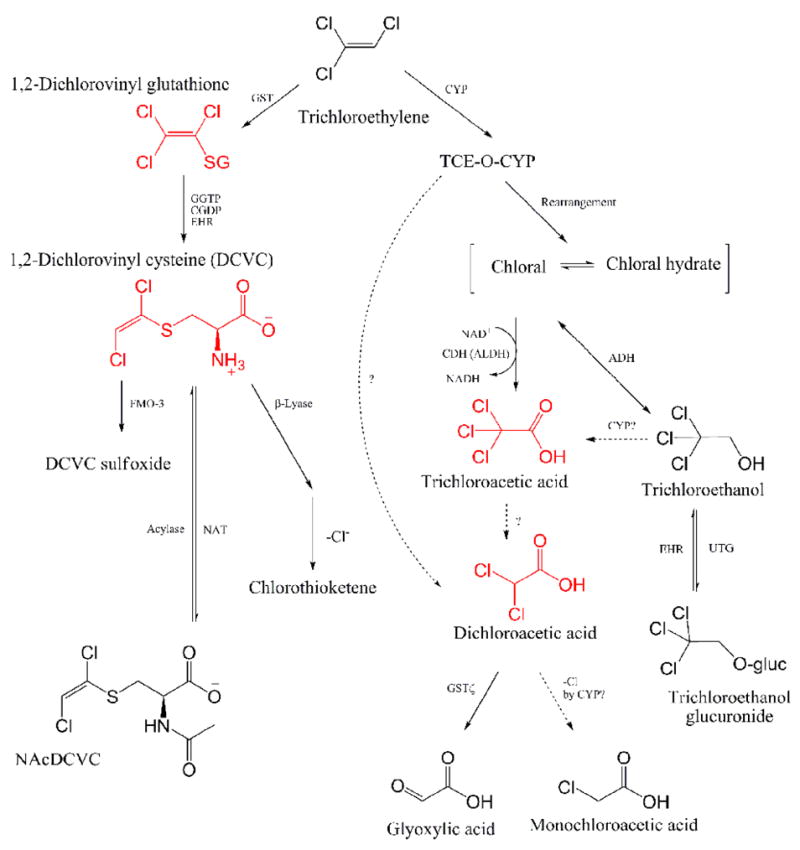
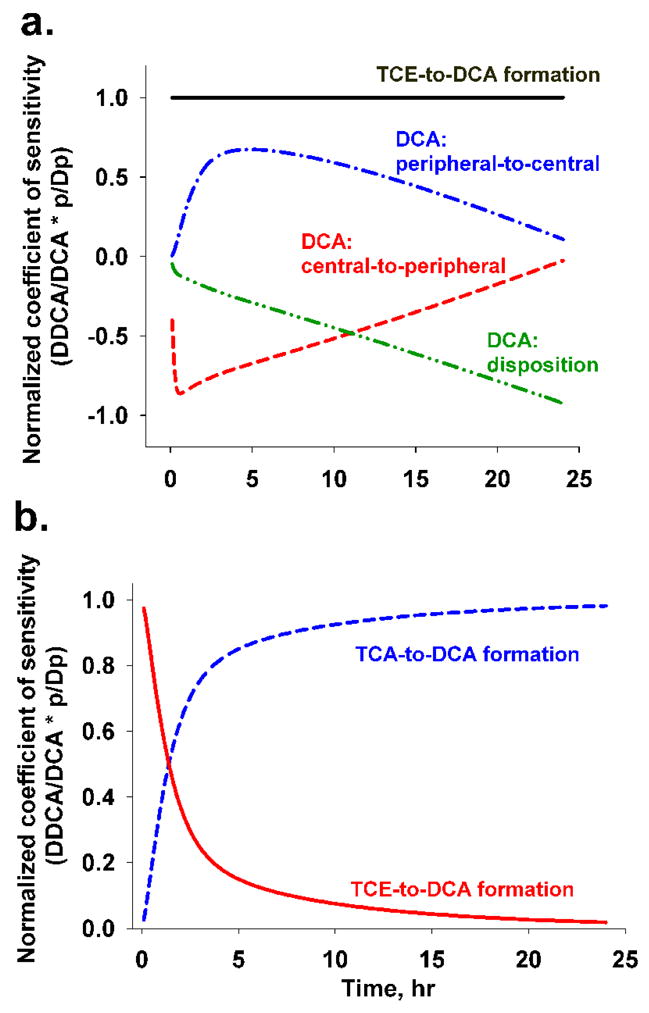
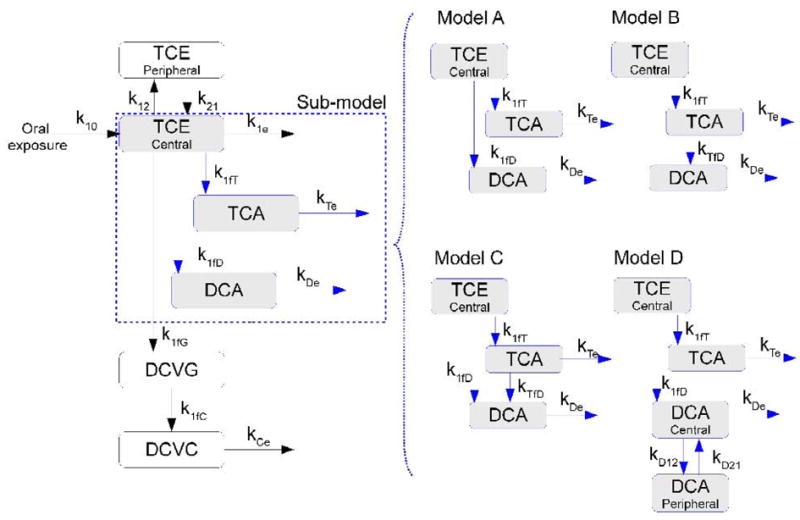
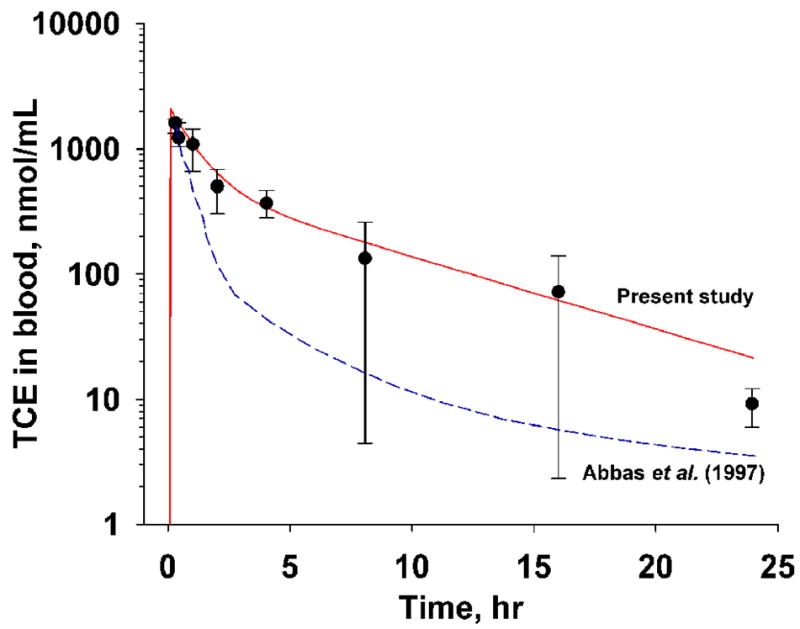
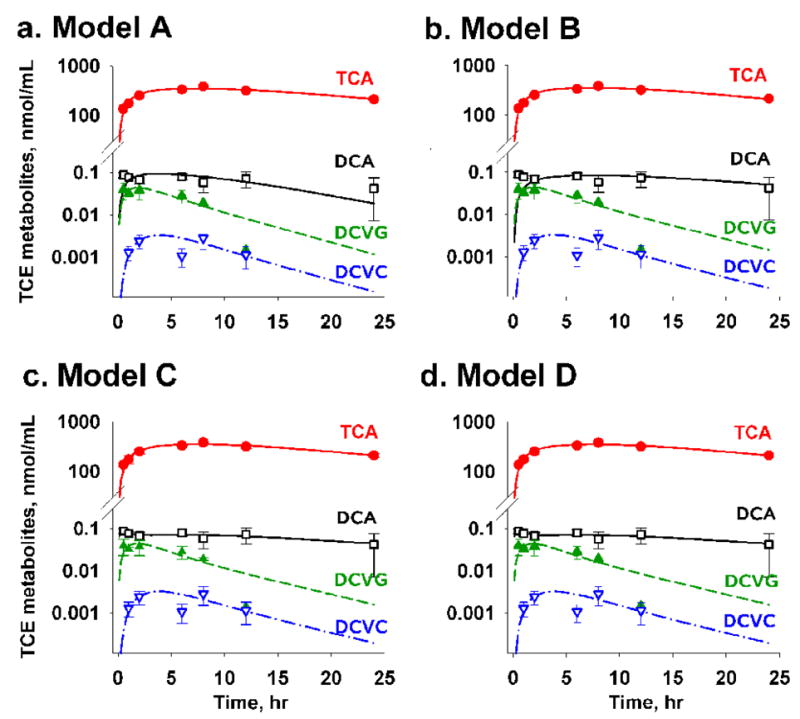
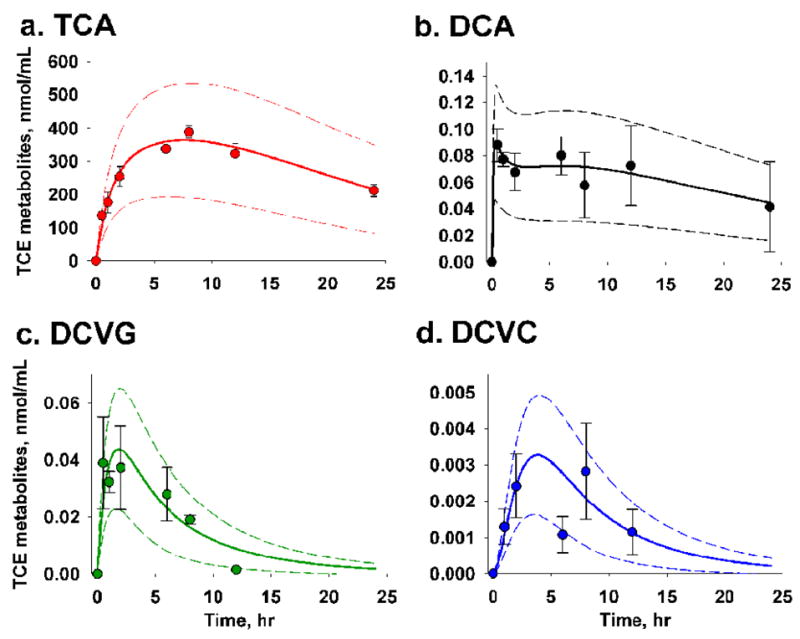
Trichloroethylene (TCE) is a well-known carcinogen in rodents and concerns exist regarding its potential carcinogenicity in humans. Oxidative metabolites of TCE, such as dichloroacetic acid (DCA) and trichloroacetic acid (TCA), are thought to be hepatotoxic and carcinogenic in mice. The reactive products of glutathione conjugation, such as S-(1,2-dichlorovinyl)-L-cysteine (DCVC), and S-(1,2-dichlorovinyl) glutathione (DCVG), are associated with renal toxicity in rats. Recently, we developed a new analytical method for simultaneous assessment of these TCE metabolites in small-volume biological samples. Since important gaps remain in our understanding of the pharmacokinetics of TCE and its metabolites, we studied a time-course of DCA, TCA, DCVG and DCVG formation and elimination after a single oral dose of 2100 mg/kg TCE in male B6C3F1 mice. Based on systemic concentration-time data, we constructed multi-compartment models to explore the kinetic properties of the formation and disposition of TCE metabolites, as well as the source of DCA formation. We conclude that TCE-oxide is the most likely source of DCA. According to the best-fit model, bioavailability of oral TCE was approximately 74%, and the half-life and clearance of each metabolite in the mouse were as follows: DCA: 0.6 h, 0.081 ml/h; TCA: 12 h, 3.80 ml/h; DCVG: 1.4 h, 16.8 ml/h; DCVC: 1.2 h, 176 ml/h. In B6C3F1 mice, oxidative metabolites are formed in much greater quantities (approximately 3600 fold difference) than glutathione-conjugative metabolites. In addition, DCA is produced to a very limited extent relative to TCA, while most of DCVG is converted into DCVC. These pharmacokinetic studies provide insight into the kinetic properties of four key biomarkers of TCE toxicity in the mouse, representing novel information that can be used in risk assessment.
三氯乙烯(TCE)在啮齿动物中是一种众所周知的致癌物,人们对其在人类中的潜在致癌性也存在担忧。TCE的氧化代谢产物,如二氯乙酸(DCA)和三氯乙酸(TCA),被认为在小鼠中具有肝毒性和致癌性。谷胱甘肽结合反应产物,如S-(1,2-二氯乙烯基)-L-半胱氨酸(DCVC)和S-(1,2-二氯乙烯基)谷胱甘肽(DCVG),与大鼠的肾毒性有关。最近,我们开发了一种新的分析方法,用于同时评估小体积生物样品中的这些TCE代谢产物。由于我们对TCE及其代谢产物的药代动力学的理解仍存在重要空白,我们研究了雄性B₆C₃F₁小鼠单次口服2,100 mg/kg TCE后DCA、TCA、DCVG和DCVC的形成和消除的时间进程。基于全身浓度-时间数据,我们构建了多室模型,以探索TCE代谢产物形成和处置的动力学特性,以及DCA形成的来源。我们得出结论,TCE-氧化物是DCA最可能的来源。根据最佳拟合模型,口服TCE的生物利用度约为74%,小鼠中每种代谢产物的半衰期和清除率如下:DCA:0.6小时,0.081毫升/小时;TCA:12小时,3.80毫升/小时;DCVG:1.4小时,16.8毫升/小时;DCVC:1.2小时,176毫升/小时。在B₆C₃F₁小鼠中,氧化代谢产物的形成量比谷胱甘肽结合代谢产物多得多(约3600倍差异)。此外,相对于TCA,DCA的产生程度非常有限,而大部分DCVG转化为DCVC。这些药代动力学研究深入了解了小鼠中TCE毒性的四种关键生物标志物的动力学特性,提供了可用于风险评估的新信息。