Dantas-Torres Filipe
Department of Veterinary Public Health, Faculty of Veterinary Medicine, University of Bari, 70010 Valenzano, Bari, Italy.
Parasit Vectors. 2009 Mar 26;2 Suppl 1(Suppl 1):S1. doi: 10.1186/1756-3305-2-S1-S1.
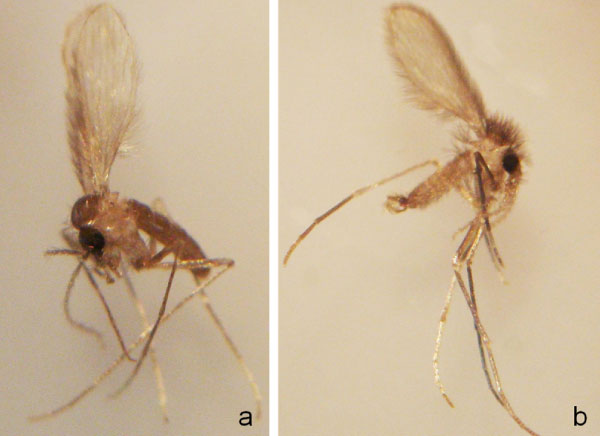
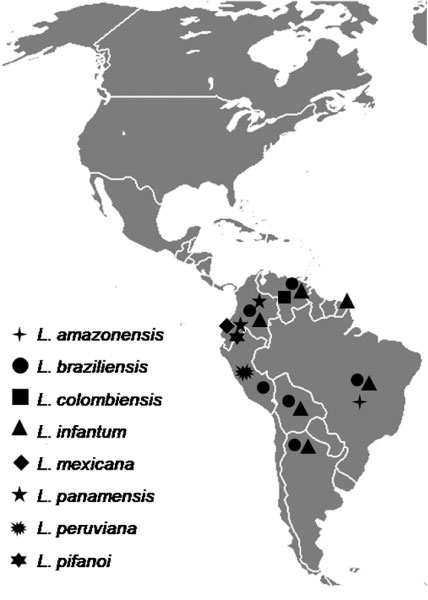
Canine leishmaniosis is widespread in South America, where a number of Leishmania species have been isolated or molecularly characterised from dogs. Most cases of canine leishmaniosis are caused by Leishmania infantum (syn. Leishmania chagasi) and Leishmania braziliensis. The only well-established vector of Leishmania parasites to dogs in South America is Lutzomyia longipalpis, the main vector of L. infantum, but many other phlebotomine sandfly species might be involved. For quite some time, canine leishmaniosis has been regarded as a rural disease, but nowadays it is well-established in large urbanised areas. Serological investigations reveal that the prevalence of anti-Leishmania antibodies in dogs might reach more than 50%, being as high as 75% in highly endemic foci. Many aspects related to the epidemiology of canine leishmaniosis (e.g., factors increasing the risk disease development) in some South American countries other than Brazil are poorly understood and should be further studied. A better understanding of the epidemiology of canine leishmaniosis in South America would be helpful to design sustainable control and prevention strategies against Leishmania infection in both dogs and humans.
犬利什曼病在南美洲广泛传播,在那里已从犬类中分离出多种利什曼原虫物种或对其进行了分子特征分析。大多数犬利什曼病病例由婴儿利什曼原虫(同义词:恰加斯利什曼原虫)和巴西利什曼原虫引起。南美洲唯一已明确的犬利什曼原虫传播媒介是长须罗蛉,它是婴儿利什曼原虫的主要传播媒介,但许多其他白蛉物种可能也参与其中。在相当长一段时间里,犬利什曼病一直被视为一种农村疾病,但如今在大型城市化地区也已普遍存在。血清学调查显示,犬类中抗利什曼原虫抗体的流行率可能超过50%,在高度流行地区高达75%。除巴西外,一些南美国家与犬利什曼病流行病学相关的许多方面(如增加疾病发生风险的因素)了解甚少,应进一步研究。更好地了解南美洲犬利什曼病的流行病学情况将有助于设计针对犬类和人类利什曼原虫感染的可持续控制和预防策略。