
肝细胞生长因子受体Met的C端截短形式。
C-terminal truncated forms of Met, the hepatocyte growth factor receptor.
作者信息
Prat M, Crepaldi T, Gandino L, Giordano S, Longati P, Comoglio P
机构信息
Department of Biomedical Sciences and Oncology, University of Torino School of Medicine, Italy.
出版信息
Mol Cell Biol. 1991 Dec;11(12):5954-62. doi: 10.1128/mcb.11.12.5954-5962.1991.
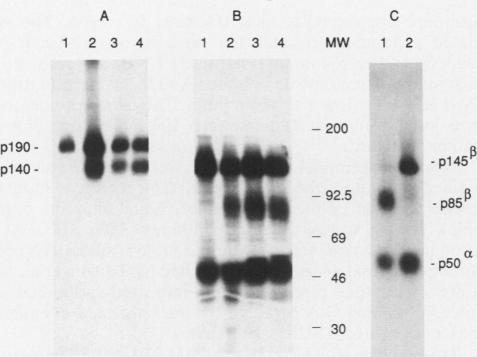
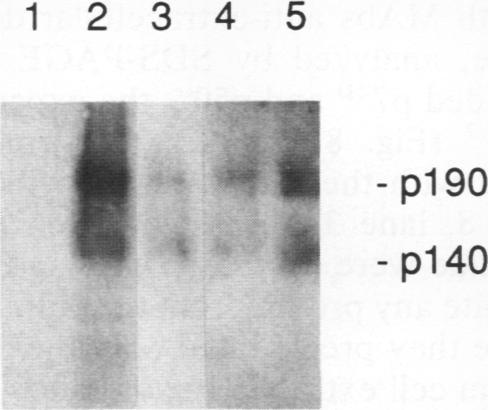
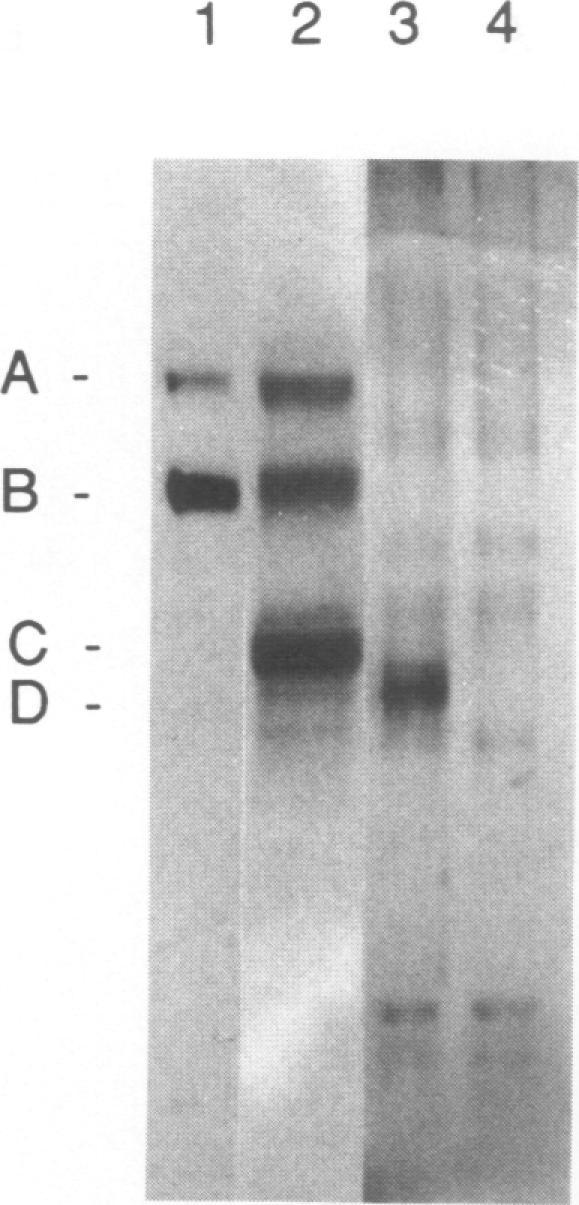
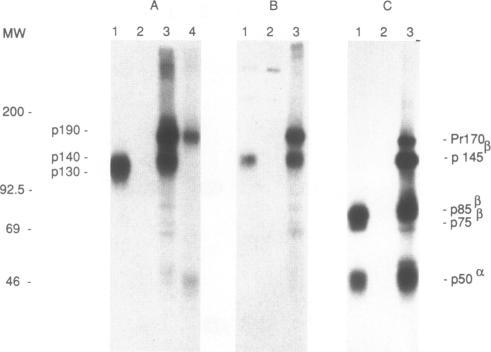
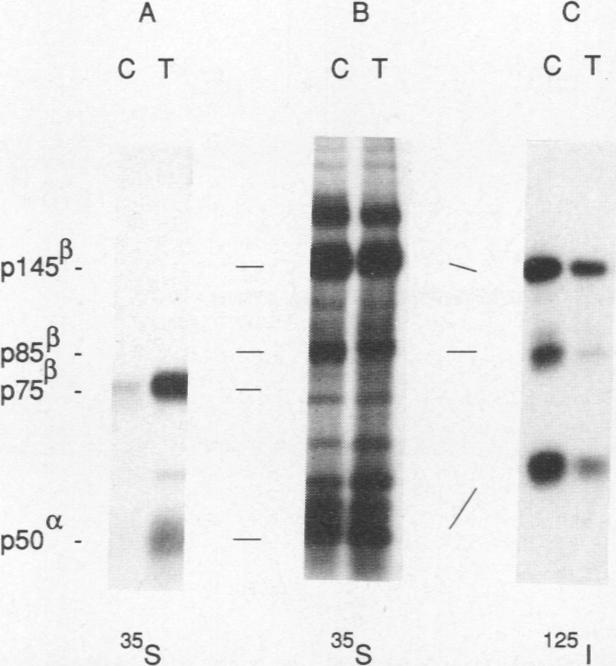
The MET proto-oncogene encodes a transmembrane tyrosine kinase of 190 kDa (p190MET), which has recently been identified as the receptor for hepatocyte growth factor/scatter factor. p190MET is a heterodimer composed of two disulfide-linked chains of 50 kDa (p50 alpha) and 145 kDa (p145 beta). We have produced four different monoclonal antibodies that are specific for the extracellular domain of the Met receptor. These antibodies immunoprecipitate with p190MET two additional Met proteins of 140 and 130 kDa. The first protein (p140MET) is membrane bound and is composed of an alpha chain (p50 alpha) and an 85-kDa C-terminal truncated beta chain (p85 beta). The second protein (p130MET) is released in the culture supernatant and consists of an alpha chain (p50 alpha) and a 75-kDa C-terminal truncated beta chain (p75 beta). Both truncated forms lack the tyrosine kinase domain. p140MET and p130MET are consistently detected in vivo, together with p190MET, in different cell lines or their culture supernatants. p140MET is preferentially localized at the cell surface, where it is present in roughly half the amount of p190MET. The two C-terminal truncated forms of the Met receptor are also found in stable transfectants expressing the full-length MET cDNA, thus showing that they originate from posttranslational proteolysis. This process is regulated by protein kinase C activation. Together, these data suggest that the production of the C-terminal truncated Met forms may have a physiological role in modulating the Met receptor function.
MET原癌基因编码一种190 kDa的跨膜酪氨酸激酶(p190MET),该激酶最近被确定为肝细胞生长因子/分散因子的受体。p190MET是一种异二聚体,由两条通过二硫键连接的链组成,分别为50 kDa(p50α)和145 kDa(p145β)。我们制备了四种针对Met受体细胞外结构域的特异性单克隆抗体。这些抗体与p190MET一起免疫沉淀出另外两种140 kDa和130 kDa的Met蛋白。第一种蛋白(p140MET)与膜结合,由一条α链(p50α)和一条85 kDa的C末端截短的β链(p85β)组成。第二种蛋白(p130MET)释放到培养上清液中,由一条α链(p50α)和一条75 kDa的C末端截短的β链(p75β)组成。两种截短形式都缺乏酪氨酸激酶结构域。在不同细胞系或其培养上清液中,体内始终能检测到p140MET和p130MET以及p190MET。p140MET优先定位于细胞表面,其含量约为p190MET的一半。在表达全长MET cDNA的稳定转染子中也发现了Met受体的两种C末端截短形式,这表明它们源自翻译后蛋白水解。该过程受蛋白激酶C激活的调节。总之,这些数据表明C末端截短的Met形式的产生可能在调节Met受体功能方面具有生理作用。



 Zotero 插件