Rupp Jan, Pfleiderer Lisa, Jugert Christiane, Moeller Sonja, Klinger Matthias, Dalhoff Klaus, Solbach Werner, Stenger Steffen, Laskay Tamas, van Zandbergen Ger
Institute of Medical Microbiology and Hygiene, University of Luebeck, Luebeck, Germany.
PLoS One. 2009 Jun 23;4(6):e6020. doi: 10.1371/journal.pone.0006020.
Intracellular pathogens have developed elaborate strategies for silent infection of preferred host cells. Chlamydia pneumoniae is a common pathogen in acute infections of the respiratory tract (e.g. pneumonia) and associated with chronic lung sequelae in adults and children. Within the lung, alveolar macrophages and polymorph nuclear neutrophils (PMN) are the first line of defense against bacteria, but also preferred host phagocytes of chlamydiae.
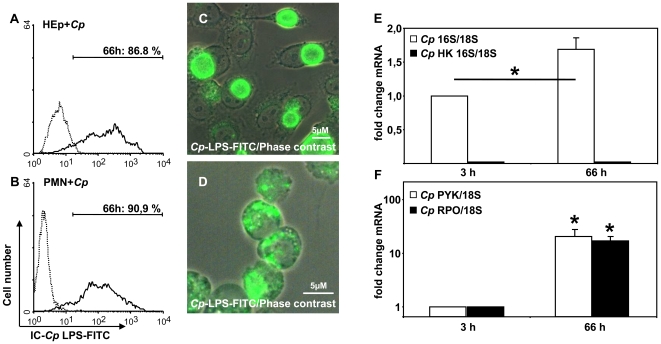
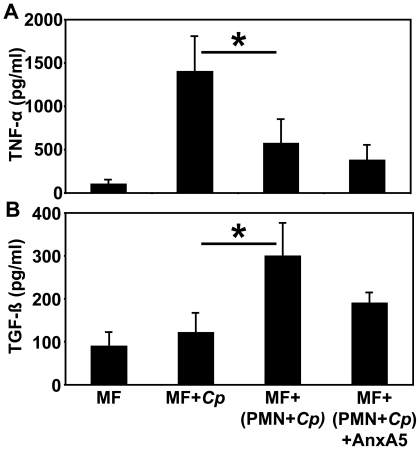
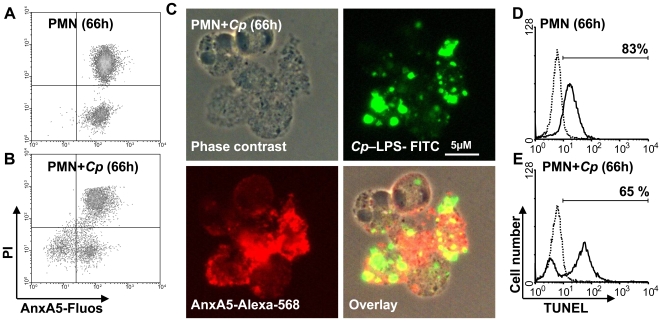
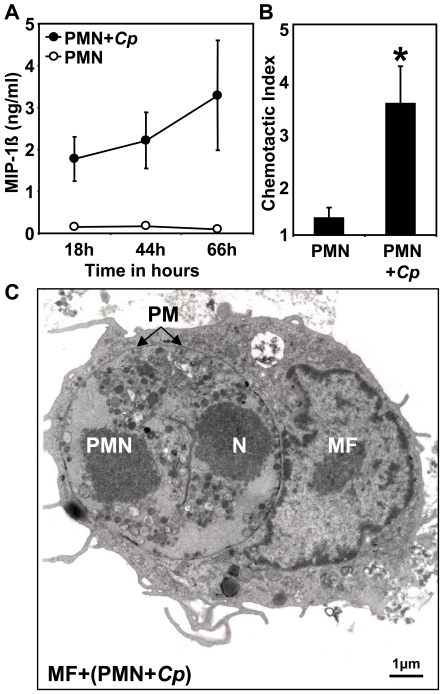
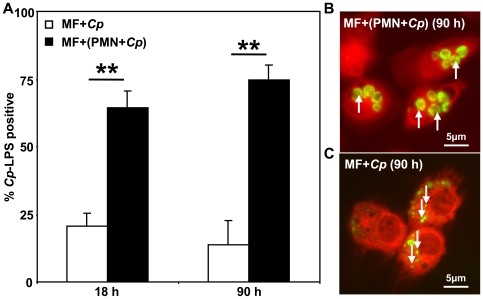
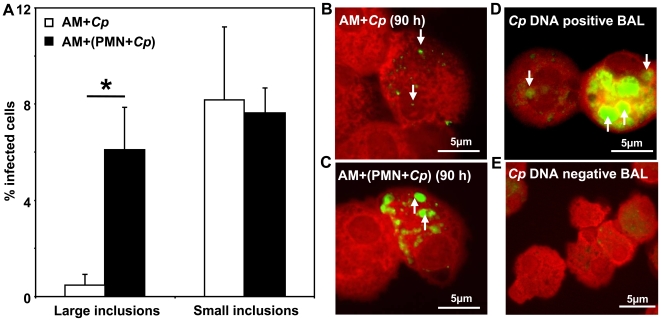
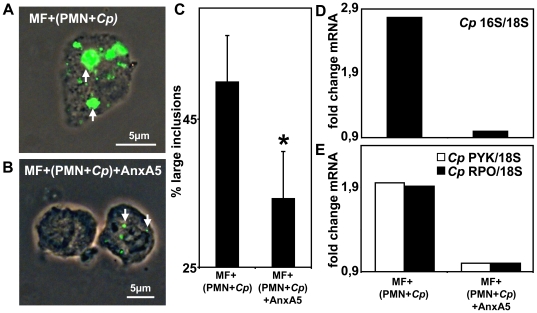
METHODOLOGY/PRINCIPAL FINDINGS: We could show that C. pneumoniae easily infect and hide inside neutrophil granulocytes until these cells become apoptotic and are subsequently taken up by macrophages. C. pneumoniae infection of macrophages via apoptotic PMN results in enhanced replicative activity of chlamydiae when compared to direct infection of macrophages, which results in persistence of the pathogen. Inhibition of the apoptotic recognition of C. pneumoniae infected PMN using PS- masking Annexin A5 significantly lowered the transmission of chlamydial infection to macrophages. Transfer of apoptotic C. pneumoniae infected PMN to macrophages resulted in an increased TGF-ss production, whereas direct infection of macrophages with chlamydiae was characterized by an enhanced TNF-alpha response.
CONCLUSIONS/SIGNIFICANCE: Taken together, our data suggest that C. pneumoniae uses neutrophil granulocytes to be silently taken up by long-lived macrophages, which allows for efficient propagation and immune protection within the human host.
细胞内病原体已形成复杂策略以在其偏好的宿主细胞中进行潜伏感染。肺炎衣原体是呼吸道急性感染(如肺炎)中的常见病原体,与成人和儿童的慢性肺部后遗症相关。在肺部,肺泡巨噬细胞和多形核中性粒细胞(PMN)是抵御细菌的第一道防线,也是衣原体偏好的宿主吞噬细胞。
方法/主要发现:我们能够证明,肺炎衣原体很容易感染并隐藏在中性粒细胞内,直到这些细胞发生凋亡,随后被巨噬细胞吞噬。与直接感染巨噬细胞相比,通过凋亡的PMN感染巨噬细胞会导致衣原体的复制活性增强,而直接感染巨噬细胞会导致病原体持续存在。使用PS-封闭膜联蛋白A5抑制对感染肺炎衣原体的PMN的凋亡识别,可显著降低衣原体感染向巨噬细胞的传播。将感染肺炎衣原体的凋亡PMN转移至巨噬细胞会导致TGF-β分泌增加,而直接用衣原体感染巨噬细胞的特征是TNF-α反应增强。
结论/意义:综上所述,我们的数据表明,肺炎衣原体利用中性粒细胞被长寿巨噬细胞默默吞噬,这使得其能在人类宿主内有效繁殖并获得免疫保护。