Department of Cell Biology, University of Texas Southwestern Medical Center, Dallas, Texas, United States of America.
PLoS One. 2009 Jun 24;4(6):e6017. doi: 10.1371/journal.pone.0006017.
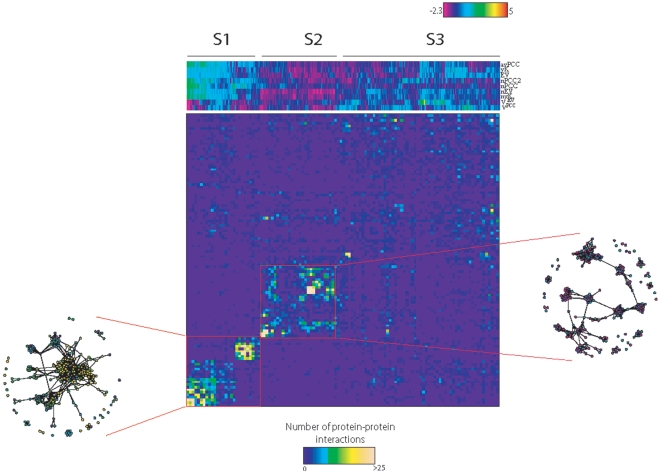
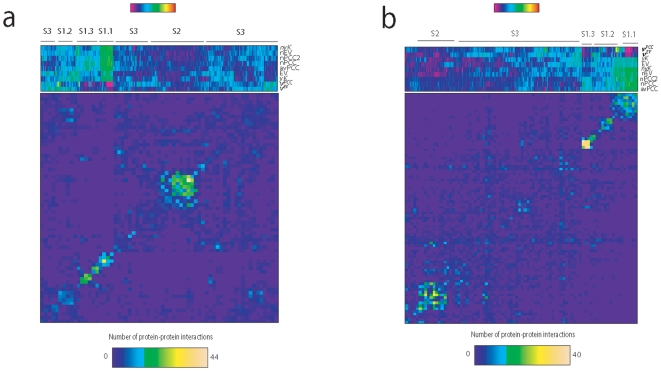
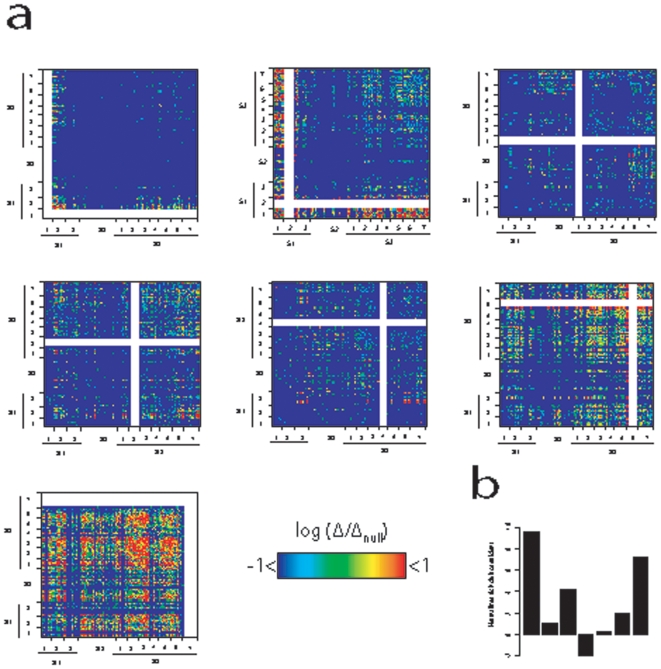
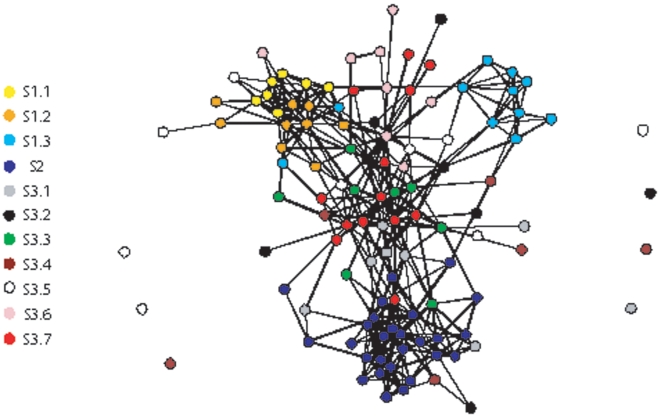
Revealing organizational principles of biological networks is an important goal of systems biology. In this study, we sought to analyze the dynamic organizational principles within the protein interaction network by studying the characteristics of individual neighborhoods of proteins within the network based on their gene expression as well as protein-protein interaction patterns. By clustering proteins into distinct groups based on their neighborhood gene expression characteristics, we identify several significant trends in the dynamic organization of the protein interaction network. We show that proteins with distinct neighborhood gene expression characteristics are positioned in specific localities in the protein interaction network thereby playing specific roles in the dynamic network connectivity. Remarkably, our analysis reveals a neighborhood characteristic that corresponds to the most centrally located group of proteins within the network. Further, we show that the connectivity pattern displayed by this group is consistent with the notion of "rich club connectivity" in complex networks. Importantly, our findings are largely reproducible in networks constructed using independent and different datasets.
揭示生物网络的组织原则是系统生物学的一个重要目标。在这项研究中,我们试图通过研究网络中蛋白质的基因表达以及蛋白质-蛋白质相互作用模式来分析蛋白质相互作用网络中个体蛋白质邻居的动态组织原则。通过根据其邻居基因表达特征将蛋白质聚类到不同的组中,我们确定了蛋白质相互作用网络动态组织中的几个重要趋势。我们表明,具有不同邻居基因表达特征的蛋白质在蛋白质相互作用网络中处于特定位置,从而在动态网络连接中发挥特定作用。值得注意的是,我们的分析揭示了与网络中位于中心位置的蛋白质组相对应的邻居特征。此外,我们表明,该组显示的连接模式与复杂网络中的“富连接连通性”概念一致。重要的是,我们的发现很大程度上可以在使用独立和不同数据集构建的网络中重现。