Fan Teresa W M, Lane Andrew N, Higashi Richard M, Farag Mohamed A, Gao Hong, Bousamra Michael, Miller Donald M
Department of Chemistry, University of Louisville, Louisville, Kentucky 40292, USA.
Mol Cancer. 2009 Jun 26;8:41. doi: 10.1186/1476-4598-8-41.
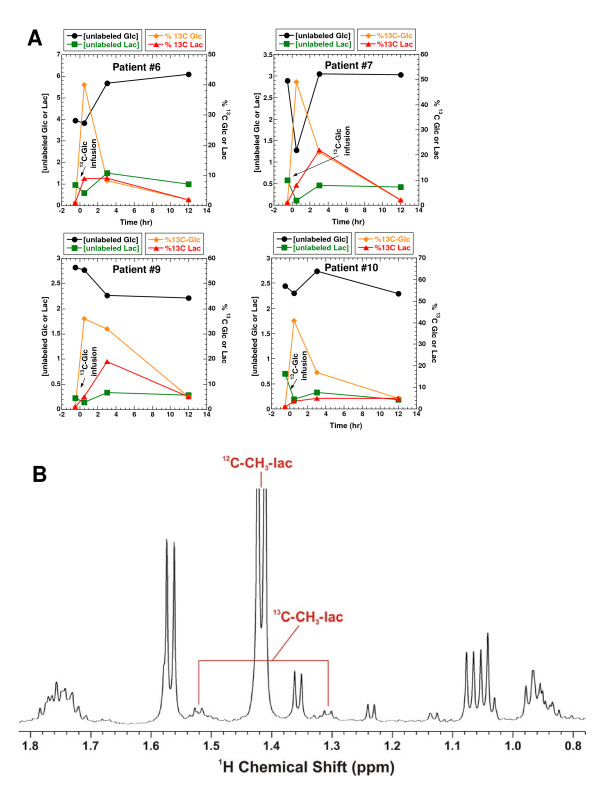
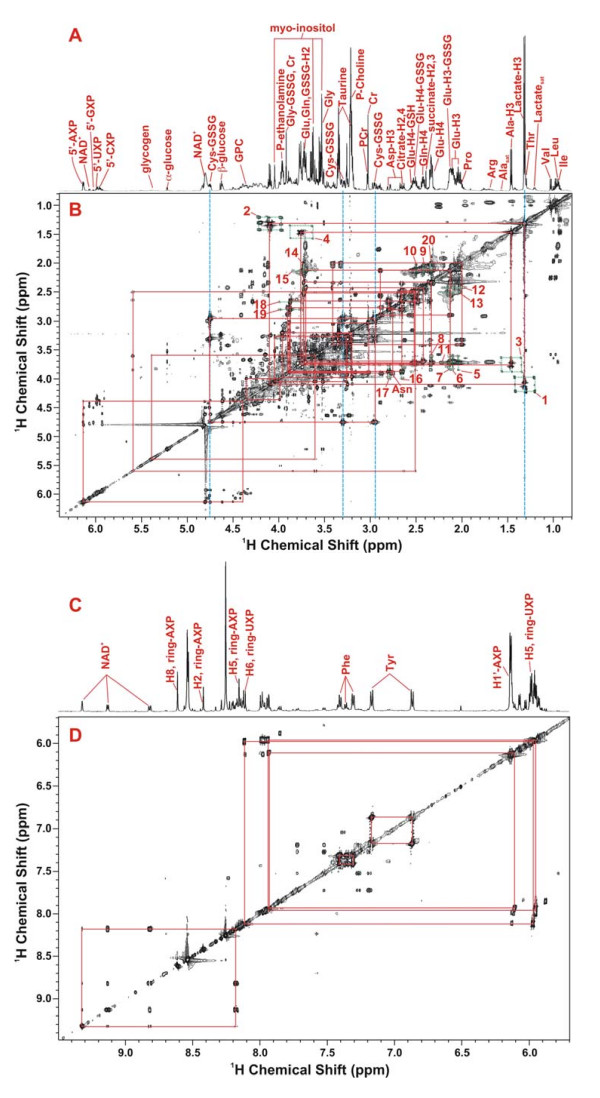
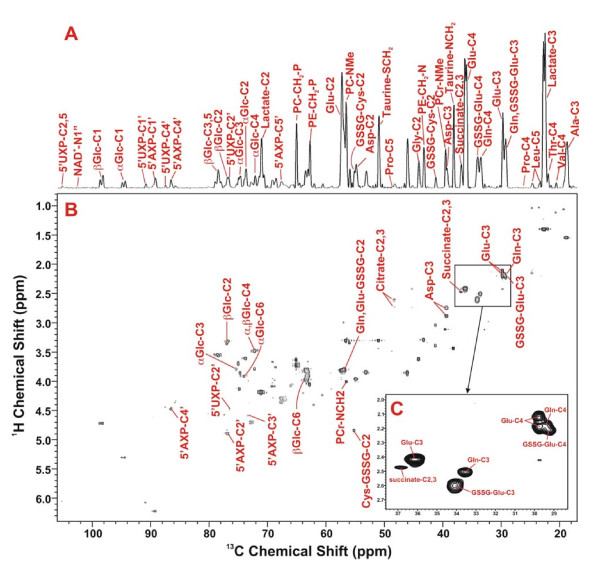
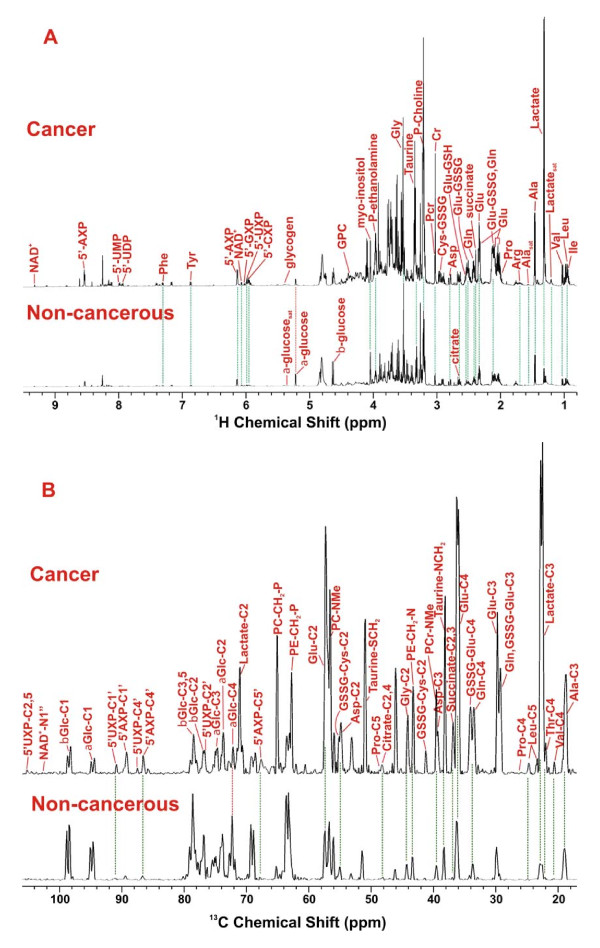
Metabolic perturbations arising from malignant transformation have not been systematically characterized in human lung cancers in situ. Stable isotope resolved metabolomic analysis (SIRM) enables functional analysis of gene dysregulations in lung cancer. To this purpose, metabolic changes were investigated by infusing uniformly labeled 13C-glucose into human lung cancer patients, followed by resection and processing of paired non-cancerous lung and non small cell carcinoma tissues. NMR and GC-MS were used for 13C-isotopomer-based metabolomic analysis of the extracts of tissues and blood plasma.
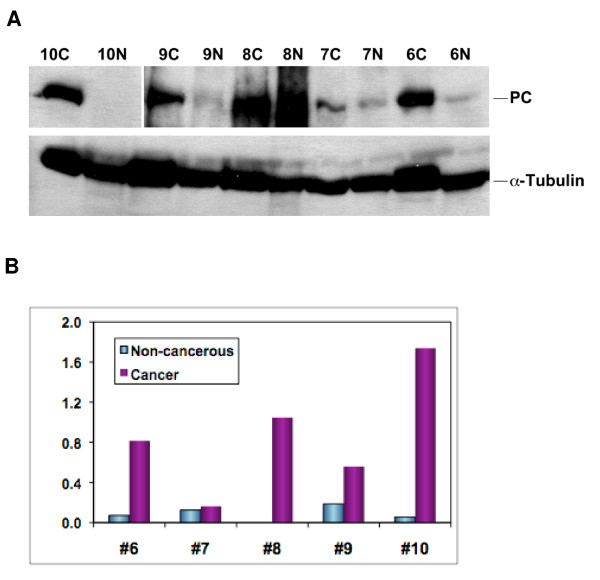
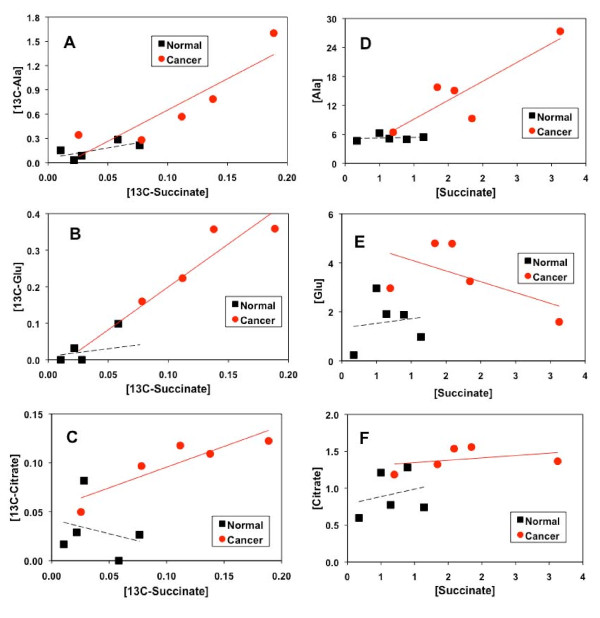
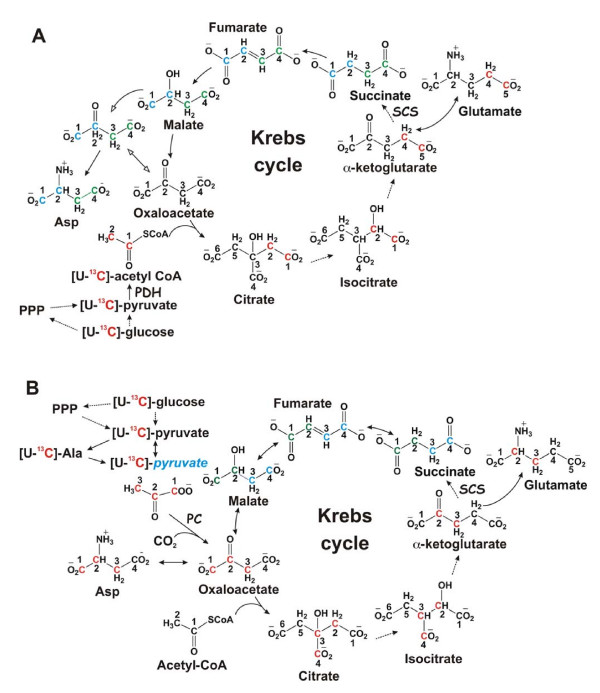
Many primary metabolites were consistently found at higher levels in lung cancer tissues than their surrounding non-cancerous tissues. 13C-enrichment in lactate, Ala, succinate, Glu, Asp, and citrate was also higher in the tumors, suggesting more active glycolysis and Krebs cycle in the tumor tissues. Particularly notable were the enhanced production of the Asp isotopomer with three 13C-labeled carbons and the buildup of 13C-2,3-Glu isotopomer in lung tumor tissues. This is consistent with the transformations of glucose into Asp or Glu via glycolysis, anaplerotic pyruvate carboxylation (PC), and the Krebs cycle. PC activation in tumor tissues was also shown by an increased level of pyruvate carboxylase mRNA and protein.
PC activation - revealed here for the first time in human subjects - may be important for replenishing the Krebs cycle intermediates which can be diverted to lipid, protein, and nucleic acid biosynthesis to fulfill the high anabolic demands for growth in lung tumor tissues. We hypothesize that this is an important event in non-small cell lung cancer and possibly in other tumor development.
恶性转化引起的代谢紊乱尚未在人肺癌原位中得到系统表征。稳定同位素分辨代谢组学分析(SIRM)能够对肺癌中的基因失调进行功能分析。为此,通过向人肺癌患者输注均匀标记的13C-葡萄糖,随后切除并处理配对的非癌性肺组织和非小细胞癌组织,研究代谢变化。使用NMR和GC-MS对组织和血浆提取物进行基于13C-同位素异构体的代谢组学分析。
许多初级代谢物在肺癌组织中的水平始终高于其周围的非癌性组织。肿瘤中乳酸、丙氨酸、琥珀酸、谷氨酸、天冬氨酸和柠檬酸的13C富集也更高,表明肿瘤组织中的糖酵解和三羧酸循环更活跃。特别值得注意的是,肺肿瘤组织中具有三个13C标记碳的天冬氨酸同位素异构体产量增加以及13C-2,3-谷氨酸同位素异构体的积累。这与葡萄糖通过糖酵解、回补性丙酮酸羧化(PC)和三羧酸循环转化为天冬氨酸或谷氨酸一致。肿瘤组织中PC的激活也通过丙酮酸羧化酶mRNA和蛋白质水平的增加得以显示。
PC激活——首次在人类受试者中揭示——可能对于补充三羧酸循环中间体很重要,这些中间体可被转移至脂质、蛋白质和核酸生物合成,以满足肺肿瘤组织生长对高合成代谢的需求。我们假设这是非小细胞肺癌以及可能在其他肿瘤发展中的一个重要事件。