Majhi Sullip K, Hattori Ricardo S, Yokota Masashi, Watanabe Seiichi, Strüssmann Carlos A
Department of Marine Bioscience, Tokyo University of Marine Science and Technology, Tokyo, Japan.
PLoS One. 2009 Jul 2;4(7):e6132. doi: 10.1371/journal.pone.0006132.
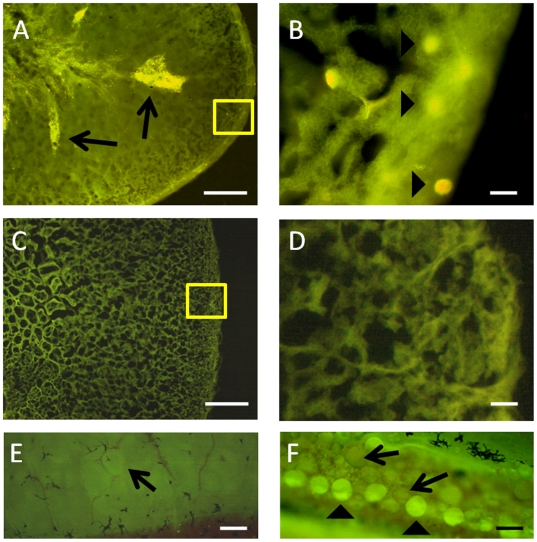
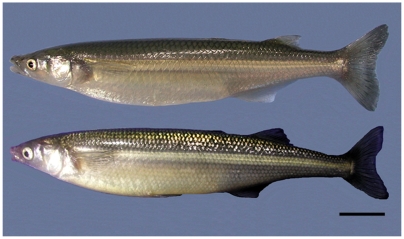
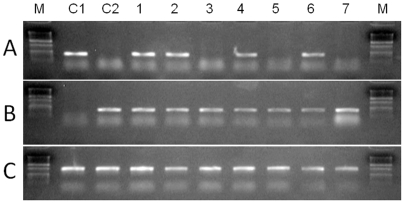
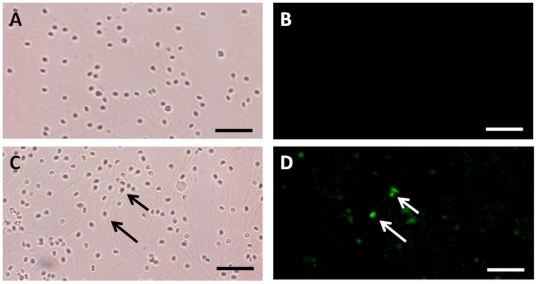
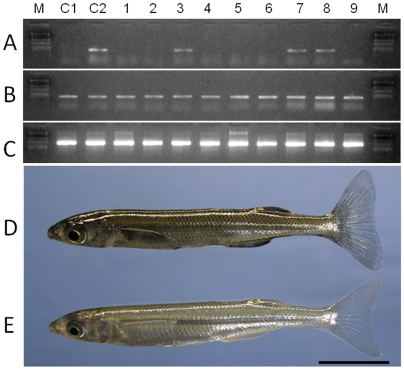
The transplantation of germ cells into adult recipient gonads is a tool with wide applications in animal breeding and conservation of valuable and/or endangered species; it also provides a means for basic studies involving germ cell (GC) proliferation and differentiation. Here we describe the establishment of a working model for xenogeneic germ cell transplantation (GCT) in sexually competent fish. Spermatogonial cells isolated from juveniles of one species, the pejerrey Odontesthes bonariensis (Atherinopsidae), were surgically transplanted into the gonads of sexually mature Patagonian pejerrey O. hatcheri, which have been partially depleted of endogenous GCs by a combination of Busulfan (40 mg/kg) and high water temperature (25 degrees C) treatments. The observation of the donor cells' behavior showed that transplanted spermatogonial cells were able to recolonize the recipients' gonads and resume spermatogenesis within 6 months from the GCT. The presence of donor-derived gametes was confirmed by PCR in 20% of the surrogate O. hatcheri fathers at 6 months and crosses with O. bonariensis mothers produced hybrids and pure O. bonariensis, with donor-derived germline transmission rates of 1.2-13.3%. These findings indicate that transplantation of spermatogonial cells into sexually competent fish can shorten considerably the production time of donor-derived gametes and offspring and could play a vital role in germline conservation and propagation of valued and/or endangered fish species.
将生殖细胞移植到成年受体性腺中,是一种在动物育种以及珍稀和/或濒危物种保护方面有着广泛应用的工具;它还为涉及生殖细胞(GC)增殖和分化的基础研究提供了一种手段。在此,我们描述了一种在具有性成熟能力的鱼类中进行异种生殖细胞移植(GCT)的工作模型。从一种鱼类——银汉鱼科的佩氏南美无须鳕幼鱼中分离出精原细胞,通过手术将其移植到性成熟的巴塔哥尼亚佩氏南美无须鳕的性腺中,这些受体鱼经过白消安(40毫克/千克)和高温(25摄氏度)联合处理后,其内源生殖细胞已部分耗尽。对供体细胞行为的观察表明,移植的精原细胞能够在受体性腺中重新定殖,并在生殖细胞移植后的6个月内恢复精子发生。6个月时,通过PCR在20%的代孕巴塔哥尼亚佩氏南美无须鳕父本中证实了供体来源配子的存在,与佩氏南美无须鳕母本杂交产生了杂种和纯种佩氏南美无须鳕,供体来源的种系传递率为1.2% - 13.3%。这些发现表明,将精原细胞移植到具有性成熟能力的鱼类中,可以显著缩短供体来源配子和后代的生产时间,并且在珍稀和/或濒危鱼类物种的种系保护和繁殖中可能发挥至关重要的作用。