Department of Orthopedic Surgery, Chonnam National University Medical School, Gwangju 501-190, Korea.
J Exp Clin Cancer Res. 2009 Jul 22;28(1):105. doi: 10.1186/1756-9966-28-105.
Osteosarcoma is a highly malignant bone tumor and is the most commonly encountered malignant bone tumor in children and adolescents. Furthermore, significant numbers of patients eventually develop pulmonary metastases and succumb to the disease even after conventional multi-agent chemotherapy and surgical excision. Several solid tumors display enhanced expression of matrix metalloproteinases (MMPs), and recently clinical trials have been initiated on MMP-inhibitors. On the other hand, bisphosphonates (BPs), which have a profound effect on bone resorption, are widely used to treat osteoclast-mediated bone diseases. BPs are also known to inhibit tumor growths and metastases in some tumors such as breast cancer, renal cell carcinoma, and prostate cancer.
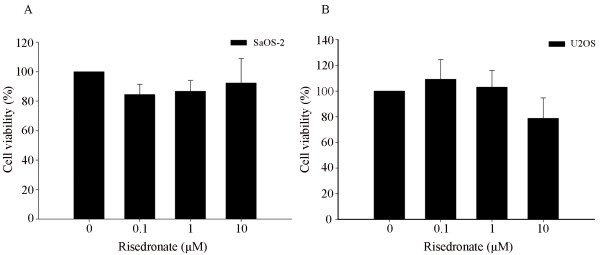
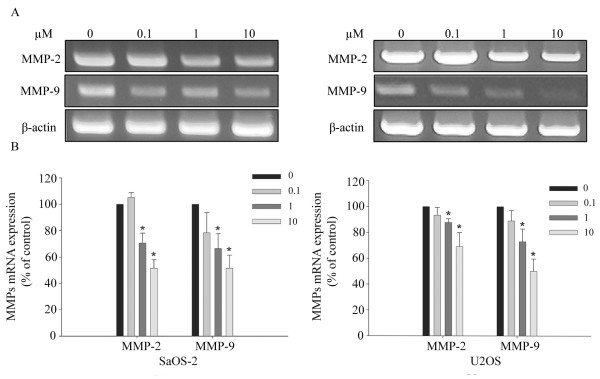
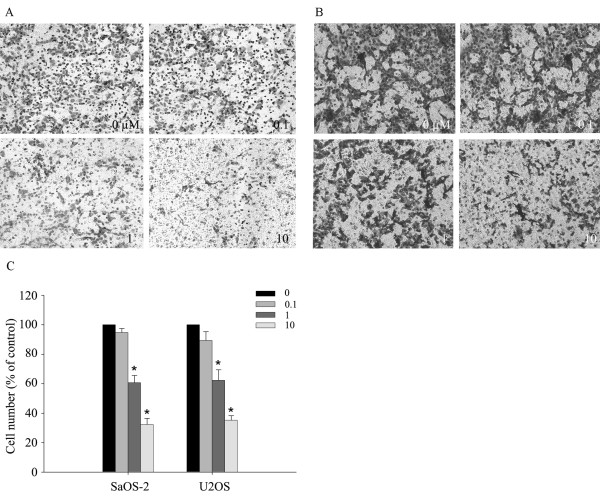
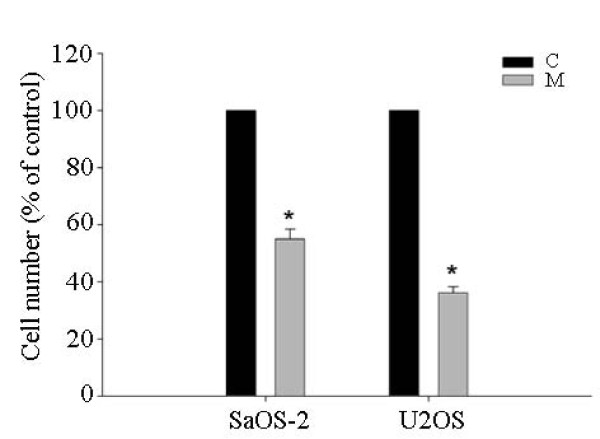
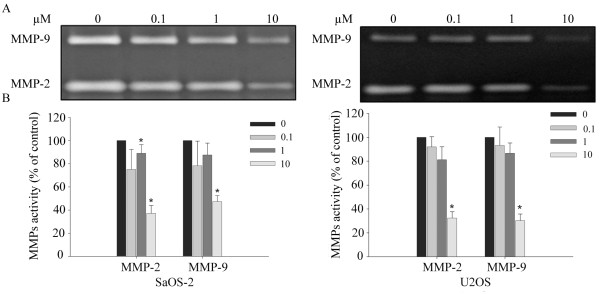
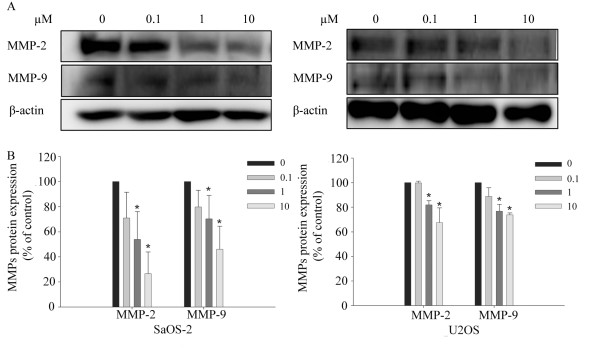
Two osteosarcoma cell lines (SaOS-2 and U2OS) were treated with risedronate (0, 0.1, 1, 10 microM) for 48 hours. Cell viabilities were determined using MTT assay, the mRNA levels of MMP-2 and MMP-9 were analyzed by reverse-transcription polymerase chain reaction, the amount of MMP-2 and MMP-9 protein were analyzed by Westernblot, the activities of MMP-2 and MMP-9 were observed by Gelatin zymography, and Matrigel invasion assays were used to investigate the invasive potential of osteosarcoma cell lines before and after risedronate treatment.
The invasiveness of osteosarcoma cell lines (SaOS-2, U2OS) were reduced in a dose dependent manner follow 48 hour treatment of up to 10 microM of the risedronate at which concentration no cytotoxicity occurred. Furthermore, the gelatinolytic activities and protein and mRNA levels of MMP-2 and MMP-9 were also suppressed by increasing risedronate concentrations.
Given that MMP-2 and MMP-9 are instrumental in tumor cell invasion, our results suggest the risedronate could reduce osteosarcoma cell invasion.
骨肉瘤是一种高度恶性的骨肿瘤,是儿童和青少年最常见的恶性骨肿瘤。此外,大量患者最终会发展为肺转移,并在接受常规多药化疗和手术切除后死于该疾病。一些实体瘤显示基质金属蛋白酶(MMPs)表达增强,最近已开始对 MMP 抑制剂进行临床试验。另一方面,双膦酸盐(BPs)对骨吸收有深远影响,广泛用于治疗破骨细胞介导的骨疾病。BPs 还已知可抑制某些肿瘤如乳腺癌、肾细胞癌和前列腺癌的肿瘤生长和转移。
用利塞膦酸钠(0、0.1、1、10μM)处理骨肉瘤细胞系(SaOS-2 和 U2OS)48 小时。用 MTT 法测定细胞活力,用逆转录聚合酶链反应分析 MMP-2 和 MMP-9 的 mRNA 水平,用 Westernblot 分析 MMP-2 和 MMP-9 蛋白的量,用明胶酶谱法观察 MMP-2 和 MMP-9 的活性,用 Matrigel 侵袭试验研究利塞膦酸钠处理前后骨肉瘤细胞系的侵袭潜能。
骨肉瘤细胞系(SaOS-2、U2OS)的侵袭性在 48 小时内呈剂量依赖性降低,达 10μM 利塞膦酸钠浓度时无细胞毒性。此外,随着利塞膦酸钠浓度的增加,MMP-2 和 MMP-9 的明胶酶活性以及蛋白和 mRNA 水平也受到抑制。
鉴于 MMP-2 和 MMP-9 在肿瘤细胞侵袭中起重要作用,我们的结果表明利塞膦酸钠可降低骨肉瘤细胞的侵袭性。