KEMRI Centre for Geographic Medicine Research - Coast, & Wellcome Trust Research Programme, P.O. Box 43640, Nairobi, Kenya.
Implement Sci. 2009 Jul 23;4:42. doi: 10.1186/1748-5908-4-42.
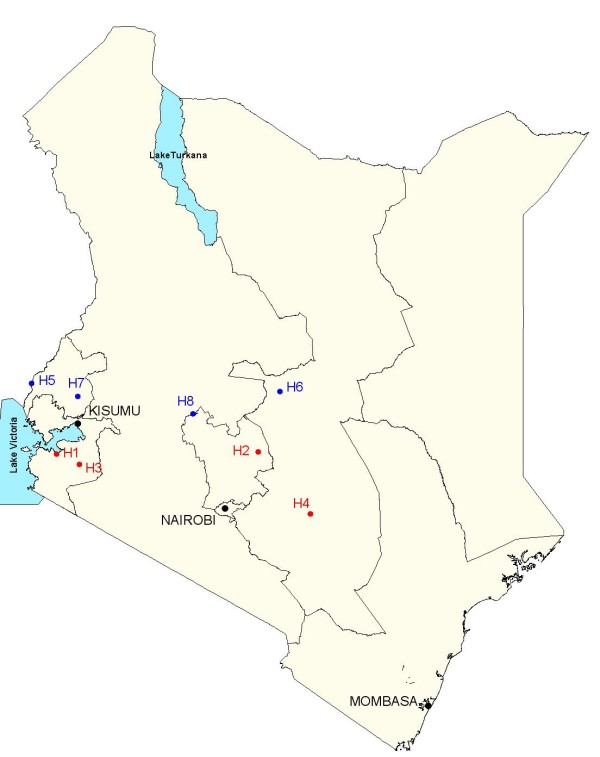
It is increasingly appreciated that the interpretation of health systems research studies is greatly facilitated by detailed descriptions of study context and the process of intervention. We have undertaken an 18-month hospital-based intervention study in Kenya aiming to improve care for admitted children and newborn infants. Here we describe the baseline characteristics of the eight hospitals as environments receiving the intervention, as well as the general and local health system context and its evolution over the 18 months.
Hospital characteristics were assessed using previously developed tools assessing the broad structure, process, and outcome of health service provision for children and newborns. Major health system or policy developments over the period of the intervention at a national level were documented prospectively by monitoring government policy announcements, the media, and through informal contacts with policy makers. At the hospital level, a structured, open questionnaire was used in face-to-face meetings with senior hospital staff every six months to identify major local developments that might influence implementation. These data provide an essential background for those seeking to understand the generalisability of reports describing the intervention's effects, and whether the intervention plausibly resulted in these effects.
Hospitals had only modest capacity, in terms of infrastructure, equipment, supplies, and human resources available to provide high-quality care at baseline. For example, hospitals were lacking between 30 to 56% of items considered necessary for the provision of care to the seriously ill child or newborn. An increase in spending on hospital renovations, attempts to introduce performance contracts for health workers, and post-election violence were recorded as examples of national level factors that might influence implementation success generally. Examples of factors that might influence success locally included frequent and sometimes numerous staff changes, movements of senior departmental or administrative staff, and the presence of local 'donor' partners with alternative priorities.
The effectiveness of interventions delivered at hospital level over periods realistically required to achieve change may be influenced by a wide variety of factors at national and local levels. We have demonstrated how dynamic such contexts are, and therefore the need to consider context when interpreting an intervention's effectiveness.
越来越多的人认识到,详细描述研究背景和干预过程极大地促进了对卫生系统研究的理解。我们在肯尼亚开展了一项为期 18 个月的基于医院的干预研究,旨在改善住院儿童和新生儿的护理。在这里,我们描述了作为干预对象的 8 家医院的基本情况,以及一般和当地卫生系统背景及其在 18 个月期间的演变。
使用先前开发的工具评估医院的特点,这些工具评估了儿童和新生儿卫生服务提供的广泛结构、过程和结果。在干预期间,通过监测政府政策公告、媒体以及与政策制定者的非正式接触,前瞻性地记录了国家一级主要卫生系统或政策的发展情况。在医院层面,每六个月与高级医院工作人员进行一次面对面会议,使用结构化的开放式问卷,以确定可能影响实施的当地主要发展情况。这些数据为那些试图理解描述干预效果的报告的普遍性以及干预是否可能导致这些效果的人提供了重要的背景信息。
医院在基础设施、设备、用品和人力资源方面的能力有限,无法在基线时提供高质量的护理。例如,医院缺乏提供重病儿童或新生儿护理所需的物品的 30%至 56%。医院装修支出增加、尝试为卫生工作者引入绩效合同以及选举后暴力事件被记录为可能影响总体实施成功的国家层面因素的例子。可能影响当地成功的因素包括频繁且有时大量的员工变动、部门或行政高级员工的调动,以及存在具有替代优先事项的当地“捐赠”合作伙伴。
在现实情况下,在医院层面实施干预以实现变革的有效性可能会受到国家和地方各级各种因素的影响。我们已经证明了这些背景是多么的动态,因此在解释干预效果时需要考虑背景。