Department of Psychology, University of Pennsylvania, Philadelphia, PA 19104, USA.
J Consult Clin Psychol. 2009 Aug;77(4):775-87. doi: 10.1037/a0015401.
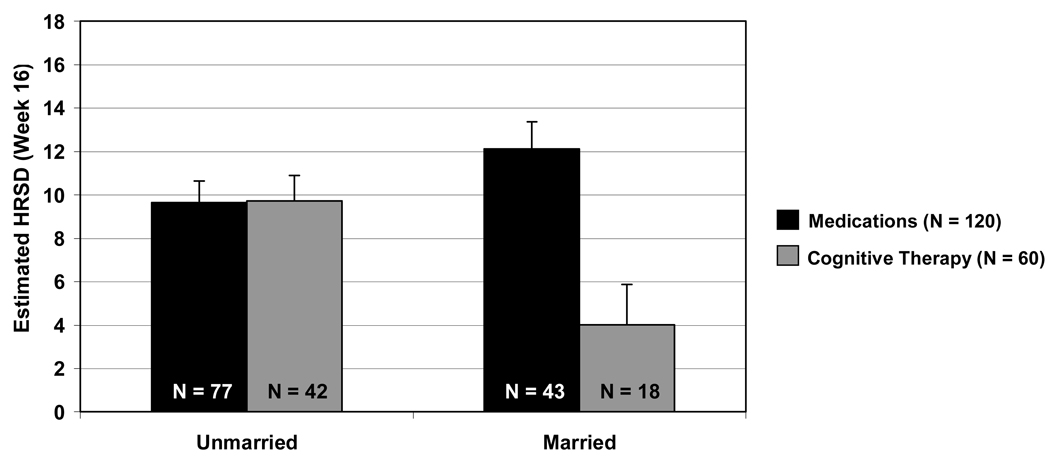
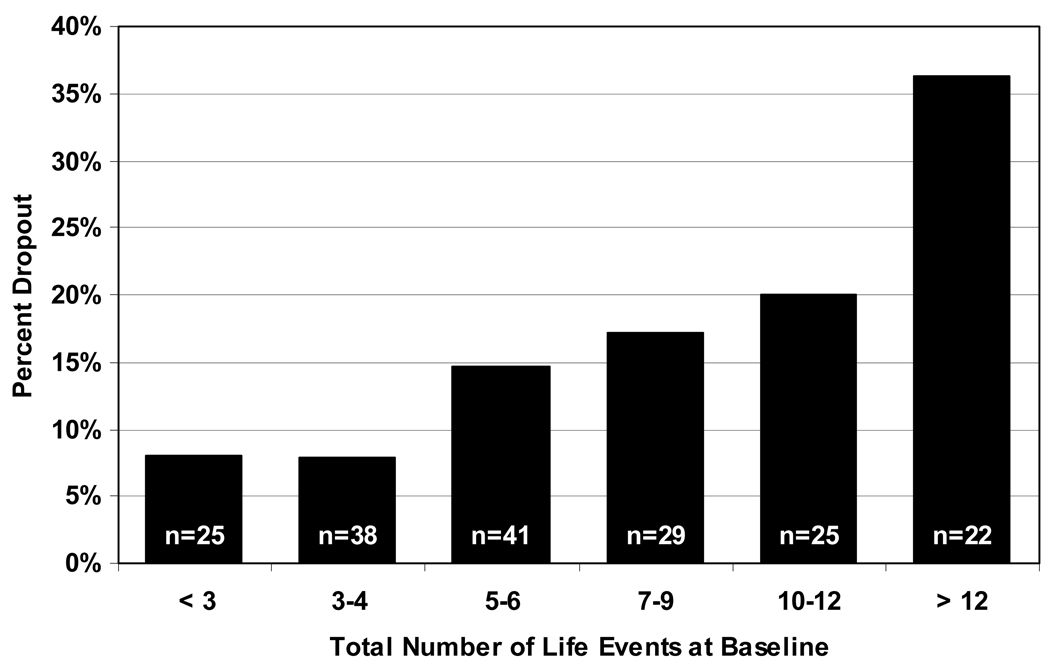
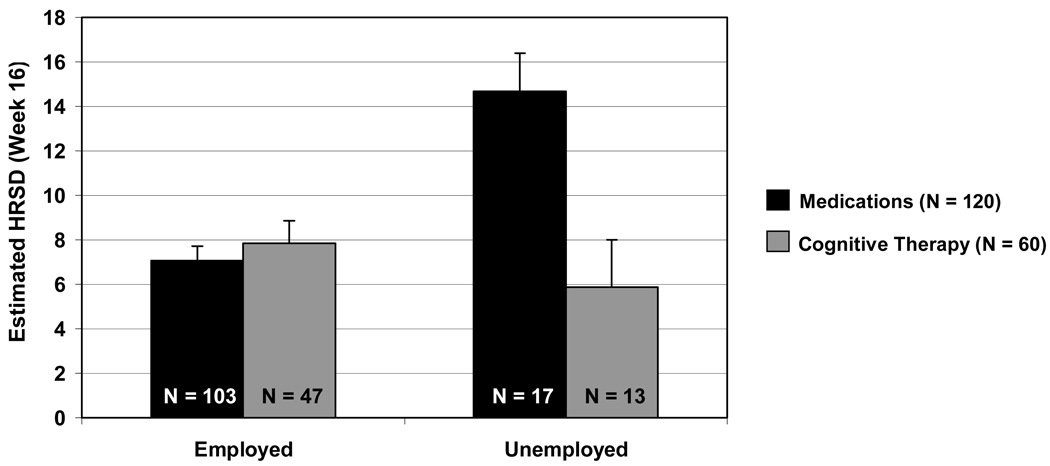
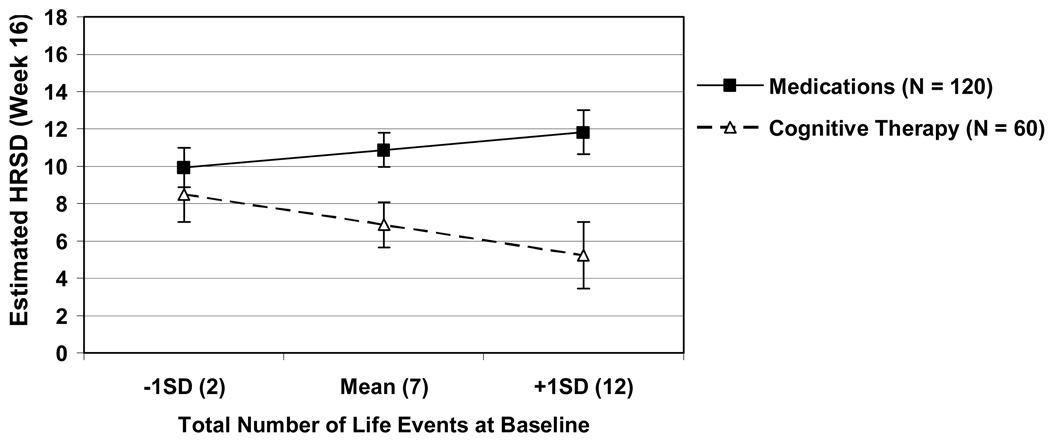
A recent randomized controlled trial found nearly equivalent response rates for antidepressant medications and cognitive therapy in a sample of moderate to severely depressed outpatients. In this article, the authors seek to identify the variables that were associated with response across both treatments as well as variables that predicted superior response in one treatment over the other. The sample consisted of 180 depressed outpatients: 60 of whom were randomly assigned to cognitive therapy; 120 were assigned to antidepressant medications. Treatment was provided for 16 weeks. Chronic depression, older age, and lower intelligence each predicted relatively poor response across both treatments. Three prescriptive variables-marriage, unemployment, and having experienced a greater number of recent life events-were identified, and each predicted superior response to cognitive therapy relative to antidepressant medications. Thus, 6 markers of treatment outcome were identified, each of which might be expected to carry considerable clinical utility. The 3 prognostic variables identify subgroups that might benefit from alternative treatment strategies; the 3 prescriptive variables identify groups who appear to respond particularly well to cognitive therapy.
最近一项随机对照试验发现,在中度至重度抑郁门诊患者样本中,抗抑郁药物和认知疗法的反应率几乎相当。在本文中,作者试图确定与两种治疗方法均相关的反应变量,以及预测一种治疗方法优于另一种治疗方法的反应的变量。该样本包括 180 名抑郁门诊患者:其中 60 名被随机分配到认知疗法组;120 名被分配到抗抑郁药物组。治疗持续 16 周。慢性抑郁、年龄较大和智力较低都预示着两种治疗方法的反应都相对较差。确定了三个规定性变量——婚姻、失业和经历了更多近期生活事件——每个变量都预示着认知疗法相对于抗抑郁药物的反应更好。因此,确定了 6 个治疗结果的标志物,每个标志物都可能具有相当大的临床应用价值。这 3 个预后变量确定了可能受益于替代治疗策略的亚组;这 3 个规定性变量确定了对认知疗法反应特别好的群体。