Haydom Lutheran Hospital, Mbulu District, Manyara Region, Tanzania.
Int J Equity Health. 2009 Jul 30;8:27. doi: 10.1186/1475-9276-8-27.
An integrated and comprehensive hospital/community based health programme is presented, aimed at reducing maternal and child mortality and morbidity. It is run as part of a general programme of health care at a rural hospital situated in northern Tanzania. The purpose was through using research and statistics from the programme area, to illustrate how a hospital-based programme with a vision of integrated healthcare may have contributed to the lower figures on mortality found in the area. Such an approach may be of interest to policy makers, in relation to the global strategy that is now developed in order to meet the MDGs 4 and 5.
The hospital provides reproductive and child health services, PMTCT-plus, comprehensive emergency obstetric care, ambulance, radio and transport services, paediatric care, an HIV/AIDS programme, and a generalised healthcare service to a population of approximately 500 000.
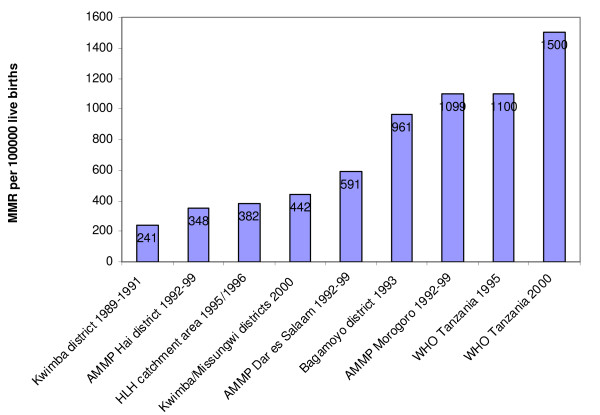
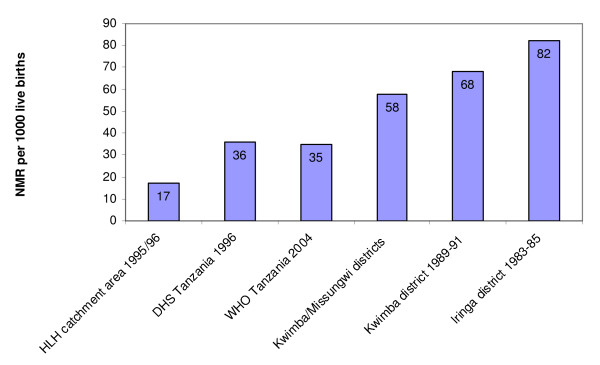
We describe these services and their potential contribution to the reduction of the maternal and neonatal mortality ratios in the study area. Several studies from this area have showed a lower maternal mortality and neonatal mortality ratio compared to other studies from Tanzania and the national estimates. Many donor-funded programmes focusing on maternal and child health are vertical in their framework. However, the hospital, being the dominant supplier of health services in its catchment area, has maintained a horizontal approach through a comprehensive care programme. The total cost of the comprehensive hospital programme described is 3.2 million USD per year, corresponding to 6.4 USD per capita.
Considering the relatively low cost of a comprehensive hospital programme including outreach services and the lower mortality ratios found in the catchment area of the hospital, we argue that donor funds should be used for supporting horizontal programmes aimed at comprehensive healthcare services. Through a strengthening of the collaboration between government and voluntary agency facilities, with clinical, preventive and managerial capabilities of the health facilities, the programmes will have a more sustainable impact and will achieve greater progress in the reduction of maternal and neonatal mortality, as opposed to vertical and segregated programmes that currently are commonly adopted for averting maternal and child deaths. Thus, we conclude that horizontal and comprehensive services of the type described in this article should be considered as a prerequisite for sustainable health care delivery at all policy and decision-making levels of the local, national and international health care delivery pyramid.
本文介绍了一个综合性的医院/社区健康项目,旨在降低母婴死亡率和发病率。该项目是在坦桑尼亚北部的一家农村医院的常规医疗保健项目下开展的。本文旨在通过利用项目区域的研究和统计数据,说明以综合医疗保健为愿景的医院为基础的方案如何为该区域较低的死亡率做出贡献。这种方法可能会引起决策者的兴趣,因为目前正在制定全球战略,以实现千年发展目标 4 和 5。
该医院提供生殖和儿童健康服务、PMTCT-Plus、全面的产科急诊护理、救护车、无线电和交通服务、儿科护理、艾滋病毒/艾滋病方案以及向大约 500000 人口提供的一般医疗服务。
我们描述了这些服务及其对研究区域内降低母婴死亡率和新生儿死亡率的潜在贡献。该地区的几项研究表明,与坦桑尼亚其他研究和国家估计相比,该地区的孕产妇死亡率和新生儿死亡率较低。许多以母婴健康为重点的捐助者资助方案在框架上是垂直的。然而,由于医院是其服务范围内的主要医疗服务供应商,因此通过综合保健方案保持了横向方法。所描述的综合医院方案的总成本为每年 320 万美元,相当于每人 6.4 美元。
考虑到包括外展服务在内的综合性医院方案的相对低成本以及医院服务范围内发现的较低死亡率,我们认为,捐助资金应用于支持旨在提供全面医疗保健服务的横向方案。通过加强政府与志愿机构设施之间的合作,利用卫生设施的临床、预防和管理能力,这些方案将产生更可持续的影响,并在降低母婴死亡率方面取得更大进展,而不是目前普遍采用的垂直和隔离方案来避免母婴死亡。因此,我们的结论是,应将本文所述类型的横向和综合服务视为在地方、国家和国际医疗保健提供金字塔的所有政策和决策制定层面实现可持续医疗保健提供的先决条件。