Unit for Public Health Nutrition, Department of Biosciences and Nutrition, Karolinska Institute, Stockholm, Sweden.
Int Breastfeed J. 2009 Aug 5;4:8. doi: 10.1186/1746-4358-4-8.
The need to promote breastfeeding is unquestionable for the health and development of infants. The aim of this study was to investigate prevalence, duration and promotion of breastfeeding status in Iran with respect to the Baby Friendly Hospital, government actions and activities by the Breastfeeding Promotion Society including comparison with European countries.
This retrospective study is based on data from 63,071 infants less than 24 months of age in all the 30 urban and rural provinces of Iran. The data of breastfeeding rates were collected in 20052006 by trained health workers in the Integrated Monitoring Evaluation System in the Family Health Office of the Ministry of Health to evaluate its subordinate offices. A translated version of a questionnaire, used to assess the current breastfeeding situation in Europe, was used.
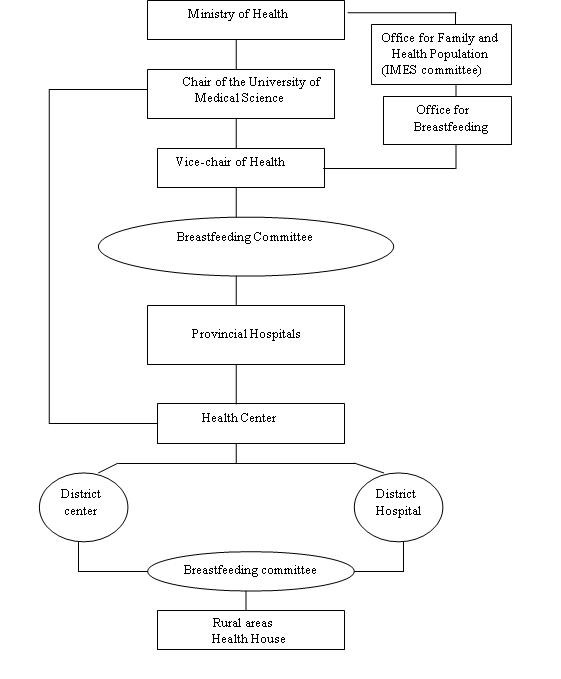
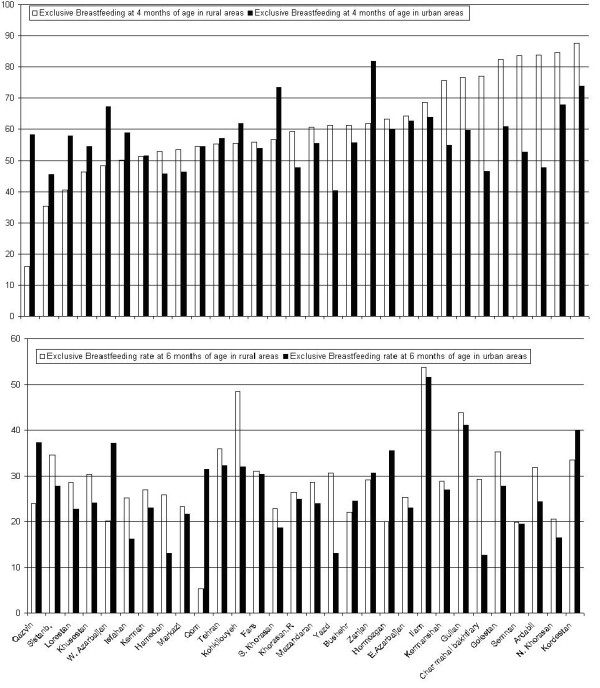
At a national level, 90% and 57% of infants were breastfed at one and two-years of age, respectively. Exclusive breastfeeding rates at 4 and 6 months of age at national level averaged 56.8% and 27.7%. Exclusive breastfeeding rates at 4 and 6 months of age in rural areas were 58% and 29%, and in urban areas 56% and 27%, respectively. The policy questionnaire showed that out of the 566 hospitals across the country 466 hospitals were accredited as Baby Friendly Hospitals, covering more than 80% of the births in 2006. A national board set standards and certified pre-service education at the Ministry of Health. Iran officially adopted the WHO International Code of Marketing of Breast Milk Substitutes in 1991. The legislation for working mothers met the International Labour Organization standards that cover women with formal employment. The Ministry of Health and Breastfeeding Promotion Society were responsible for producing booklets, pamphlets, breastfeeding journal, CD, workshops and websites. Monitoring of breastfeeding rates was performed every four years and funded by the Ministry of Health within the budgets assigned to the health care system.
In comparison to many European Union countries, Iran showed a favorable situation in terms of breastfeeding rates and promotion of breastfeeding. Iran still needs to increase the rate of exclusive breastfeeding during the first six months.
促进母乳喂养对婴儿的健康和发育是毋庸置疑的。本研究旨在调查伊朗的母乳喂养现状、持续时间和促进情况,包括与欧洲国家的比较,以了解婴儿友好医院、政府行动和母乳喂养促进协会的活动。
本回顾性研究基于伊朗所有 30 个城乡省份 63071 名小于 24 个月龄婴儿的数据。2005 年至 2006 年,通过卫生部家庭卫生办公室综合监测评估系统培训的卫生工作者收集母乳喂养率数据,以评估其下属办事处。使用了一份评估欧洲当前母乳喂养情况的问卷的翻译版本。
在国家层面,90%和 57%的婴儿分别在一岁和两岁时母乳喂养。全国 4 个月和 6 个月时的纯母乳喂养率平均为 56.8%和 27.7%。农村地区的 4 个月和 6 个月纯母乳喂养率分别为 58%和 29%,城市地区分别为 56%和 27%。政策问卷显示,全国 566 家医院中有 466 家被认定为婴儿友好医院,2006 年覆盖了超过 80%的分娩。国家委员会在卫生部制定了标准并认证了职前教育。伊朗于 1991 年正式通过了世界卫生组织《国际母乳代用品销售守则》。为有正式就业的妇女制定的工作母亲立法符合国际劳工组织的标准。卫生部和母乳喂养促进协会负责制作小册子、宣传册、母乳喂养杂志、CD、研讨会和网站。母乳喂养率的监测每四年进行一次,由卫生部在分配给医疗保健系统的预算内提供资金。
与许多欧盟国家相比,伊朗在母乳喂养率和促进母乳喂养方面表现出有利的情况。伊朗仍需要提高前六个月的纯母乳喂养率。