Meyer Gabriele, Steckelberg Anke, Mühlhauser Ingrid
University of Hamburg, Unit of Health Sciences and Education, Hamburg, Germany.
Ger Med Sci. 2007 Jan 11;5:Doc01.
Evidence-based consumer information is a prerequisite for informed decision making. So far, there are no reports on the quality of consumer information brochures on osteoporosis. In the present study we analysed brochures on osteoporosis available in Germany.
All printed brochures from patient and consumer advocacy groups, physician and governmental organisations, health insurances, and pharmaceutical companies were initially collected in 2001, and updated in December 2004. Brochures were analysed by two independent researchers using 37 internationally proposed criteria addressing evidence-based content, risk communication, transparency of the development process, and layout and design.
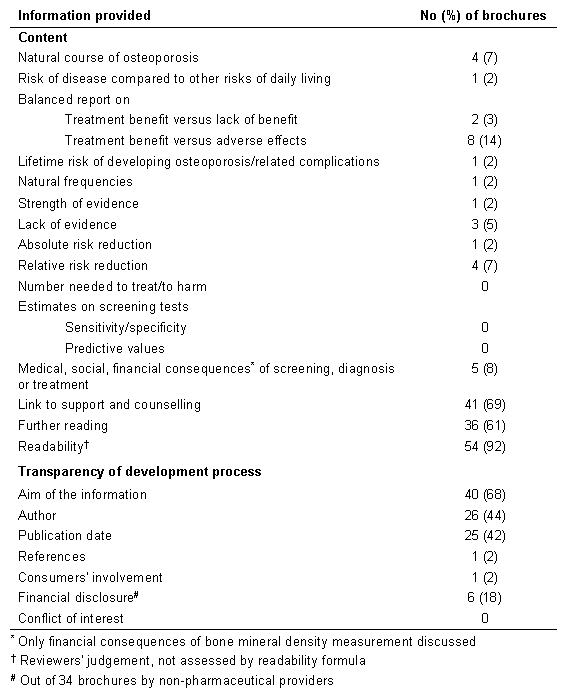
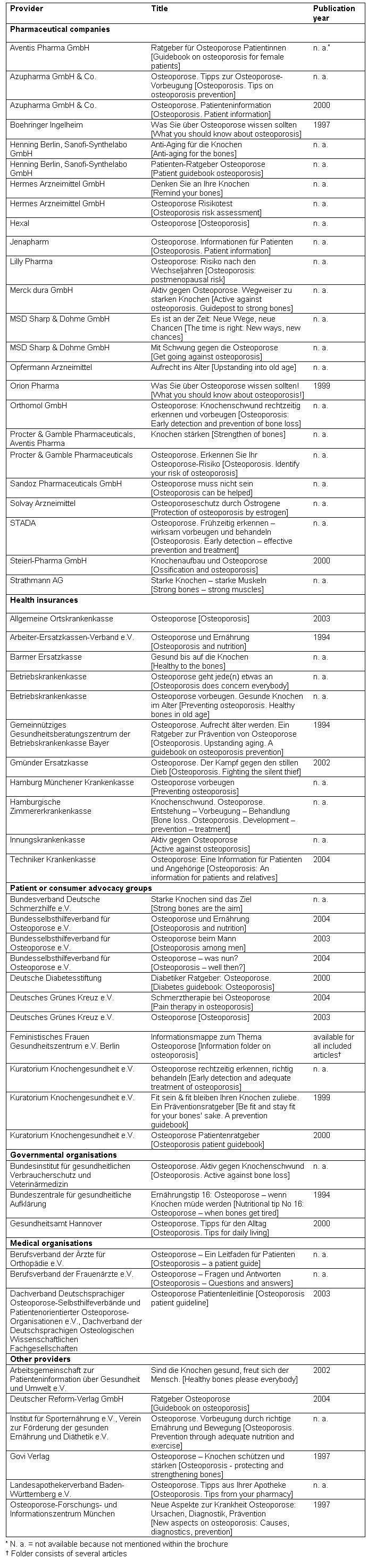
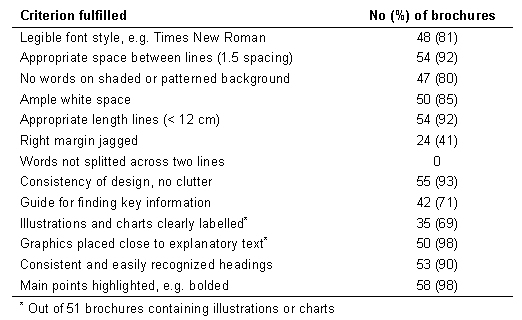
A total of 165 brochures were identified; 59 were included as they specifically targeted osteoporosis prevention and treatment. Most brochures were provided by pharmaceutical companies (n=25), followed by health insurances (n=11) and patient and consumer advocacy groups (n=11). Quality of brochures did not differ between providers. Only 1 brochure presented lifetime risk estimate; 4 mentioned natural course of osteoporosis. A balanced report on benefit versus lack of benefit was presented in 2 brochures and on benefit versus adverse effects in 8 brochures. Four brochures mentioned relative risk reduction, 1 reported absolute risk reduction through hormone replacement therapy (HRT). Out of 28 brochures accessed in 2004 10 still recommended HRT without discussing adverse effects. Transparency of the development process was limited: 25 brochures reported publication date, 26 cited author and only 1 references. In contrast, readability and design was generally good.
The quality of consumer brochures on osteoporosis in Germany is utterly inadequate. They fail to give evidence-based data on diagnosis and treatment options. Therefore, the material is not useful to enhance informed consumer choice.
基于证据的消费者信息是做出明智决策的前提。到目前为止,尚无关于骨质疏松症消费者信息手册质量的报告。在本研究中,我们分析了德国现有的骨质疏松症手册。
2001年最初收集了患者和消费者倡导团体、医生和政府组织、健康保险机构以及制药公司的所有印刷手册,并于2004年12月进行了更新。由两名独立研究人员使用37项国际提出的标准对手册进行分析,这些标准涉及基于证据的内容、风险沟通、开发过程的透明度以及布局和设计。
共识别出165份手册;其中59份因其专门针对骨质疏松症的预防和治疗而被纳入。大多数手册由制药公司提供(n = 25),其次是健康保险机构(n = 11)以及患者和消费者倡导团体(n = 11)。不同提供者提供的手册质量没有差异。只有1份手册给出了终生风险估计;4份提到了骨质疏松症的自然病程。2份手册对益处与无益处进行了平衡报道,8份手册对益处与不良反应进行了平衡报道。4份手册提到了相对风险降低,1份报告了通过激素替代疗法(HRT)的绝对风险降低。在2004年获取的28份手册中,有10份仍在推荐HRT但未讨论不良反应。开发过程的透明度有限:25份手册报告了出版日期,26份引用了作者,只有1份列出了参考文献。相比之下,可读性和设计总体良好。
德国关于骨质疏松症的消费者手册质量完全不足。它们未能提供关于诊断和治疗选择的基于证据的数据。因此,这些材料无助于增强消费者的明智选择。