Tull Samantha P, Yates Clara M, Maskrey Benjamin H, O'Donnell Valerie B, Madden Jackie, Grimble Robert F, Calder Philip C, Nash Gerard B, Rainger G Ed
Centre for Cardiovascular Sciences, School of Clinical and Experimental Medicine, The Medical School, The University of Birmingham, Birmingham, United Kingdom.
PLoS Biol. 2009 Aug;7(8):e1000177. doi: 10.1371/journal.pbio.1000177. Epub 2009 Aug 25.
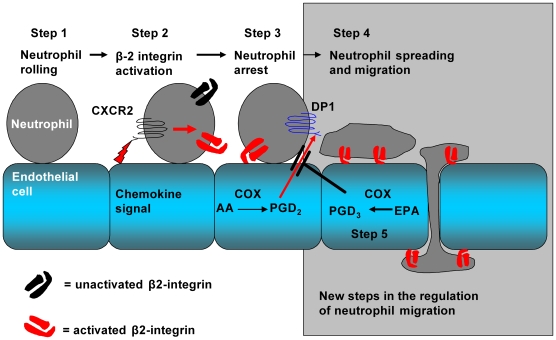
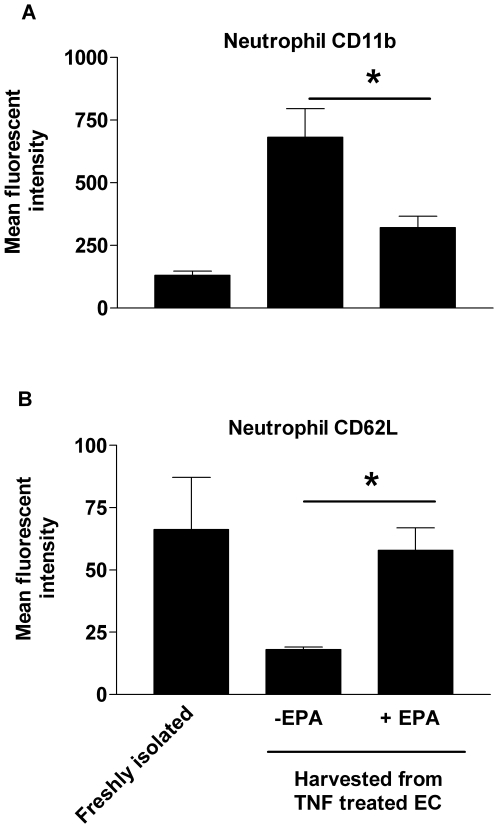
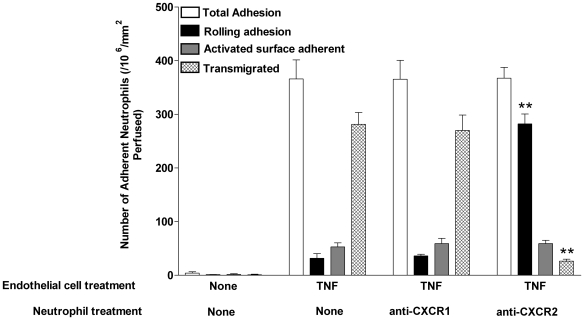
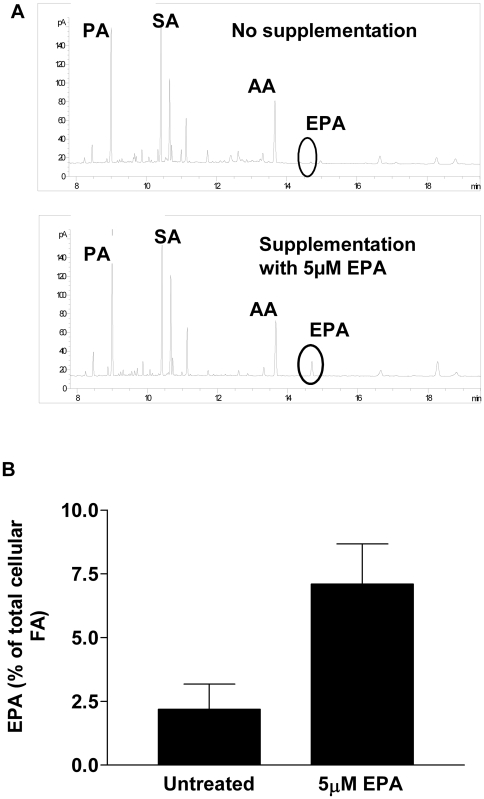
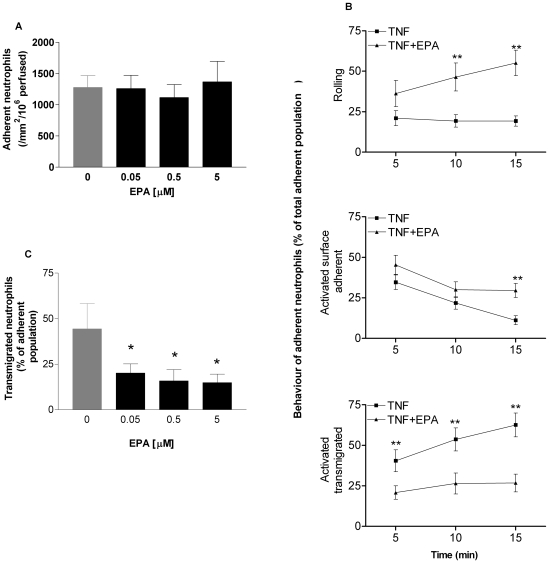
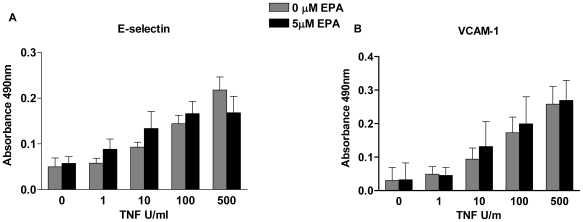
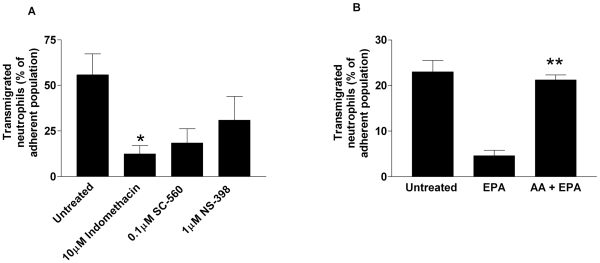
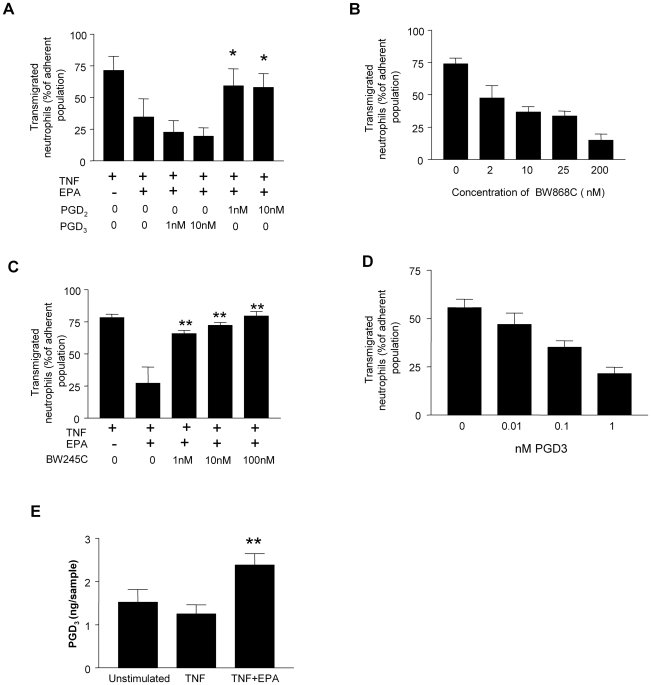
Inflammation is a physiological response to tissue trauma or infection, but leukocytes, which are the effector cells of the inflammatory process, have powerful tissue remodelling capabilities. Thus, to ensure their precise localisation, passage of leukocytes from the blood into inflamed tissue is tightly regulated. Recruitment of blood borne neutrophils to the tissue stroma occurs during early inflammation. In this process, peptide agonists of the chemokine family are assumed to provide a chemotactic stimulus capable of supporting the migration of neutrophils across vascular endothelial cells, through the basement membrane of the vessel wall, and out into the tissue stroma. Here, we show that, although an initial chemokine stimulus is essential for the recruitment of flowing neutrophils by endothelial cells stimulated with the inflammatory cytokine tumour necrosis factor-alpha, transit of the endothelial monolayer is regulated by an additional and downstream stimulus. This signal is supplied by the metabolism of the omega-6-polyunsaturated fatty acid (n-6-PUFA), arachidonic acid, into the eicosanoid prostaglandin-D(2) (PGD(2)) by cyclooxygenase (COX) enzymes. This new step in the neutrophil recruitment process was revealed when the dietary n-3-PUFA, eicosapentaenoic acid (EPA), was utilised as an alternative substrate for COX enzymes, leading to the generation of PGD(3). This alternative series eicosanoid inhibited the migration of neutrophils across endothelial cells by antagonising the PGD(2) receptor. Here, we describe a new step in the neutrophil recruitment process that relies upon a lipid-mediated signal to regulate the migration of neutrophils across endothelial cells. PGD(2) signalling is subordinate to the chemokine-mediated activation of neutrophils, but without the sequential delivery of this signal, neutrophils fail to penetrate the endothelial cell monolayer. Importantly, the ability of the dietary n-3-PUFA, EPA, to inhibit this process not only revealed an unsuspected level of regulation in the migration of inflammatory leukocytes, it also contributes to our understanding of the interactions of this bioactive lipid with the inflammatory system. Moreover, it indicates the potential for novel therapeutics that target the inflammatory system with greater affinity and/or specificity than supplementing the diet with n-3-PUFAs.
炎症是机体对组织损伤或感染的一种生理反应,但作为炎症过程效应细胞的白细胞具有强大的组织重塑能力。因此,为确保其精确定位,白细胞从血液进入炎症组织的过程受到严格调控。在早期炎症期间,血源性中性粒细胞会被招募至组织基质。在此过程中,趋化因子家族的肽类激动剂被认为能提供一种趋化刺激,支持中性粒细胞穿过血管内皮细胞、通过血管壁基底膜并进入组织基质。在此,我们表明,虽然初始趋化因子刺激对于炎症细胞因子肿瘤坏死因子-α刺激的内皮细胞招募流动的中性粒细胞至关重要,但内皮单层的转运受另一种下游刺激调控。该信号由ω-6-多不饱和脂肪酸(n-6-PUFA)花生四烯酸通过环氧化酶(COX)代谢为类花生酸前列腺素-D2(PGD2)提供。当膳食中的n-3-PUFA二十碳五烯酸(EPA)作为COX酶的替代底物时,揭示了中性粒细胞招募过程中的这一新步骤,从而导致PGD3的生成。这种替代系列类花生酸通过拮抗PGD2受体抑制中性粒细胞穿过内皮细胞的迁移。在此,我们描述了中性粒细胞招募过程中的一个新步骤,该步骤依赖脂质介导的信号来调节中性粒细胞穿过内皮细胞的迁移。PGD2信号传导从属于趋化因子介导的中性粒细胞激活,但如果没有该信号的顺序传递,中性粒细胞就无法穿透内皮细胞单层。重要的是,膳食n-3-PUFA EPA抑制这一过程的能力不仅揭示了炎症白细胞迁移中未被怀疑的调控水平,还有助于我们理解这种生物活性脂质与炎症系统的相互作用。此外,这表明了新型疗法的潜力,这些疗法比用n-3-PUFAs补充饮食具有更高的亲和力和/或特异性来靶向炎症系统。