Kavishe Reginald A, van den Heuvel Jeroen M W, van de Vegte-Bolmer Marga, Luty Adrian J F, Russel Frans G M, Koenderink Jan B
Department of Pharmacology and Toxicology 149, Radboud University Nijmegen Medical Centre, P,O, Box 9101, 6500 HB Nijmegen, the Netherlands.
Malar J. 2009 Aug 28;8:205. doi: 10.1186/1475-2875-8-205.
The spread of drug resistance has been a major obstacle to the control of malaria. The mechanisms underlying drug resistance in malaria seem to be complex and multigenic. The current literature on multiple drug resistance against anti-malarials has documented PfMDR1, an ATP-binding cassette (ABC) protein, as an important determinant of resistance. In the Plasmodium falciparum genome, there are several ABC transporters some of which could be putative drug transporting proteins. In order to understand the molecular mechanisms underlying drug resistance, characterization of these transporters is essential. The aim of this study was to characterize and localize putative ABC transporters.
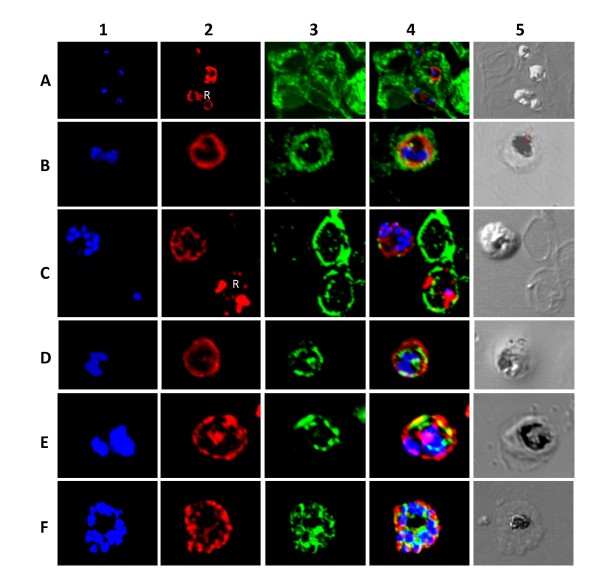
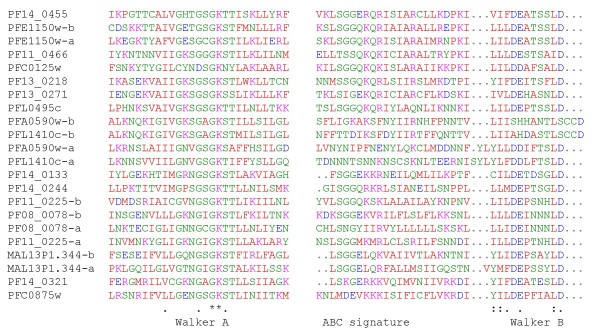
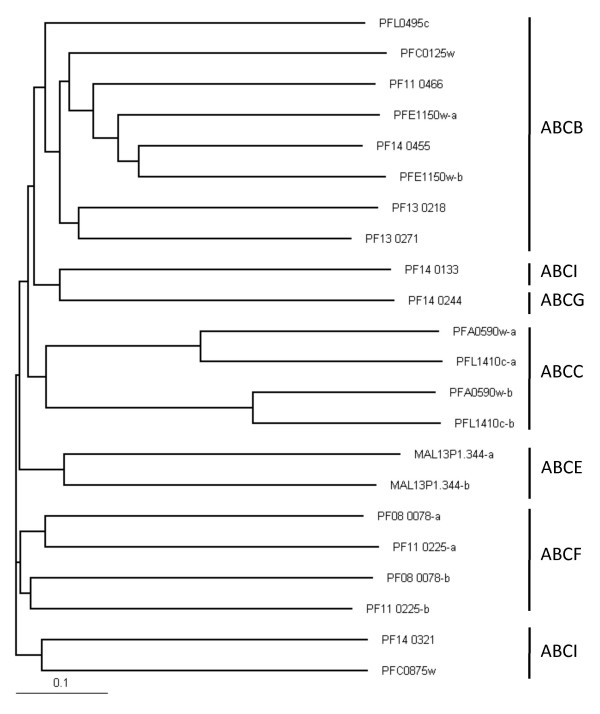
In the plasmoDB database, 16 members of the P. falciparum ABC family can be identified, 11 of which are putative transport proteins. A phylogenetic analysis of the aligned NBDs of the PfABC genes was performed. Antibodies against PfMRP1 (PfABCC1), PfMRP2 (PfABCC2), and PfMDR5 (PfABCB5) were generated, affinity purified and used in immunocytochemistry to localize the proteins in the asexual stages of the parasite.
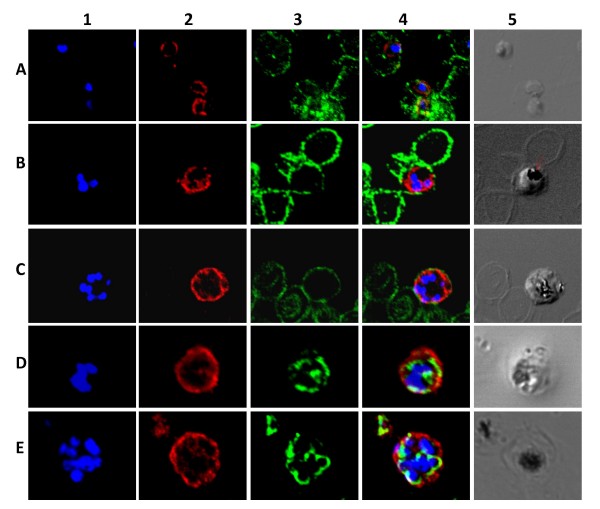
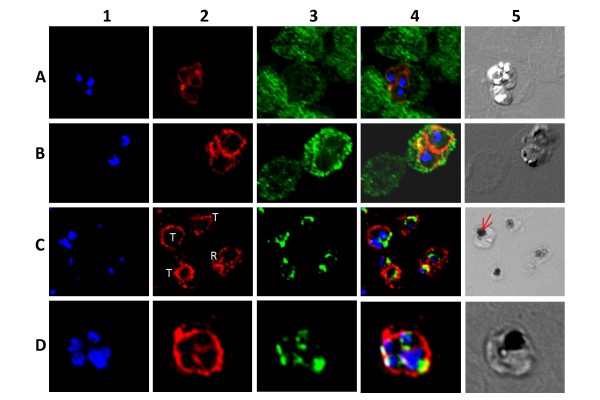
The ABC family members of P. falciparum were categorized into subfamilies. The ABC B subfamily was the largest and contained seven members. Other family members that could be involved in drug transport are PfABCC1, PfABCC2, PfABCG1, and PfABCI3. The expression and localization of three ABC transport proteins was determined. PfMRP1, PfMRP2, and PfMDR5 are localized to the plasma membrane in all asexual stages of the parasite.
In conclusion, 11 of the 16 ABC proteins in the P. falciparum genome are putative transport proteins, some of which might be involved in drug resistance. Moreover, it was demonstrated that three of these proteins are expressed on the parasite's plasma membrane.
耐药性的传播一直是疟疾控制的主要障碍。疟疾耐药性的潜在机制似乎复杂且具有多基因性。当前关于抗疟药多重耐药性的文献已将一种ATP结合盒(ABC)蛋白——PfMDR1记录为耐药性的一个重要决定因素。在恶性疟原虫基因组中,有几种ABC转运蛋白,其中一些可能是假定的药物转运蛋白。为了了解耐药性的分子机制,对这些转运蛋白进行表征至关重要。本研究的目的是对假定的ABC转运蛋白进行表征和定位。
在plasmoDB数据库中,可以鉴定出恶性疟原虫ABC家族的16个成员,其中11个是假定的转运蛋白。对PfABC基因比对后的NBD进行了系统发育分析。制备了针对PfMRP1(PfABCC1)、PfMRP2(PfABCC2)和PfMDR5(PfABCB5)的抗体,进行了亲和纯化,并用于免疫细胞化学以在寄生虫的无性阶段定位这些蛋白质。
恶性疟原虫的ABC家族成员被分类为亚家族。ABC B亚家族最大,包含7个成员。其他可能参与药物转运的家族成员是PfABCC1、PfABCC2、PfABCG1和PfABCI3。确定了三种ABC转运蛋白的表达和定位。PfMRP1、PfMRP2和PfMDR5在寄生虫的所有无性阶段均定位于质膜。
总之,恶性疟原虫基因组中的16种ABC蛋白中有11种是假定的转运蛋白,其中一些可能与耐药性有关。此外,已证明这些蛋白中的三种在寄生虫的质膜上表达。