Hare Mary, Elman Jeffrey L, Tabaczynski Tracy, McRae Ken
Bowling Green State University, Bowling Green, OH.
Cogn Sci. 2009 Mar 31;33(4):610-628. doi: 10.1111/j.1551-6709.2009.01027.x.
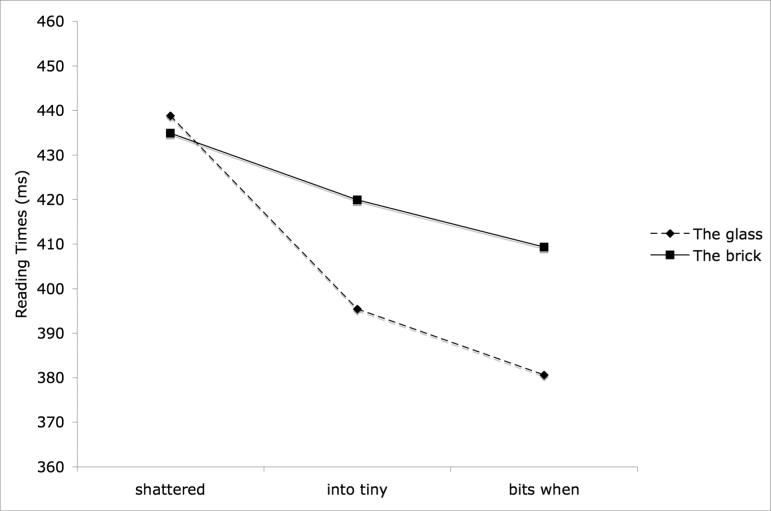
Anticipation plays a role in language comprehension. In this article, we explore the extent to which verb sense influences expectations about upcoming structure. We focus on change of state verbs like shatter, which have different senses that are expressed in either transitive or intransitive structures, depending on the sense that is used. In two experiments we influence the interpretation of verb sense by manipulating the thematic fit of the grammatical subject as cause or affected entity for the verb, and test whether readers' expectations for a transitive or intransitive structure change as a result. This sense-biasing context influenced reading times in the post-verbal regions. Reading times for transitive sentences were faster following good-cause than good theme subjects, but the opposite pattern was found for intransitive sentences. We conclude that readers use sense-contingent subcategorization preferences during on-line comprehension.
预期在语言理解中发挥着作用。在本文中,我们探究动词语义对即将出现的句子结构的预期产生影响的程度。我们聚焦于像“shatter”这样的状态变化动词,这类动词具有不同的语义,根据所使用的语义,它们可以用及物结构或不及物结构来表达。在两个实验中,我们通过操纵语法主语作为动词的致使者或受影响实体的题元适配性来影响动词语义的解读,并测试读者对及物或不及物结构的预期是否因此而改变。这种语义偏向语境影响了动词后区域的阅读时间。及物句子在致使者合适的主语之后的阅读时间比题元合适的主语之后更快,但不及物句子则发现了相反的模式。我们得出结论,读者在在线理解过程中会使用与语义相关的次范畴化偏好。