Department of Oral Biology, School of Dental Medicine, University at Buffalo, The State University of New York, 3435 Main St, Buffalo, NY 14214, USA.
Crit Care. 2009;13(4):R117. doi: 10.1186/cc7967. Epub 2009 Jul 15.
Dental plaque biofilms are colonized by respiratory pathogens in mechanically-ventilated intensive care unit patients. Thus, improvements in oral hygiene in these patients may prevent ventilator-associated pneumonia. The goal of this study was to determine the minimum frequency (once or twice a day) for 0.12% chlorhexidine gluconate application necessary to reduce oral colonization by pathogens in 175 intubated patients in a trauma intensive care unit.
A randomized, double-blind, placebo-controlled clinical trial tested oral topical 0.12% chlorhexidine gluconate or placebo (vehicle alone), applied once or twice a day by staff nurses. Quantitation of colonization of the oral cavity by respiratory pathogens (teeth/denture/buccal mucosa) was measured.
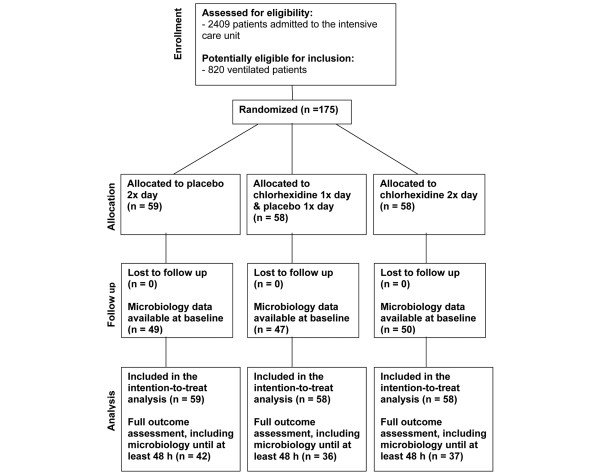
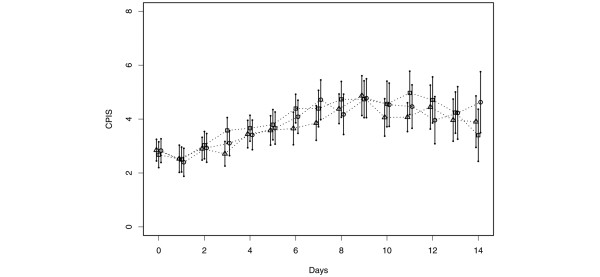
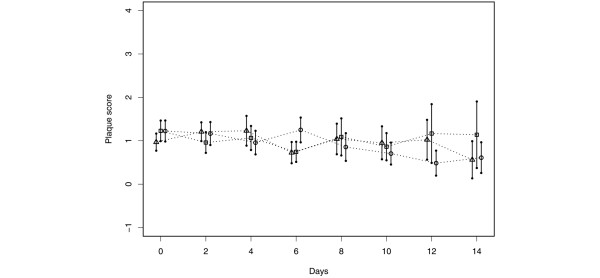
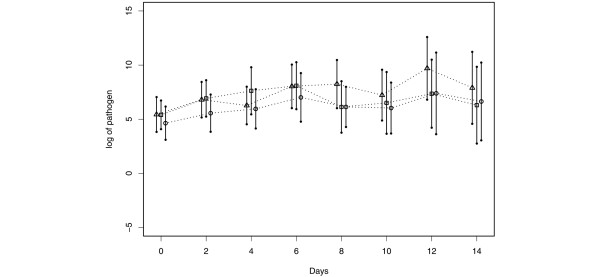
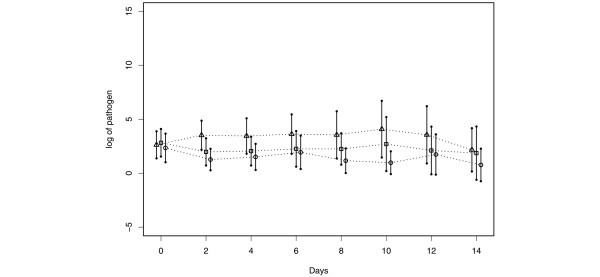
Subjects were recruited from 1 March, 2004 until 30 November, 2007. While 175 subjects were randomized, microbiologic baseline data was available for 146 subjects, with 115 subjects having full outcome assessment after at least 48 hours. Chlorhexidine reduced the number of Staphylococcus aureus, but not the total number of enterics, Pseudomonas or Acinetobacter in the dental plaque of test subjects. A non-significant reduction in pneumonia rate was noted in groups treated with chlorhexidine compared with the placebo group (OR = 0.54, 95% CI: 0.23 to 1.25, P = 0.15). No evidence for resistance to chlorhexidine was noted, and no adverse events were observed. No differences were noted in microbiologic or clinical outcomes between treatment arms.
While decontamination of the oral cavity with chlorhexidine did not reduce the total number of potential respiratory pathogens, it did reduce the number of S. aureus in dental plaque of trauma intensive care patients.
机械通气重症监护病房患者的口腔菌斑生物膜会被呼吸道病原体定植。因此,改善这些患者的口腔卫生状况可能有助于预防呼吸机相关性肺炎。本研究的目的是确定 0.12%葡萄糖酸氯己定在创伤重症监护病房 175 例插管患者中应用的最低频率(每日一次或两次),以减少口腔中病原体的定植。
一项随机、双盲、安慰剂对照临床试验测试了口腔局部应用 0.12%葡萄糖酸氯己定或安慰剂(仅载体),由护士每日一次或两次应用。通过定量检测口腔中呼吸道病原体(牙齿/义齿/颊粘膜)的定植情况来评估口腔定植情况。
本研究于 2004 年 3 月 1 日至 2007 年 11 月 30 日期间招募受试者。虽然有 175 名受试者被随机分配,但有 146 名受试者有微生物学基线数据,115 名受试者在至少 48 小时后完成了全部结局评估。氯己定可减少测试对象牙菌斑中金黄色葡萄球菌的数量,但不能减少肠杆菌、铜绿假单胞菌或不动杆菌的总数。与安慰剂组相比,氯己定治疗组的肺炎发生率有降低趋势(比值比=0.54,95%置信区间:0.23 至 1.25,P=0.15)。未发现对氯己定耐药的证据,也未观察到不良反应。在治疗组之间,未观察到微生物学或临床结局的差异。
虽然氯己定口腔消毒不能减少潜在呼吸道病原体的总数,但确实减少了创伤重症监护患者牙菌斑中金黄色葡萄球菌的数量。