Bertalan Marcelo, Albano Rodolpho, de Pádua Vânia, Rouws Luc, Rojas Cristian, Hemerly Adriana, Teixeira Kátia, Schwab Stefan, Araujo Jean, Oliveira André, França Leonardo, Magalhães Viviane, Alquéres Sylvia, Cardoso Alexander, Almeida Wellington, Loureiro Marcio Martins, Nogueira Eduardo, Cidade Daniela, Oliveira Denise, Simão Tatiana, Macedo Jacyara, Valadão Ana, Dreschsel Marcela, Freitas Flávia, Vidal Marcia, Guedes Helma, Rodrigues Elisete, Meneses Carlos, Brioso Paulo, Pozzer Luciana, Figueiredo Daniel, Montano Helena, Junior Jadier, de Souza Filho Gonçalo, Martin Quintana Flores Victor, Ferreira Beatriz, Branco Alan, Gonzalez Paula, Guillobel Heloisa, Lemos Melissa, Seibel Luiz, Macedo José, Alves-Ferreira Marcio, Sachetto-Martins Gilberto, Coelho Ana, Santos Eidy, Amaral Gilda, Neves Anna, Pacheco Ana Beatriz, Carvalho Daniela, Lery Letícia, Bisch Paulo, Rössle Shaila C, Urményi Turán, Rael Pereira Alessandra, Silva Rosane, Rondinelli Edson, von Krüger Wanda, Martins Orlando, Baldani José Ivo, Ferreira Paulo C G
Instituto de Bioquímica Médica, UFRJ, CCS, Bloco D, subssolo 21491-590 Rio de Janeiro, Brazil.
BMC Genomics. 2009 Sep 23;10:450. doi: 10.1186/1471-2164-10-450.
Gluconacetobacter diazotrophicus Pal5 is an endophytic diazotrophic bacterium that lives in association with sugarcane plants. It has important biotechnological features such as nitrogen fixation, plant growth promotion, sugar metabolism pathways, secretion of organic acids, synthesis of auxin and the occurrence of bacteriocins.
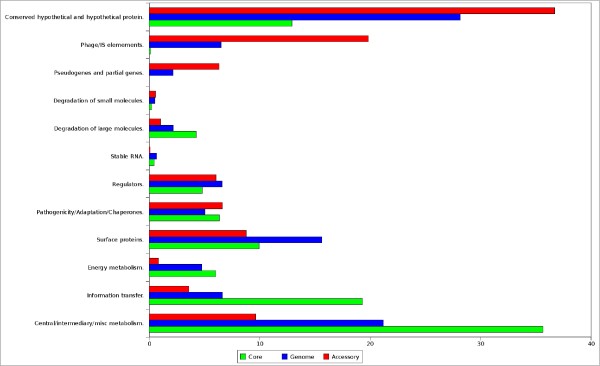
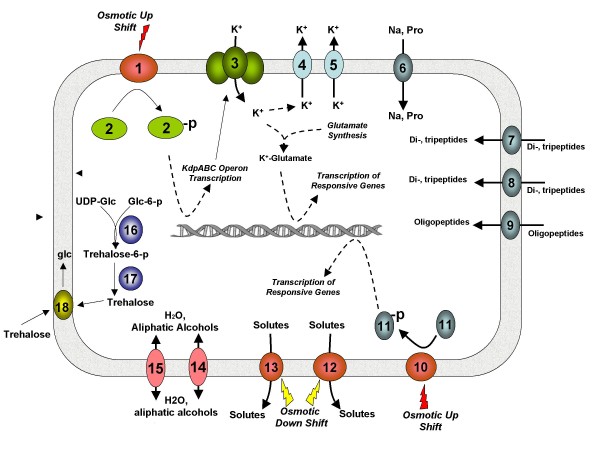
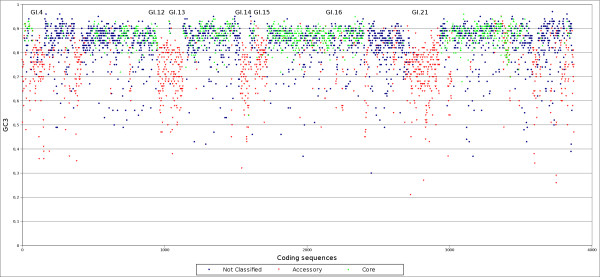
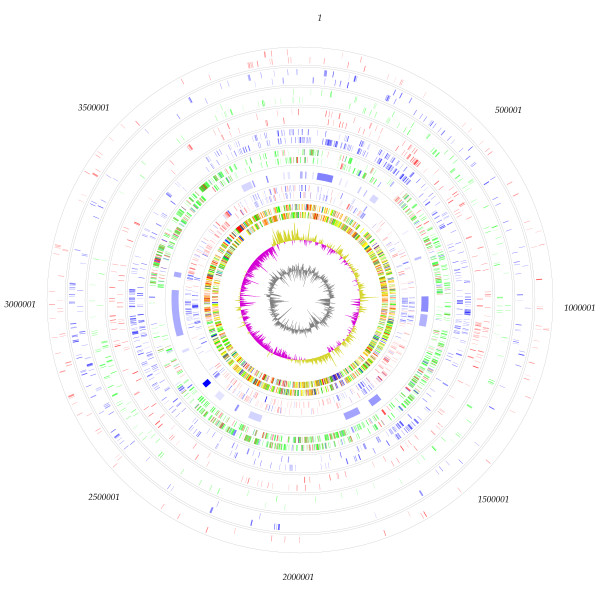
Gluconacetobacter diazotrophicus Pal5 is the third diazotrophic endophytic bacterium to be completely sequenced. Its genome is composed of a 3.9 Mb chromosome and 2 plasmids of 16.6 and 38.8 kb, respectively. We annotated 3,938 coding sequences which reveal several characteristics related to the endophytic lifestyle such as nitrogen fixation, plant growth promotion, sugar metabolism, transport systems, synthesis of auxin and the occurrence of bacteriocins. Genomic analysis identified a core component of 894 genes shared with phylogenetically related bacteria. Gene clusters for gum-like polysaccharide biosynthesis, tad pilus, quorum sensing, for modulation of plant growth by indole acetic acid and mechanisms involved in tolerance to acidic conditions were identified and may be related to the sugarcane endophytic and plant-growth promoting traits of G. diazotrophicus. An accessory component of at least 851 genes distributed in genome islands was identified, and was most likely acquired by horizontal gene transfer. This portion of the genome has likely contributed to adaptation to the plant habitat.
The genome data offer an important resource of information that can be used to manipulate plant/bacterium interactions with the aim of improving sugarcane crop production and other biotechnological applications.
重氮营养醋杆菌Pal5是一种与甘蔗植株共生的内生固氮细菌。它具有重要的生物技术特性,如固氮、促进植物生长、糖代谢途径、有机酸分泌、生长素合成以及细菌素的产生。
重氮营养醋杆菌Pal5是第三种完成全基因组测序的固氮内生细菌。其基因组由一条3.9 Mb的染色体和两个分别为16.6 kb和38.8 kb的质粒组成。我们注释了3938个编码序列,这些序列揭示了与内生生活方式相关的几个特征,如固氮、促进植物生长、糖代谢、转运系统、生长素合成以及细菌素的产生。基因组分析确定了与系统发育相关细菌共有的894个基因的核心成分。鉴定出了类胶状多糖生物合成、菌毛、群体感应、吲哚乙酸调节植物生长以及酸性条件耐受机制的基因簇,这些可能与重氮营养醋杆菌的甘蔗内生和促进植物生长特性有关。确定了分布在基因组岛中的至少851个基因的辅助成分,很可能是通过水平基因转移获得的。基因组的这一部分可能有助于适应植物生境。
基因组数据提供了重要的信息资源,可用于操纵植物/细菌相互作用,以提高甘蔗作物产量和其他生物技术应用。