Graf Christian, Assoud Abdeljalil, Mayasree Oottil, Kleinke Holger
Department of Chemistry, University of Waterloo, Waterloo, ON, N2L 3G1, Canada.
Molecules. 2009 Aug 24;14(9):3115-31. doi: 10.3390/molecules14093115.
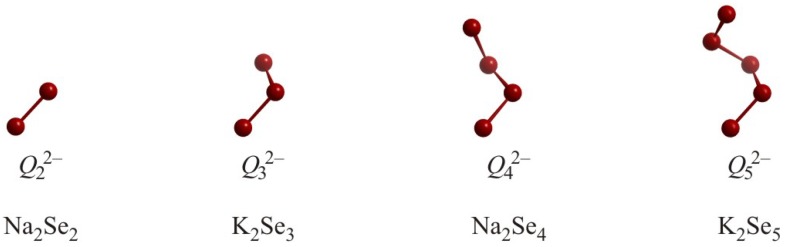
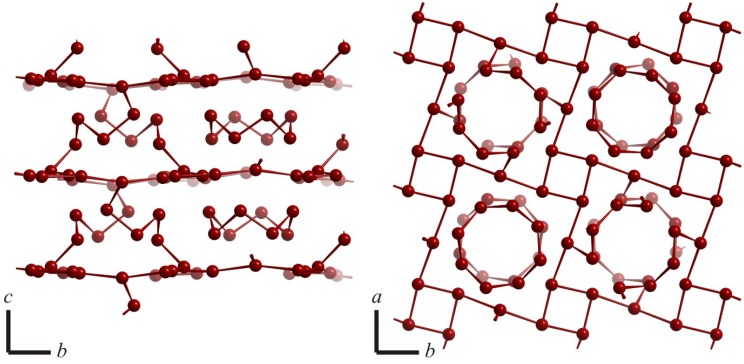
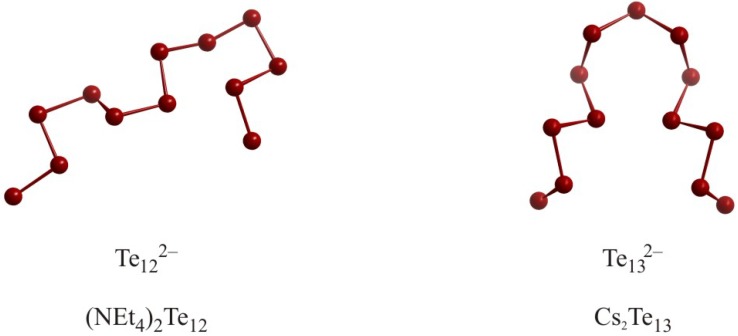
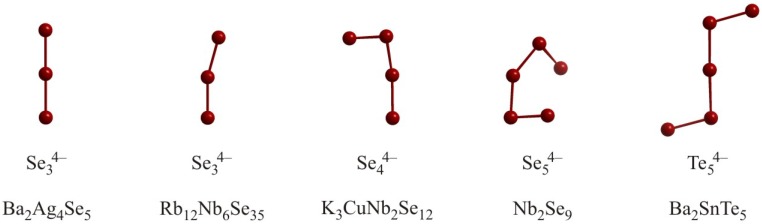
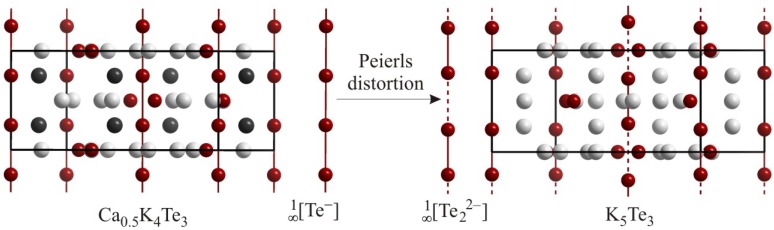
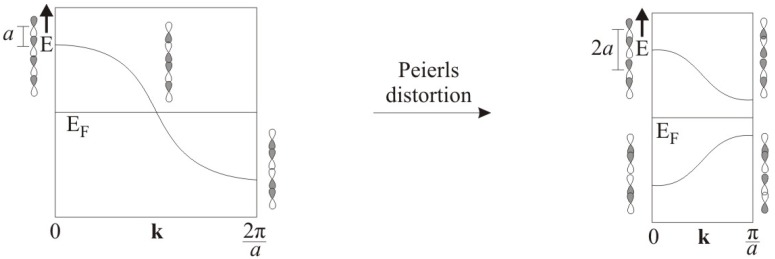
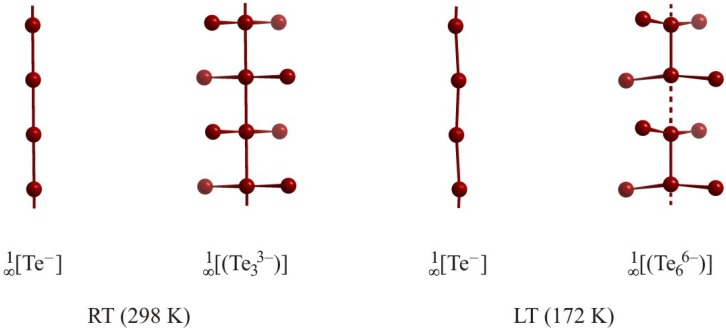
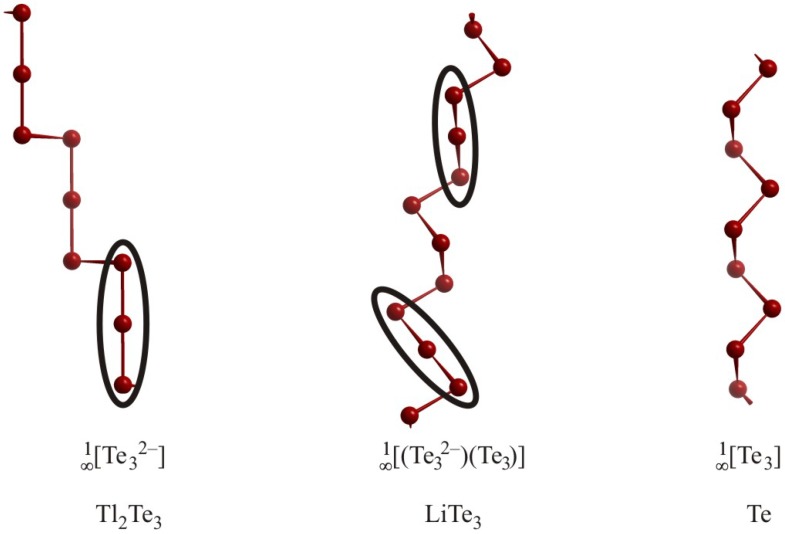
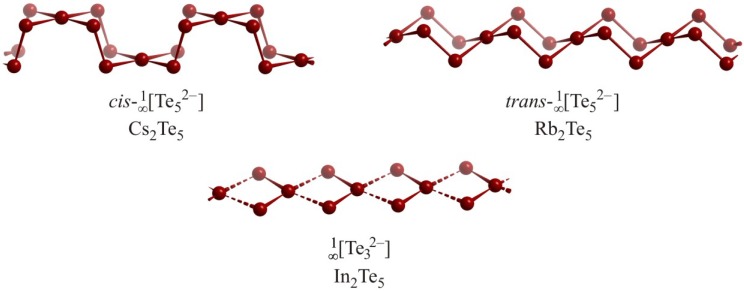
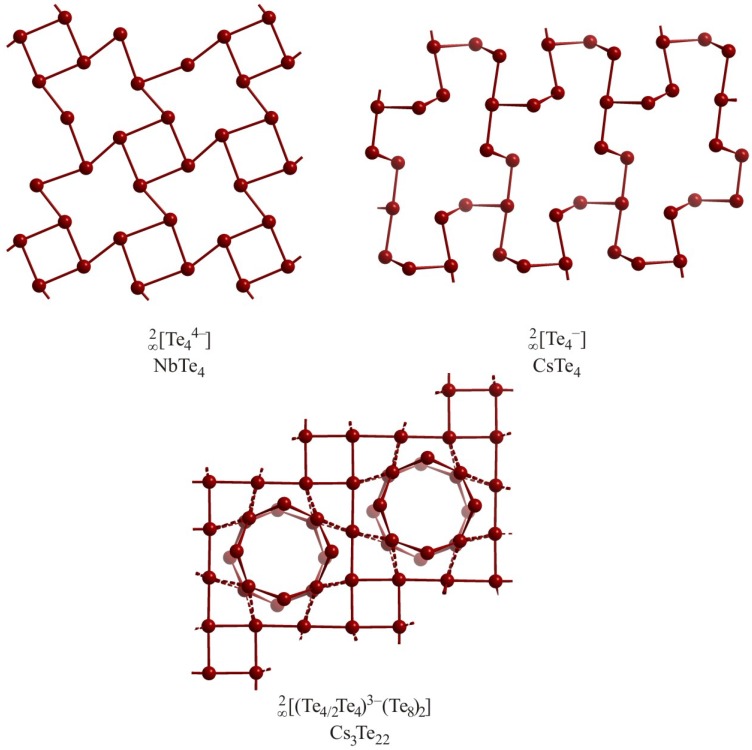
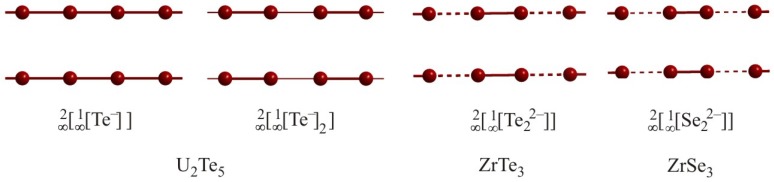
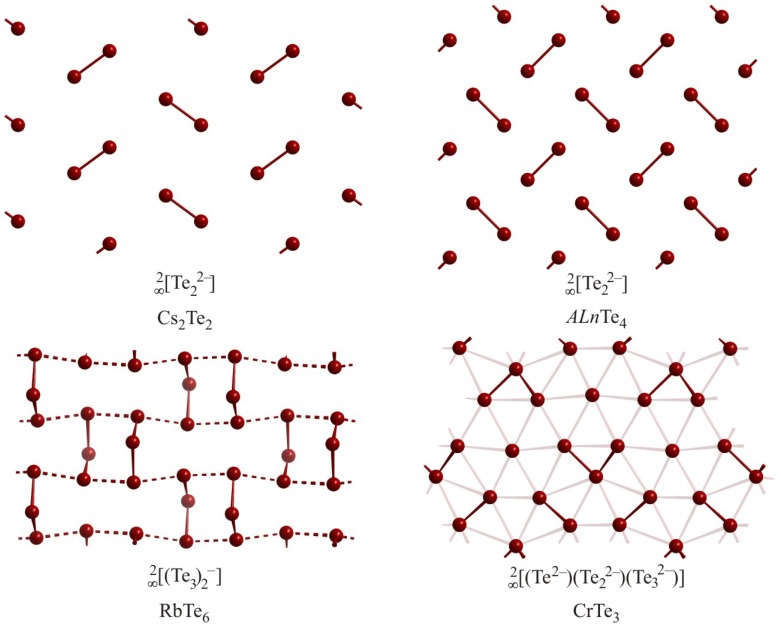
A large variety of different interactions between the chalcogen atoms, Q, occur in the solid state structures of polyselenides and polytellurides, including both molecular and infinite units. The simplest motifs are classical Q(2)(2-) dumbbells and nonlinear Q(n)(2-) chains (n = 3, 4, 5, ..), e.g. found in alkali metal polychalcogenides. In addition, nonclassical so-called hypervalent motifs exist in the form of linear Q(3)(4-) units or within larger units such as Q(4)(4-) and Q(5)(4-). Infinitely extended Q units include zigzag, cis/trans and linear chains, as well as planar and slightly puckered layers. Several of those are susceptible to Peierls distortions, leading to the formation of both commensurate and incommensurate superstructures and anomalies in transport properties, including metal-nonmetal transitions.
在多硒化物和多碲化物的固态结构中,硫族元素原子Q之间存在着各种各样不同的相互作用,包括分子单元和无限延伸的单元。最简单的结构单元是经典的Q(2)(2-)哑铃形结构和非线性的Q(n)(2-)链(n = 3、4、5等),例如在碱金属多硫族化物中发现的。此外,还存在非经典的所谓超价结构单元,其形式为线性的Q(3)(4-)单元或存在于更大的单元如Q(4)(4-)和Q(5)(4-)中。无限延伸的Q单元包括锯齿形、顺式/反式和线性链,以及平面和轻微褶皱的层。其中一些容易发生派尔斯畸变,导致形成相称和不相称的超结构以及输运性质异常,包括金属-非金属转变。