Maiese Kenneth, Chong Zhao Zhong, Hou Jinling, Shang Yan Chen
Division of Cellular and Molecular Cerebral Ischemia, Wayne State University School of Medicine, Detroit, Michigan 48201, USA.
Molecules. 2009 Sep 9;14(9):3446-85. doi: 10.3390/molecules14093446.
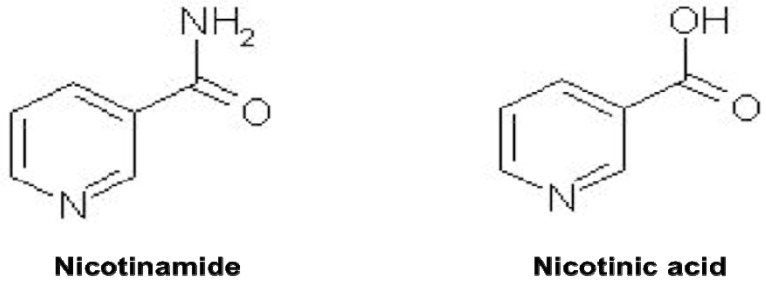
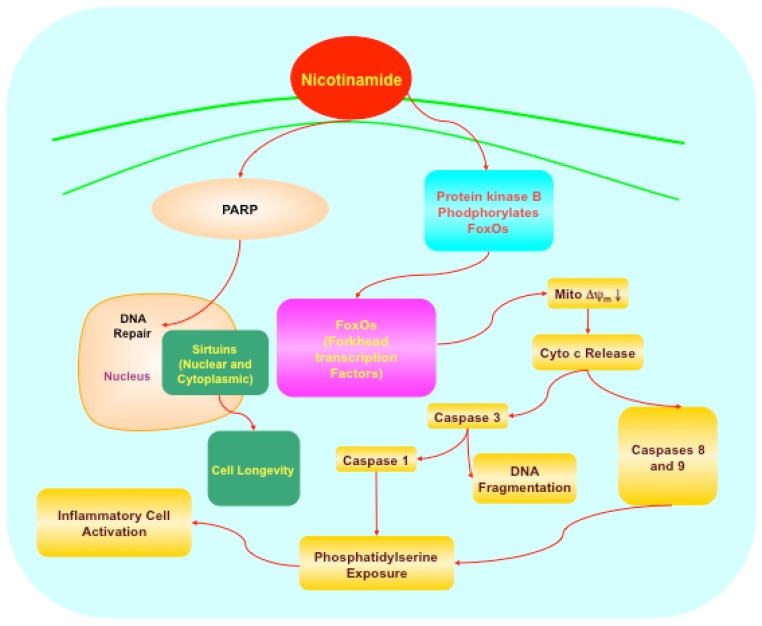
Nicotinamide, the amide form of vitamin B(3) (niacin), is changed to its mononucleotide compound with the enzyme nicotinic acide/nicotinamide adenylyltransferase, and participates in the cellular energy metabolism that directly impacts normal physiology. However, nicotinamide also influences oxidative stress and modulates multiple pathways tied to both cellular survival and death. During disorders that include immune system dysfunction, diabetes, and aging-related diseases, nicotinamide is a robust cytoprotectant that blocks cellular inflammatory cell activation, early apoptotic phosphatidylserine exposure, and late nuclear DNA degradation. Nicotinamide relies upon unique cellular pathways that involve forkhead transcription factors, sirtuins, protein kinase B (Akt), Bad, caspases, and poly (ADP-ribose) polymerase that may offer a fine line with determining cellular longevity, cell survival, and unwanted cancer progression. If one is cognizant of the these considerations, it becomes evident that nicotinamide holds great potential for multiple disease entities, but the development of new therapeutic strategies rests heavily upon the elucidation of the novel cellular pathways that nicotinamide closely governs.
烟酰胺是维生素B(3)(烟酸)的酰胺形式,在烟酸/烟酰胺腺苷酸转移酶的作用下转变为其单核苷酸化合物,并参与直接影响正常生理功能的细胞能量代谢。然而,烟酰胺也会影响氧化应激,并调节与细胞存活和死亡相关的多种途径。在包括免疫系统功能障碍、糖尿病和衰老相关疾病在内的病症中,烟酰胺是一种强大的细胞保护剂,可阻止细胞炎性细胞活化、早期凋亡性磷脂酰丝氨酸暴露和晚期核DNA降解。烟酰胺依赖于独特的细胞途径,这些途径涉及叉头转录因子、沉默调节蛋白、蛋白激酶B(Akt)、Bad、半胱天冬酶和聚(ADP-核糖)聚合酶,这些途径可能在决定细胞寿命、细胞存活和不必要的癌症进展方面起着微妙的作用。如果认识到这些因素,就会明显看出烟酰胺对多种疾病实体具有巨大潜力,但新治疗策略的开发在很大程度上取决于对烟酰胺密切调控的新型细胞途径的阐明。