Department of Pathobiology, College of Veterinary Medicine and Biomedical Sciences, Texas A&M University, College Station, Texas, United States of America.
PLoS One. 2009 Sep 28;4(9):e7216. doi: 10.1371/journal.pone.0007216.
The extraembryonic endoderm (ExEn) defines the yolk sac, a set of membranes that provide essential support for mammalian embryos. Recent findings suggest that the committed ExEn precursor is present already in the embryonic Inner Cell Mass (ICM) as a group of cells that intermingles with the closely related epiblast precursor. All ICM cells contain Oct4, a key transcription factor that is first expressed at the morula stage. In vitro, the epiblast precursor is most closely represented by the well-characterized embryonic stem (ES) cell lines that maintain the expression of Oct4, but analogous ExEn precursor cell lines are not known and it is unclear if they would express Oct4.
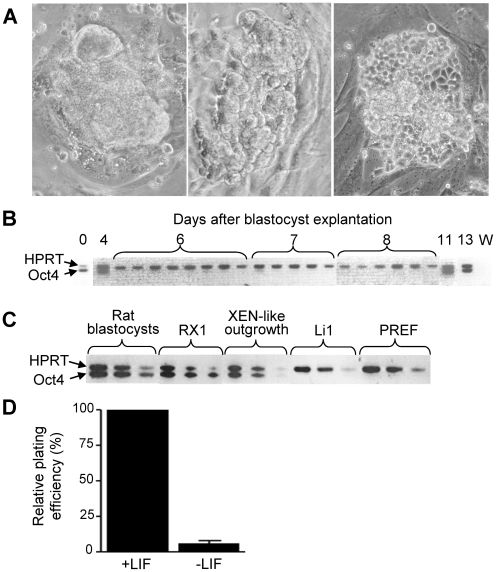
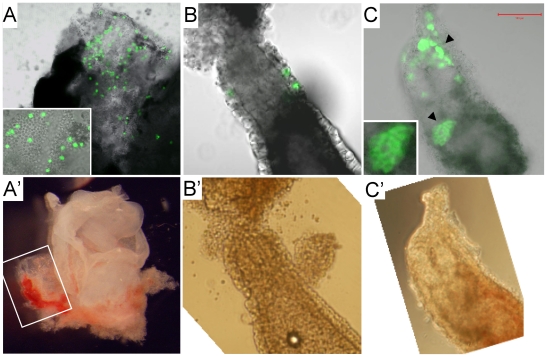
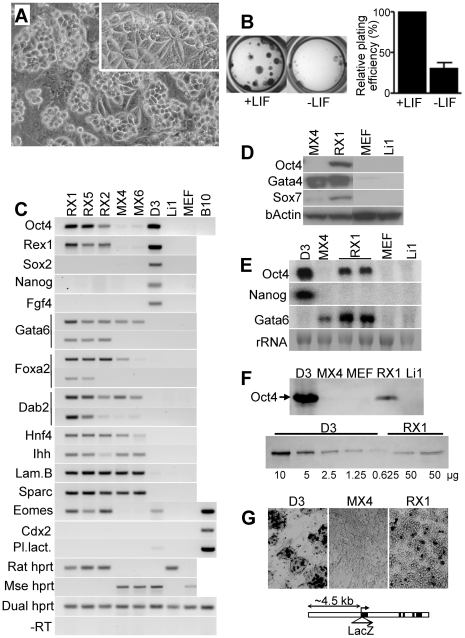
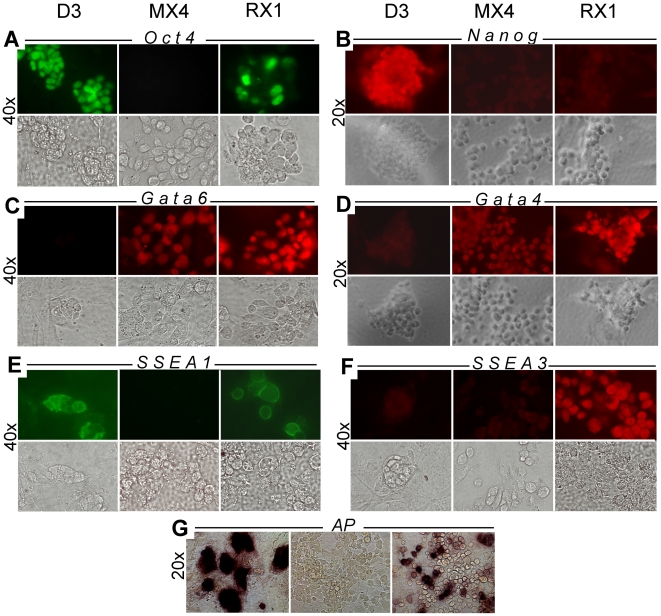
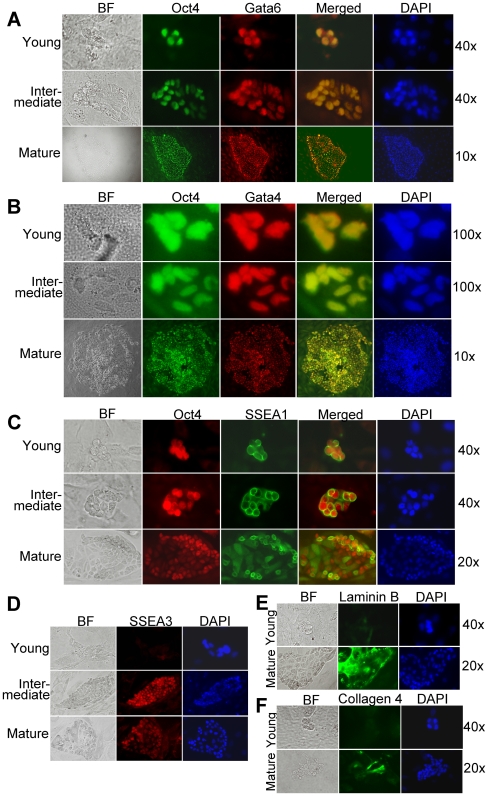
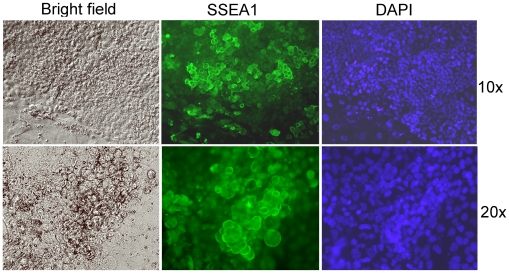
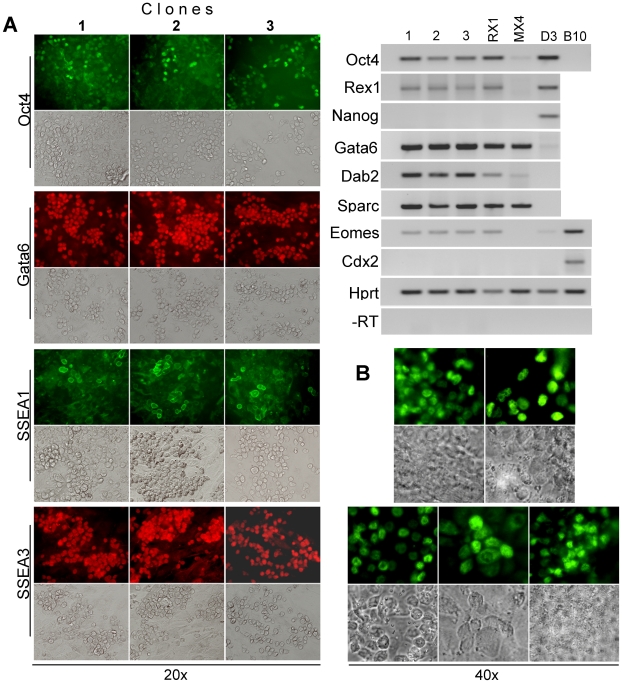
METHODOLOGY/PRINCIPAL FINDINGS: Here we report the isolation and characterization of permanently proliferating Oct4-expressing rat cell lines ("XEN-P cell lines"), which closely resemble the ExEn precursor. We isolated the XEN-P cell lines from blastocysts and characterized them by plating and gene expression assays as well as by injection into embryos. Like ES cells, the XEN-P cells express Oct4 and SSEA1 at high levels and their growth is stimulated by leukemia inhibitory factor, but instead of the epiblast determinant Nanog, they express the ExEn determinants Gata6 and Gata4. Further, they lack markers characteristic of the more differentiated primitive/visceral and parietal ExEn stages, but exclusively differentiate into these stages in vitro and contribute to them in vivo.
CONCLUSIONS/SIGNIFICANCE: Our findings (i) suggest strongly that the ExEn precursor is a self-renewable entity, (ii) indicate that active Oct4 gene expression (transcription plus translation) is part of its molecular identity, and (iii) provide an in vitro model of early ExEn differentiation.
胚外内胚层 (ExEn) 定义了卵黄囊,这是一组为哺乳动物胚胎提供必要支持的膜。最近的研究结果表明,已经在胚胎内细胞团 (ICM) 中存在着定型的胚外内胚层前体,作为一群与密切相关的外胚层前体混合的细胞。所有 ICM 细胞都含有 Oct4,这是一种关键的转录因子,它在桑葚胚阶段首次表达。在体外,外胚层前体最接近的代表是具有良好特征的胚胎干细胞 (ES) 细胞系,这些细胞系维持着 Oct4 的表达,但类似的胚外内胚层前体细胞系尚不清楚,也不清楚它们是否会表达 Oct4。
方法/主要发现:在这里,我们报告了永久增殖的 Oct4 表达大鼠细胞系(“XEN-P 细胞系”)的分离和特征,这些细胞系非常类似于胚外内胚层前体。我们从囊胚中分离出 XEN-P 细胞系,并通过平板培养和基因表达分析以及注射到胚胎中对其进行了特征描述。与 ES 细胞一样,XEN-P 细胞高水平表达 Oct4 和 SSEA1,其生长受到白血病抑制因子的刺激,但它们不表达外胚层决定因子 Nanog,而是表达胚外内胚层决定因子 Gata6 和 Gata4。此外,它们缺乏更分化的原始/内脏和壁内胚层阶段的特征标记物,但在体外专门分化为这些阶段,并在体内对其有贡献。
结论/意义:我们的发现强烈表明,胚外内胚层前体是一种自我更新的实体;表明活跃的 Oct4 基因表达(转录加翻译)是其分子特征的一部分;并提供了早期胚外内胚层分化的体外模型。