Department of Clinical Sciences, Lung Function Testing Laboratory, Cummings School of Veterinary Medicine, Tufts University, North Grafton, MA, USA.
Respir Res. 2009 Oct 5;10(1):92. doi: 10.1186/1465-9921-10-92.
Adult mice have a remarkable capacity to regenerate functional alveoli following either lung resection or injury that exceeds the regenerative capacity observed in larger adult mammals. The molecular basis for this unique capability in mice is largely unknown. We examined the transcriptomic responses to single lung pneumonectomy in adult mice in order to elucidate prospective molecular signaling mechanisms used in this species during lung regeneration.
Unilateral left pneumonectomy or sham thoracotomy was performed under general anesthesia (n = 8 mice per group for each of the four time points). Total RNA was isolated from the remaining lung tissue at four time points post-surgery (6 hours, 1 day, 3 days, 7 days) and analyzed using microarray technology.
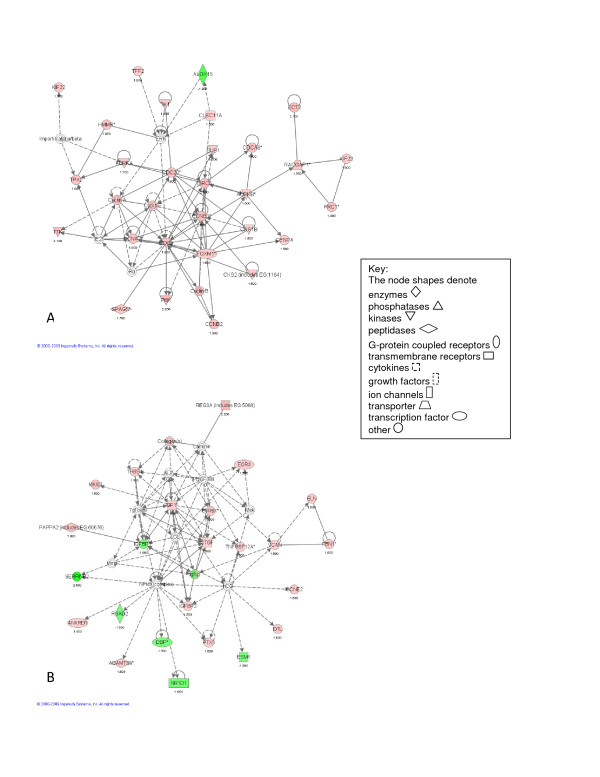
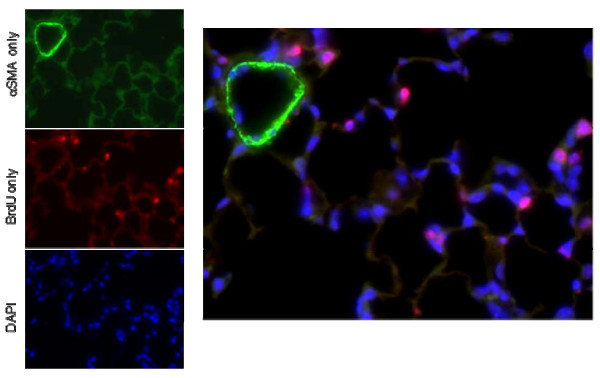
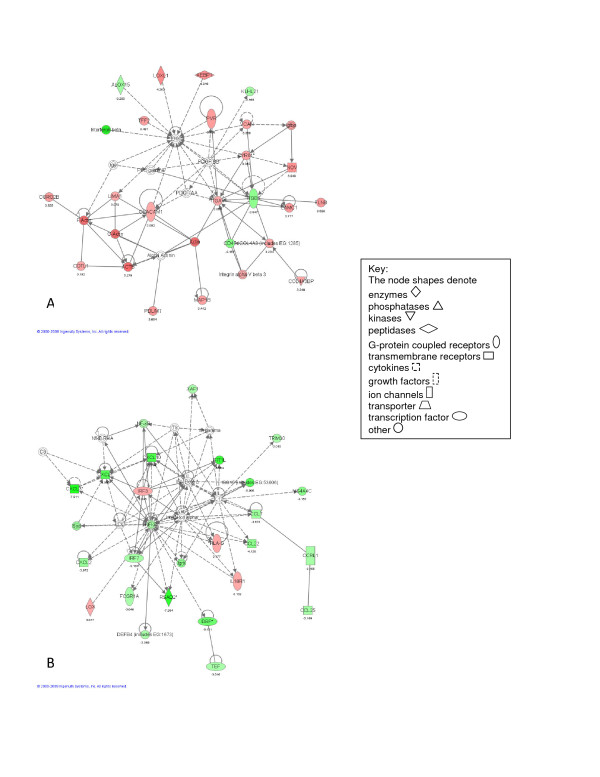
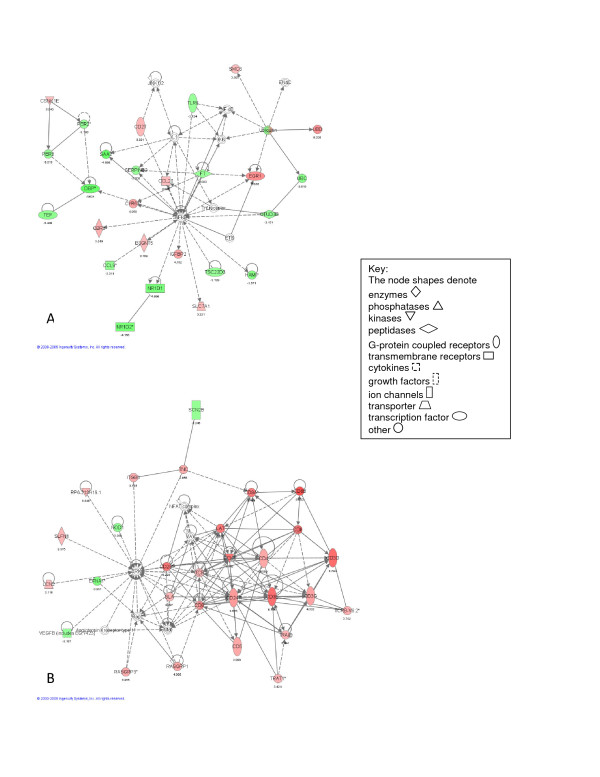
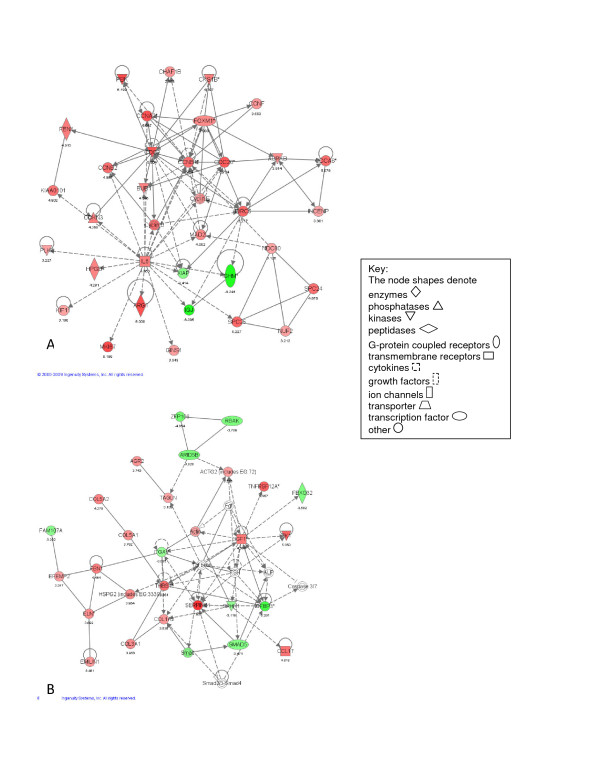
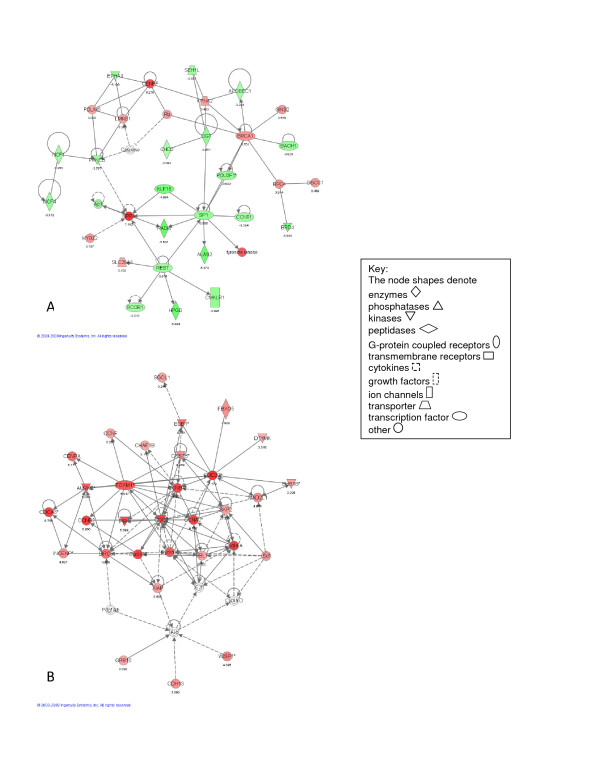
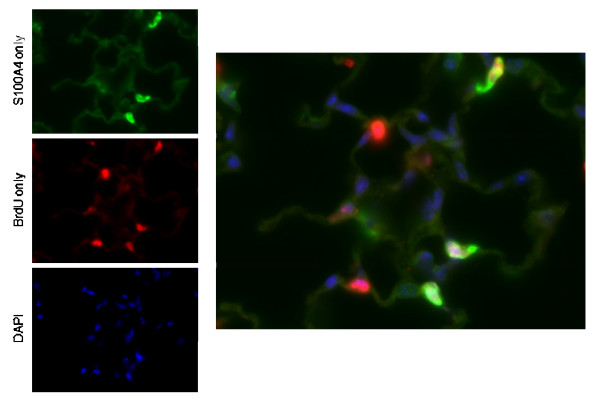
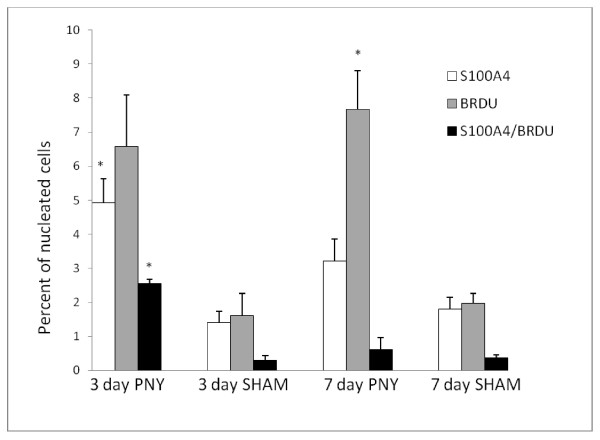
The observed transcriptomic patterns revealed mesenchymal cell signaling, including up-regulation of genes previously associated with activated fibroblasts (Tnfrsf12a, Tnc, Eln, Col3A1), as well as modulation of Igf1-mediated signaling. The data set also revealed early down-regulation of pro-inflammatory cytokine transcripts and up-regulation of genes involved in T cell development/function, but few similarities to transcriptomic patterns observed during embryonic or post-natal lung development. Immunohistochemical analysis suggests that early fibroblast but not myofibroblast proliferation is important during lung regeneration and may explain the preponderance of mesenchymal-associated genes that are over-expressed in this model. This again appears to differ from embryonic alveologenesis.
These data suggest that modulation of mesenchymal cell transcriptome patterns and proliferation of S100A4 positive mesenchymal cells, as well as modulation of pro-inflammatory transcriptome patterns, are important during post-pneumonectomy lung regeneration in adult mice.
成年老鼠在肺切除或损伤后具有显著的再生功能性肺泡的能力,这种再生能力超过了较大成年哺乳动物的再生能力。老鼠具有这种独特能力的分子基础在很大程度上是未知的。我们研究了成年老鼠单侧左肺切除或假手术(每组 8 只老鼠,每个时间点)后的转录组反应,以阐明该物种在肺再生过程中使用的潜在分子信号机制。
在全身麻醉下进行单侧左肺切除术或假开胸术(每组 8 只老鼠,每个时间点)。手术后 6 小时、1 天、3 天和 7 天,从剩余的肺组织中分离总 RNA,并使用微阵列技术进行分析。
观察到的转录组模式显示间充质细胞信号,包括先前与激活的成纤维细胞相关的基因(Tnfrsf12a、Tnc、Eln、Col3A1)上调,以及 Igf1 介导的信号调节。该数据集还显示早期促炎细胞因子转录物下调和参与 T 细胞发育/功能的基因上调,但与胚胎或出生后肺发育过程中观察到的转录组模式几乎没有相似之处。免疫组织化学分析表明,早期成纤维细胞而不是肌成纤维细胞增殖在肺再生中很重要,这可能解释了该模型中过度表达的间充质相关基因的优势。这似乎再次与胚胎肺泡发生不同。
这些数据表明,在成年老鼠肺切除后肺再生过程中,调节间充质细胞转录组模式和 S100A4 阳性间充质细胞的增殖,以及调节促炎转录组模式,是很重要的。