Department of Molecular Physiology & Biophysics, Baylor College of Medicine, Houston, TX, USA.
Mol Brain. 2009 Oct 5;2:31. doi: 10.1186/1756-6606-2-31.
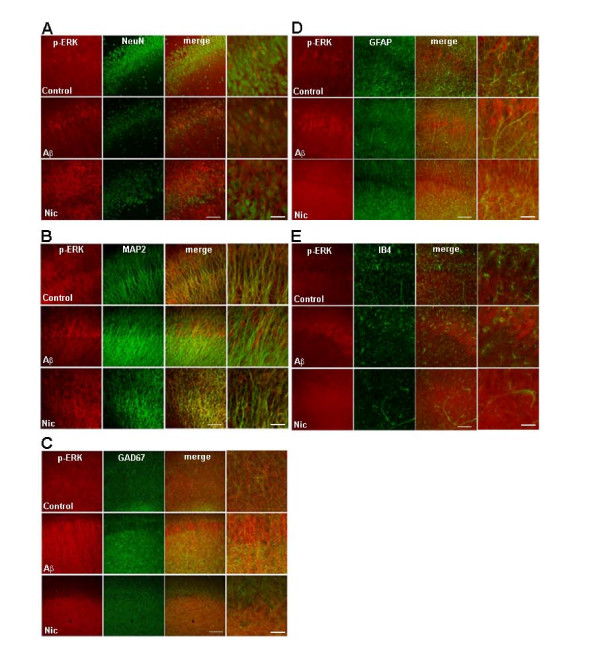
Previous studies have shown that beta amyloid (Abeta) peptide triggers the activation of several signal transduction cascades in the hippocampus, including the extracellular signal-regulated kinase (ERK) cascade. In this study we sought to characterize the cellular localization of phosphorylated, active ERK in organotypic hippocampal cultures after acute exposure to either Abeta (1-42) or nicotine.
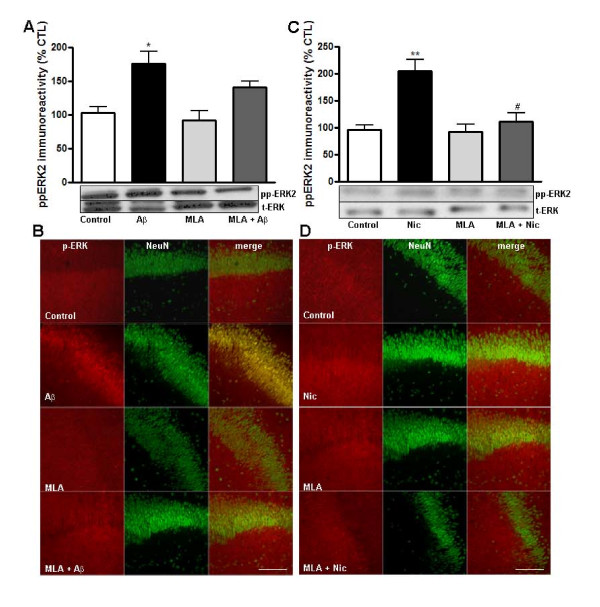
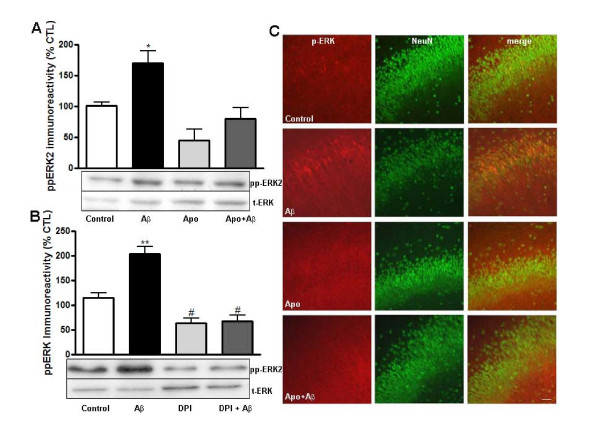
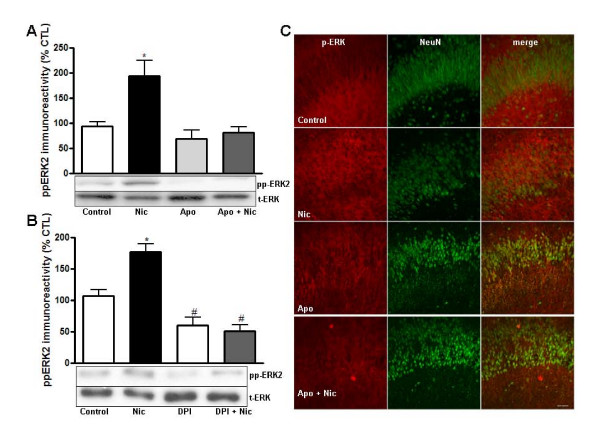
We observed that Abeta and nicotine increased the levels of active ERK in distinct cellular localizations. We also examined whether phospho-ERK was regulated by redox signaling mechanisms and found that increases in active ERK induced by Abeta and nicotine were blocked by inhibitors of NADPH oxidase.
Our findings indicate that NADPH oxidase-dependent redox signaling is required for Abeta-induced activation of ERK, and suggest a similar mechanism may occur during early stages of Alzheimer's disease.
先前的研究表明,β淀粉样肽(Abeta)肽在海马体中触发了几个信号转导级联反应的激活,包括细胞外信号调节激酶(ERK)级联反应。在这项研究中,我们试图描述在急性暴露于 Abeta(1-42)或尼古丁后,在器官型海马体培养物中磷酸化、活性 ERK 的细胞定位。
我们发现 Abeta 和尼古丁增加了磷酸化、活性 ERK 在不同细胞定位中的水平。我们还研究了磷酸化 ERK 是否受到氧化还原信号机制的调节,并发现 Abeta 和尼古丁诱导的活性 ERK 增加被 NADPH 氧化酶抑制剂阻断。
我们的发现表明,NADPH 氧化酶依赖性氧化还原信号对于 Abeta 诱导的 ERK 激活是必需的,并表明在阿尔茨海默病的早期阶段可能发生类似的机制。