Beckhauser Thiago Fernando, Francis-Oliveira José, De Pasquale Roberto
Physiology and Biophysics Department, Biomedical Sciences Institute, Sao Paulo University (USP), Butanta, Sao Paulo, Brazil.
J Exp Neurosci. 2016 Sep 4;10(Suppl 1):23-48. doi: 10.4137/JEN.S39887. eCollection 2016.
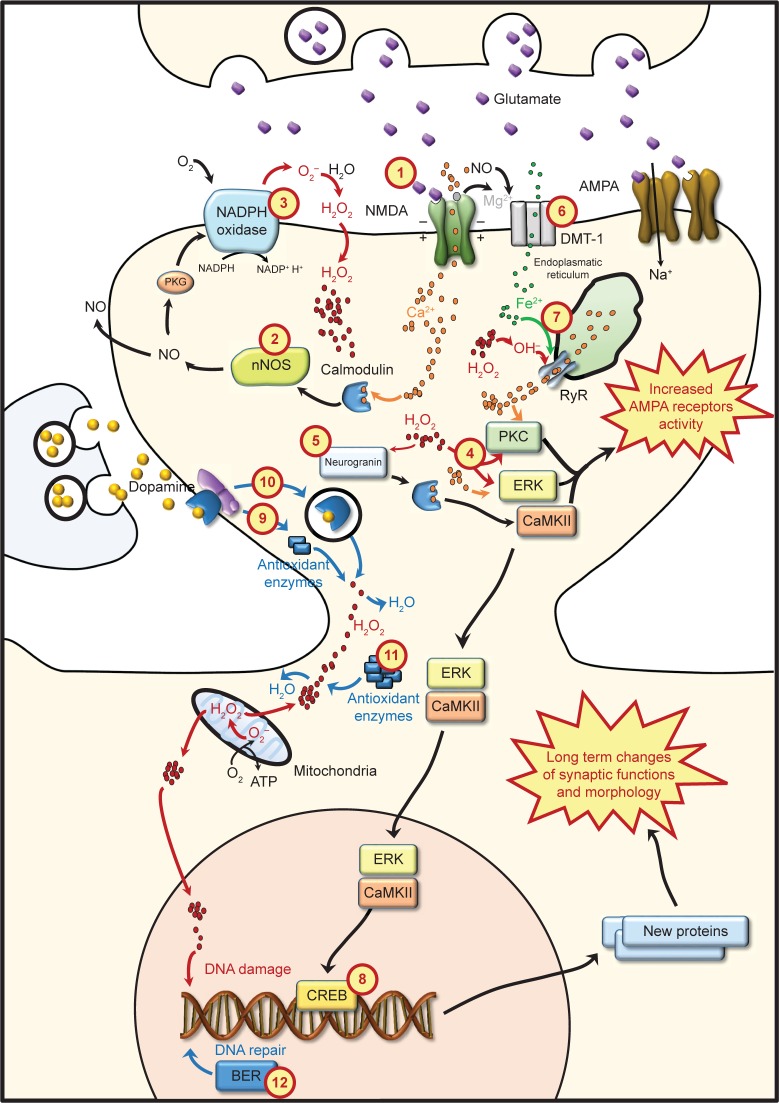
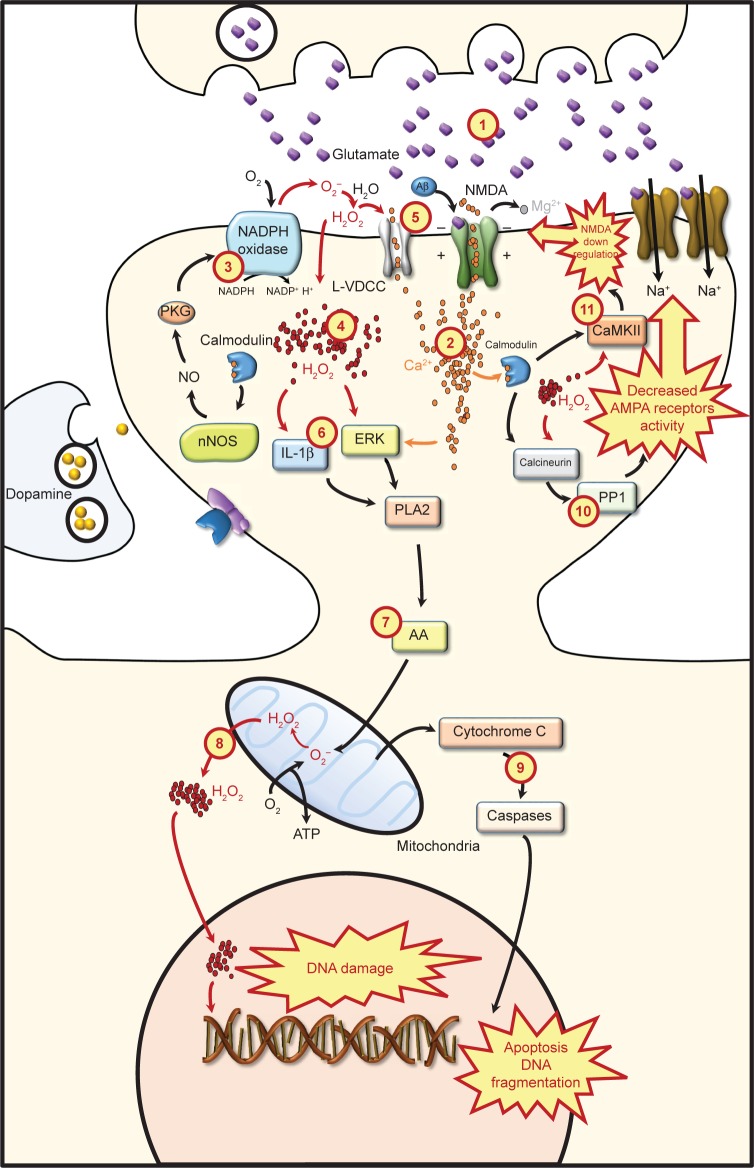
In the mammalian central nervous system, reactive oxygen species (ROS) generation is counterbalanced by antioxidant defenses. When large amounts of ROS accumulate, antioxidant mechanisms become overwhelmed and oxidative cellular stress may occur. Therefore, ROS are typically characterized as toxic molecules, oxidizing membrane lipids, changing the conformation of proteins, damaging nucleic acids, and causing deficits in synaptic plasticity. High ROS concentrations are associated with a decline in cognitive functions, as observed in some neurodegenerative disorders and age-dependent decay of neuroplasticity. Nevertheless, controlled ROS production provides the optimal redox state for the activation of transductional pathways involved in synaptic changes. Since ROS may regulate neuronal activity and elicit negative effects at the same time, the distinction between beneficial and deleterious consequences is unclear. In this regard, this review assesses current research and describes the main sources of ROS in neurons, specifying their involvement in synaptic plasticity and distinguishing between physiological and pathological processes implicated.
在哺乳动物的中枢神经系统中,活性氧(ROS)的产生与抗氧化防御机制相互平衡。当大量ROS积累时,抗氧化机制会不堪重负,进而可能发生细胞氧化应激。因此,ROS通常被视为有毒分子,它会氧化膜脂、改变蛋白质构象、破坏核酸并导致突触可塑性缺陷。正如在某些神经退行性疾病和神经可塑性的年龄依赖性衰退中所观察到的那样,高浓度的ROS与认知功能下降有关。然而,受控的ROS产生为参与突触变化的转导途径的激活提供了最佳的氧化还原状态。由于ROS可能同时调节神经元活动并引发负面影响,因此有益和有害后果之间的区别尚不清楚。在这方面,本综述评估了当前的研究,并描述了神经元中ROS的主要来源,明确了它们在突触可塑性中的作用,并区分了所涉及的生理和病理过程。