Schnitzler Sebastian U, Schnitzler Paul
Department of Virology, Hygiene Institute, University of Heidelberg, Heidelberg, Germany.
Virus Genes. 2009 Dec;39(3):279-92. doi: 10.1007/s11262-009-0404-8. Epub 2009 Oct 7.
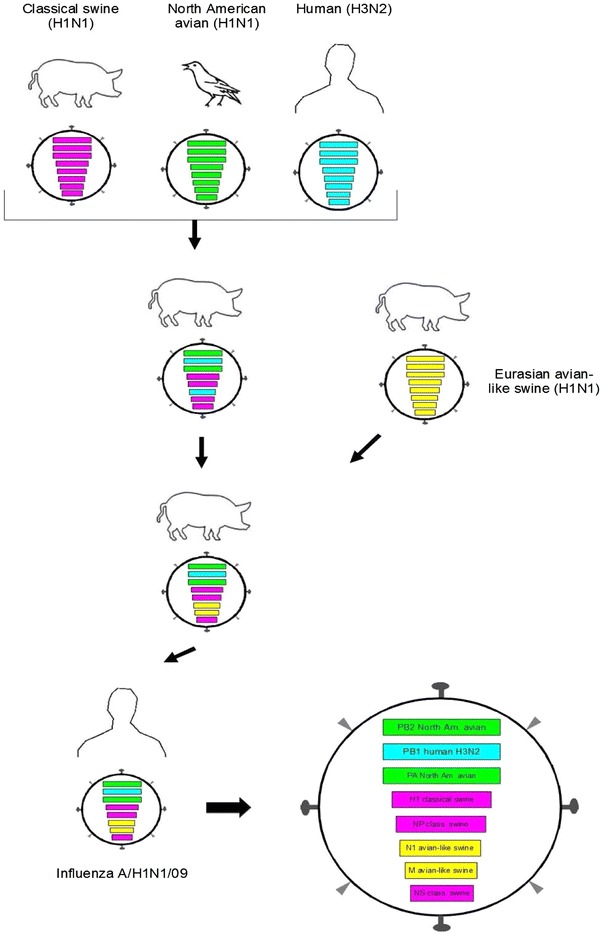
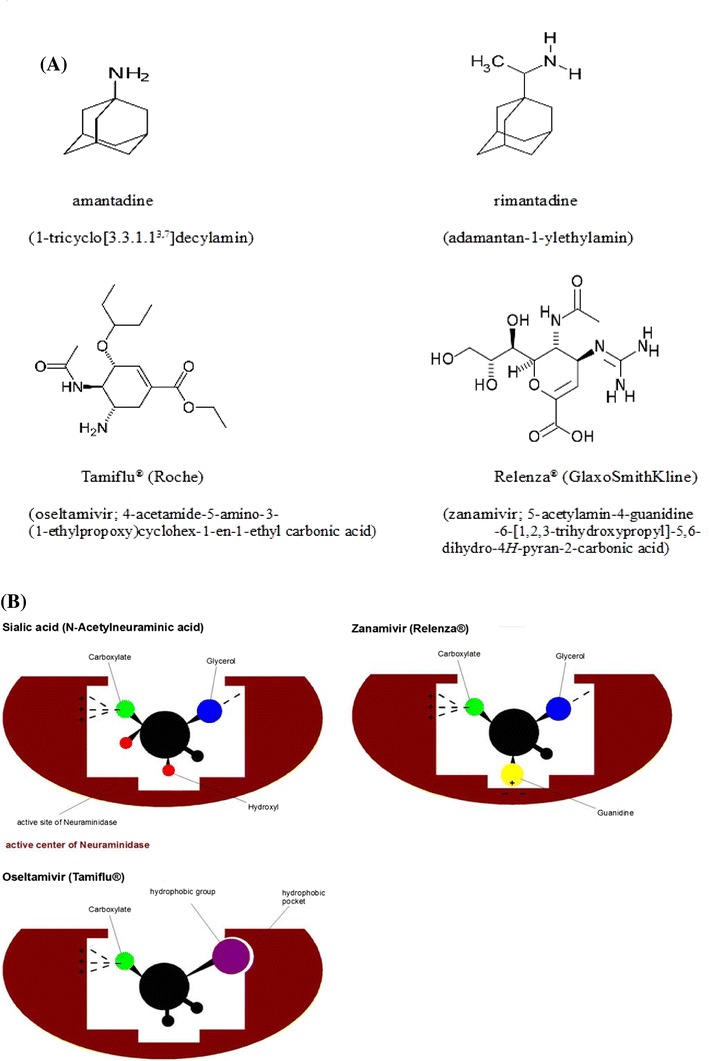
Influenza viruses cause annual epidemics and occasional pandemics that have claimed the lives of millions. The emergence of new strains will continue to pose challenges to public health and the scientific communities. The recent flu pandemic caused by a swine-origin influenza virus A/H1N1 (S-OIV) presents an opportunity to examine virulence factors, the spread of the infection and to prepare for major influenza outbreaks in the future. The virus contains a novel constellation of gene segments, the nearest known precursors being viruses found in swine and it probably arose through reassortment of two viruses of swine origin. Specific markers for virulence can be evaluated in the viral genome, PB1-F2 is a molecular marker of pathogenicity but is not present in the new S-OIV. While attention was focused on a threat of an avian influenza H5N1 pandemic emerging from Asia, a novel influenza virus of swine origin emerged in North America, and is now spreading worldwide. However, S-OIV demonstrates that even serotypes already encountered in past human pandemics may constitute new pandemic threats. There are concerns that this virus may mutate or reassort with existing influenza viruses giving rise to more transmissible or more pathogenic viruses. The 1918 Spanish flu pandemic virus was relatively mild in its first wave and acquired more virulence when it returned in the winter. Thus preparedness on a global scale against a potential more virulent strain is highly recommended. Most isolates of the new S-OIVs are susceptible to neuraminidase inhibitors, and currently a vaccine against the pandemic strain is being manufactured and will be available this fall. This review summarizes the current information on the new pandemic swine-origin influenza virus A/H1N1.
流感病毒每年都会引发疫情,偶尔还会导致大流行,已造成数百万人死亡。新毒株的出现将继续给公共卫生和科学界带来挑战。最近由甲型H1N1猪源流感病毒(S-OIV)引发的流感大流行,为研究毒力因子、感染传播以及为未来重大流感疫情做准备提供了契机。该病毒包含一组新的基因片段,已知最接近的前体是在猪身上发现的病毒,它可能是由两种猪源病毒重组产生的。毒力的特定标志物可在病毒基因组中评估,PB1-F2是致病性的分子标志物,但在新的S-OIV中不存在。当注意力集中在亚洲出现的H5N1禽流感大流行威胁时,一种新型猪源流感病毒在北美出现,目前正在全球传播。然而,S-OIV表明,即使是过去人类大流行中已经出现过的血清型也可能构成新的大流行威胁。人们担心这种病毒可能与现有的流感病毒发生变异或重组,产生更具传染性或致病性更强的病毒。1918年西班牙流感大流行病毒在第一波疫情中相对温和,在冬季卷土重来时变得更具毒性。因此,强烈建议在全球范围内做好应对潜在更具毒性毒株的准备。大多数新的S-OIV分离株对神经氨酸酶抑制剂敏感,目前针对该大流行毒株的疫苗正在生产,将于今年秋季上市。本综述总结了关于新型大流行猪源甲型H1N1流感病毒的当前信息。