Kwiatkowski D J, Nygaard T G, Schuback D E, Perman S, Trugman J M, Bressman S B, Burke R E, Brin M F, Ozelius L, Breakefield X O
Department of Medicine, Massachusetts General Hospital, Charlestown 02129.
Am J Hum Genet. 1991 Jan;48(1):121-8.
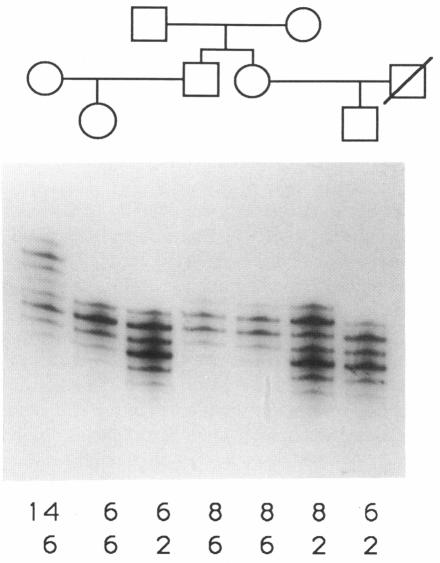
Dopa-responsive dystonia is a clinical variant of idiopathic torsion dystonia that is distinguished from other forms of dystonia by the frequent occurrence of parkinsonism, diurnal fluctuation of symptoms, and its dramatic therapeutic response to L-dopa. Linkage of a gene causing classic dystonia in a large non-Jewish kindred (DYT1) and in a group of Ashkenazi Jewish families, to the gelsolin (GSN) and arginino-succinate synthetase (ASS) loci on chromosome 9q32-34, respectively, was recently determined. Here we report the discovery of a highly informative (GT)n repeat VNTR polymorphism within the ASS locus. Analysis of a large kindred with dopa-responsive dystonia, using this new polymorphism and conventional RFLPs for the 9q32-34 region, excludes loci in this region as a cause of this form of dystonia. This provides proof of genetic heterogeneity between classic idiopathic torsion dystonia and dopa-responsive dystonia.
多巴反应性肌张力障碍是特发性扭转性肌张力障碍的一种临床变异型,与其他形式的肌张力障碍的区别在于帕金森症的频繁发生、症状的日波动以及对左旋多巴的显著治疗反应。最近确定,在一个大型非犹太家系(DYT1)和一组阿什肯纳兹犹太家庭中,导致经典肌张力障碍的一个基因分别与9号染色体q32 - 34上的凝溶胶蛋白(GSN)和精氨琥珀酸合成酶(ASS)基因座连锁。在此,我们报告在ASS基因座内发现了一个信息丰富的(GT)n重复VNTR多态性。利用这种新的多态性以及9q32 - 34区域的传统RFLP,对一个患有多巴反应性肌张力障碍的大家系进行分析,排除了该区域的基因座是这种形式肌张力障碍的病因。这为经典特发性扭转性肌张力障碍和多巴反应性肌张力障碍之间的遗传异质性提供了证据。