Division of Rheumatology, Immunology and Allergy, Brigham and Women's Hospital, 75 Francis Street, PBB-B3, Boston, MA 02115, USA.
Arthritis Res Ther. 2009;11(5):R160. doi: 10.1186/ar2842. Epub 2009 Oct 29.
Despite recent advances in anti-inflammatory therapy, rheumatoid arthritis (RA) patients continue to rate pain as a priority. The etiology of RA pain is likely multifactorial, including both inflammatory and non-inflammatory components. In this study, we examine the association between disease activity, sleep, psychiatric distress and pain sensitivity in RA.
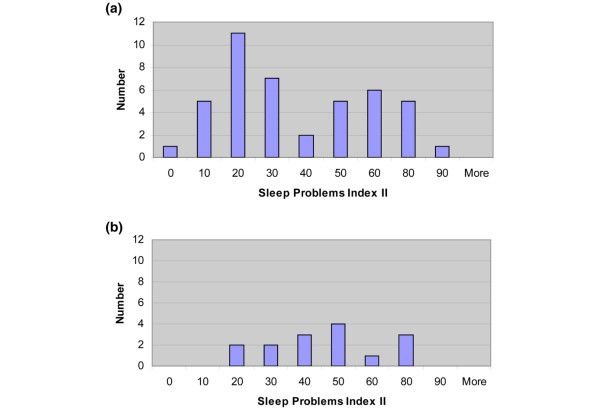
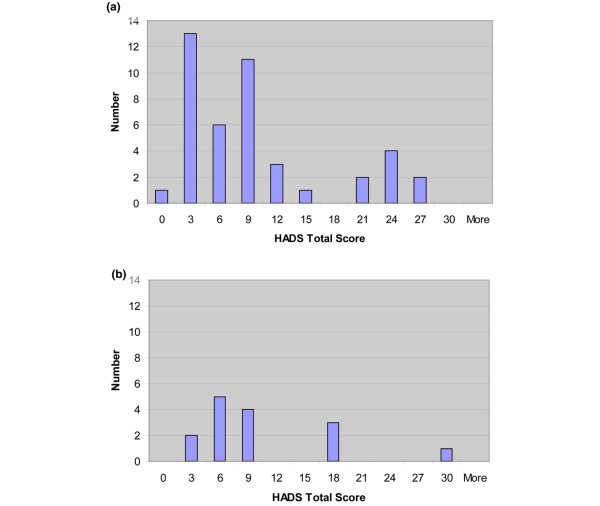
Fifty-nine female RA patients completed questionnaires and underwent pressure pain threshold testing to assess hyperalgesia/allodynia at joint and non-joint sites. Blood samples were taken to measure C-reactive protein (CRP). The association between disease activity, sleep problems, psychiatric distress and pain threshold was assessed using Pearson/Spearman correlations and multivariable linear regression. Disease activity levels, sleep problems and psychiatric distress were compared between RA patients with fibromyalgia and RA patients without fibromyalgia.
In unadjusted analyses, CRP was not correlated with pain threshold, but tender joint count was inversely correlated with pain threshold at all sites (P < or = 0.004). Sleep problems were associated with low pain threshold at all sites (P < or = 0.0008). Psychiatric distress was associated with low pain threshold at the wrist and thumbnail (P < or = 0.006). In multivariable linear regression models, CRP was inversely associated with wrist pain threshold (P = 0.003). Sleep problems were inversely associated with pain threshold at all sites (P < or = 0.01), but psychiatric distress was not. Despite differences in pain threshold, CRP levels and sleep problems between RA patients with fibromyalgia and those without fibromyalgia, associations between these variables did not change when patients with fibromyalgia were excluded.
Multivariable models are essential in analyses of pain. Among RA patients, inflammation is associated with heightened pain sensitivity at joints. In contrast, poor sleep is associated with diffuse pain sensitivity, as noted in central pain conditions such as fibromyalgia. Future studies examining pain sensitivity at joint and non-joint sites may identify patients with different underlying pain mechanisms and suggest alternative approaches to treating RA pain.
尽管近年来抗炎治疗取得了进展,但类风湿关节炎(RA)患者仍将疼痛视为首要问题。RA 疼痛的病因可能是多因素的,包括炎症和非炎症成分。在这项研究中,我们研究了 RA 患者的疾病活动度、睡眠、精神困扰与疼痛敏感性之间的关系。
59 名女性 RA 患者完成了问卷调查,并进行了压力疼痛阈值测试,以评估关节和非关节部位的痛觉过敏/感觉异常。采集血样测量 C 反应蛋白(CRP)。使用 Pearson/Spearman 相关分析和多变量线性回归评估疾病活动度、睡眠问题、精神困扰与疼痛阈值之间的关系。比较了患有纤维肌痛和未患有纤维肌痛的 RA 患者之间的疾病活动水平、睡眠问题和精神困扰。
在未调整的分析中,CRP 与疼痛阈值无相关性,但压痛关节计数与所有部位的疼痛阈值呈负相关(P≤0.004)。睡眠问题与所有部位的低疼痛阈值相关(P≤0.0008)。精神困扰与腕关节和拇指的低疼痛阈值相关(P≤0.006)。在多变量线性回归模型中,CRP 与腕关节疼痛阈值呈负相关(P=0.003)。睡眠问题与所有部位的疼痛阈值呈负相关(P≤0.01),但精神困扰则无。尽管患有纤维肌痛和未患有纤维肌痛的 RA 患者之间的疼痛阈值、CRP 水平和睡眠问题存在差异,但当排除纤维肌痛患者后,这些变量之间的关联并未改变。
多变量模型在疼痛分析中至关重要。在 RA 患者中,炎症与关节处的疼痛敏感性增加有关。相比之下,睡眠质量差与弥漫性疼痛敏感性有关,如纤维肌痛等中枢性疼痛疾病。未来研究在关节和非关节部位检测疼痛敏感性,可能会发现具有不同潜在疼痛机制的患者,并为治疗 RA 疼痛提供替代方法。