Vaidyanathan Subramanian, Mansour Paul, Soni Bakul M, Hughes Peter L, Singh Gurpreet, Oo Tun
Regional Spinal Injuries Centre, District General Hospital, Southport PR8 6PN, UK.
Cases J. 2009 Aug 6;2:7333. doi: 10.4076/1757-1626-2-7333.
Distigmine, a long-acting anti-cholinesterase, is associated with side effects such as Parkinsonism, cholinergic crisis, and rhabdomyolysis. We report a spinal cord injury patient, who developed marked hydronephrosis and hydroureter after distigmine therapy, which led to a series of complications over subsequent years.
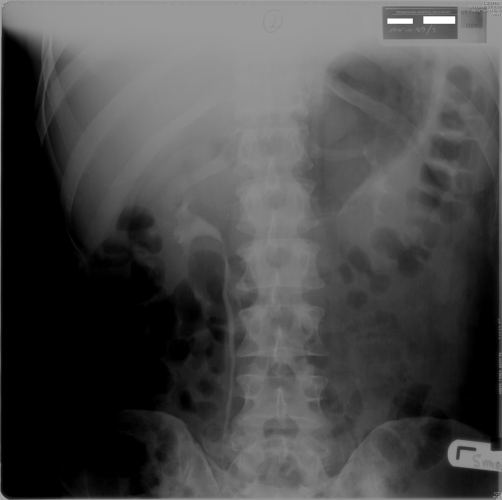
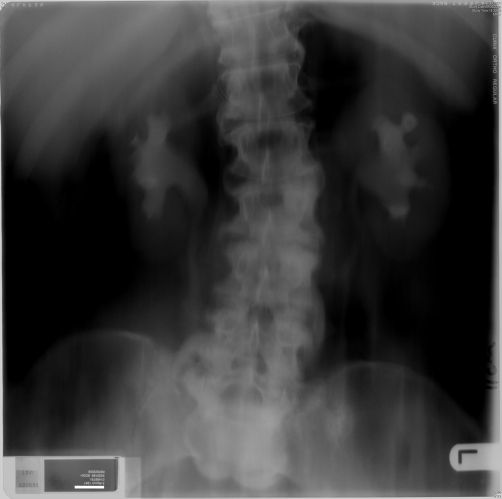
A 38-year-old male developed T-9 paraplegia in 1989. Intravenous urography, performed in 1989, showed normal kidneys, ureters and bladder. He was prescribed distigmine bromide orally and was allowed to pass urine spontaneously. In 1992, intravenous urography showed bilateral marked hydronephrosis and hydroureter. Distigmine was discontinued. He continued to pass urine spontaneously. In 2006, intravenous urography showed moderate dilatation of both pelvicalyceal systems and ureters down to the level of urinary bladder. This patient was performing self-catheterisation only once a day. He was advised to do catheterisations at least three times a day. In December 2008, this patient developed haematuriawhich lasted for nearly four months.. He received trimethoprim, then cephalexin, followed by Macrodantin, amoxicillin and ciprofloxacin. In February 2009, intravenous urography showed calculus at the lower pole of left kidney. Both kidneys were moderately hydronephrotic. Ureters were dilated down to the bladder. Dilute contrast was seen in the bladder due to residual urine. This patient was advised to perform six catheterisations a day, and take propiverine hydrochloride 15 mg, three times a day. Microbiology of urine showed Klebsiella oxytoca, Pseudomonas aeruginosa, and Enterococcus faecalis. Cystoscopy revealed papillary lesions in bladder neck and trigone. Transurethral resection was performed. Histology showed marked chronic cystitis including follicular cystitis and papillary/polypoid cystitis. There was no evidence of malignancy.
Distigmine therapy resulted in marked bilateral hydronephrosis and hydroureter. Persistence of hydronephrosis after omitting distigmine, and presence of residual urine in bladder over many years probably predisposed to formation of polypoid cystitis and follicular cystitis, and contributed to prolonged haematuria, which occurred after an episode of urine infection. This case illustrates the dangers of prescribing distigmine to promote spontaneous voiding in spinal cord injury patients. Instead of using distigmine, spinal cord injury patients should be advised to consider intermittent catheterisation together with oxybutynin or propiverine to achieve complete, low-pressure emptying of urinary bladder.
地斯的明是一种长效抗胆碱酯酶药物,可引发帕金森症、胆碱能危象及横纹肌溶解等副作用。我们报告了一名脊髓损伤患者,其在接受地斯的明治疗后出现了明显的肾积水和输尿管积水,并在随后数年引发了一系列并发症。
一名38岁男性于1989年发生T-9节段截瘫。1989年进行的静脉肾盂造影显示肾脏、输尿管和膀胱正常。给他开了溴化地斯的明口服,并允许其自主排尿。1992年,静脉肾盂造影显示双侧明显肾积水和输尿管积水。停用了地斯的明。他继续自主排尿。2006年,静脉肾盂造影显示肾盂肾盏系统和输尿管中度扩张至膀胱水平。该患者每天仅进行一次自我导尿。建议他每天至少进行三次导尿。2008年12月,该患者出现血尿,持续了近四个月。他接受了甲氧苄啶治疗,之后是头孢氨苄,随后是呋喃妥因、阿莫西林和环丙沙星。2009年2月,静脉肾盂造影显示左肾下极有结石。双肾均有中度肾积水。输尿管扩张至膀胱。由于残余尿,膀胱内可见稀释造影剂。建议该患者每天进行六次导尿,并服用盐酸丙哌维林15毫克,每日三次。尿液微生物学检查显示有产酸克雷伯菌、铜绿假单胞菌和粪肠球菌。膀胱镜检查发现膀胱颈和三角区有乳头状病变。进行了经尿道切除术。组织学显示有明显的慢性膀胱炎,包括滤泡性膀胱炎和乳头状/息肉样膀胱炎。没有恶性肿瘤的证据。
地斯的明治疗导致明显的双侧肾积水和输尿管积水。停用 地斯的明后肾积水持续存在,且多年来膀胱内有残余尿,这可能易引发息肉样膀胱炎和滤泡性膀胱炎,并导致尿液感染后出现的长时间血尿。该病例说明了给脊髓损伤患者开地斯的明以促进自主排尿的危险性。脊髓损伤患者不应使用地斯的明,而应建议他们考虑间歇性导尿并联合使用奥昔布宁或丙哌维林,以实现膀胱的完全、低压排空。