Department of Pathology and Immunology, Washington University School of Medicine, St. Louis, MO 63110, USA.
J Cell Biol. 2009 Nov 30;187(5):655-68. doi: 10.1083/jcb.200908036.
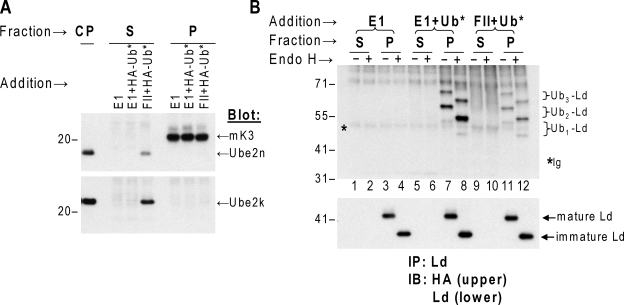
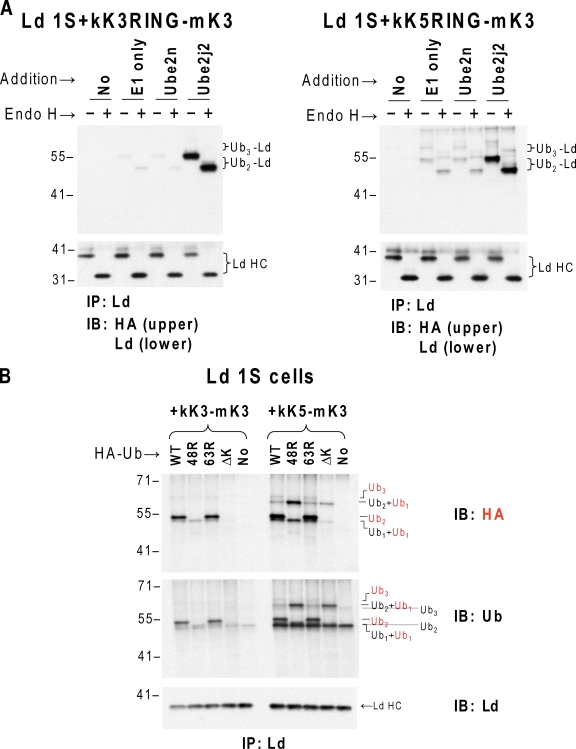
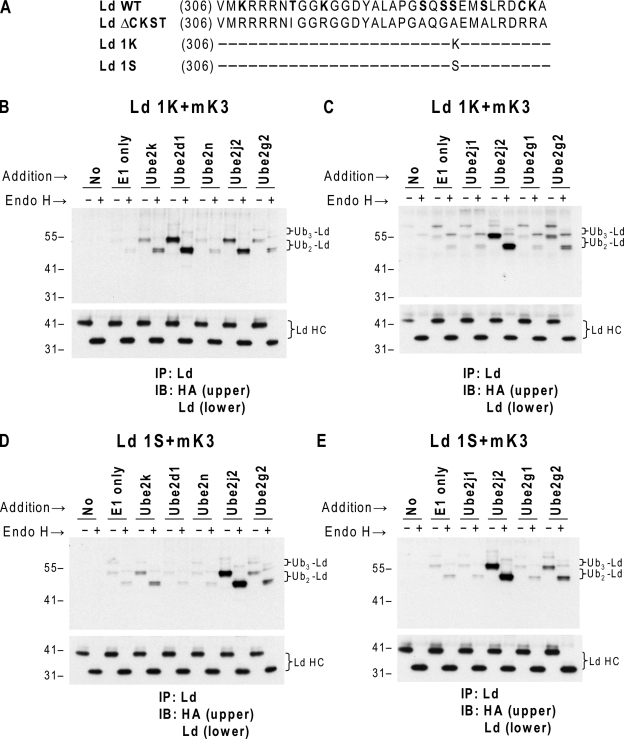
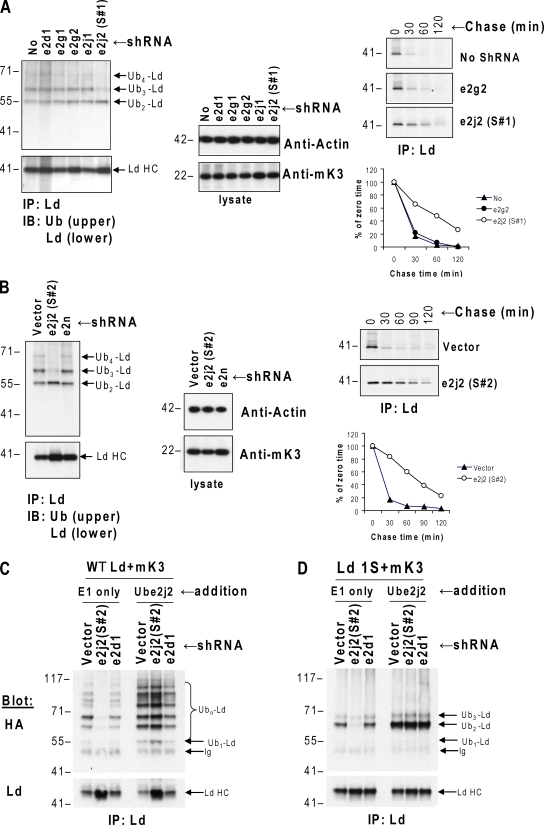
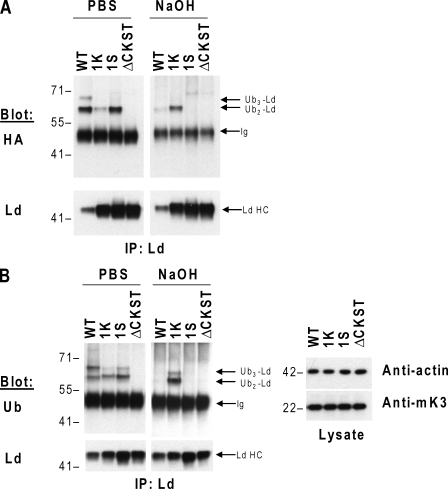
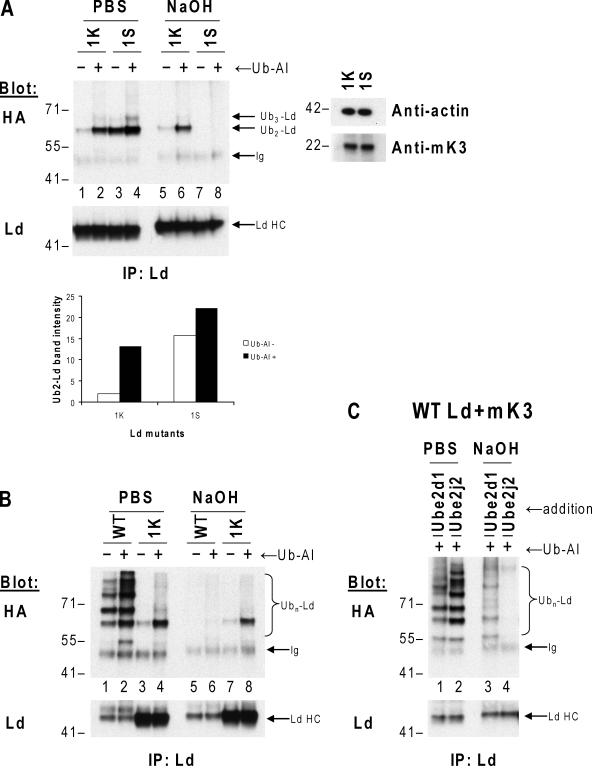
Ubiquitin (Ub) modification of proteins plays a prominent role in the regulation of multiple cell processes, including endoplasmic reticulum-associated degradation (ERAD). Until recently, ubiquitination of substrates was thought to occur only via isopeptide bonds, typically to lysine residues. Several recent studies suggest that Ub can also be coupled to nonlysine residues by ester/thiolester bonds; however, the molecular basis for these novel modifications remains elusive. To probe the mechanism and importance of nonlysine ubiquitination, we have studied the viral ligase murine K3 (mK3), which facilitates the polyubiquitination of hydroxylated amino acids serine/threonine on its ERAD substrate. In this paper, we identify Ube2j2 as the primary cellular E2 recruited by the mK3 ligase, and this E2-E3 pair is capable of conjugating Ub on lysine or serine residues of substrates. However, surprisingly, Ube2j2-mK3 preferentially promotes ubiquitination of hydroxylated amino acids via ester bonds even when lysine residues are present on wild-type substrates, thus establishing physiological relevance of this novel ubiquitination strategy.
泛素(Ub)对蛋白质的修饰在调节多种细胞过程中起着重要作用,包括内质网相关降解(ERAD)。直到最近,人们还认为底物的泛素化仅通过异肽键发生,通常是赖氨酸残基。最近的几项研究表明,Ub 也可以通过酯/硫酯键与非赖氨酸残基偶联;然而,这些新型修饰的分子基础仍然难以捉摸。为了探究非赖氨酸泛素化的机制和重要性,我们研究了病毒连接酶鼠 K3(mK3),它促进其 ERAD 底物上羟基化氨基酸丝氨酸/苏氨酸的多泛素化。在本文中,我们确定 Ube2j2 是 mK3 连接酶募集的主要细胞 E2,并且这个 E2-E3 对能够在底物的赖氨酸或丝氨酸残基上结合 Ub。然而,令人惊讶的是,即使在野生型底物上存在赖氨酸残基时,Ube2j2-mK3 也优先通过酯键促进羟基化氨基酸的泛素化,从而确立了这种新型泛素化策略的生理相关性。