Division of Immunology, Department of Pathology, University of Cambridge Cambridge CB2 1QP, UK.
Hum Mol Genet. 2010 Mar 1;19(5):737-51. doi: 10.1093/hmg/ddp538. Epub 2009 Dec 3.
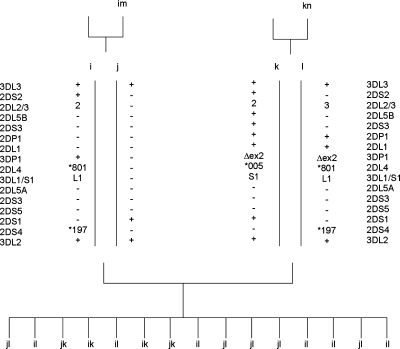
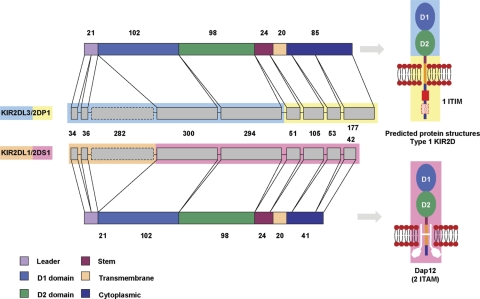
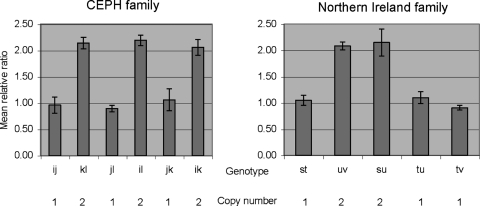
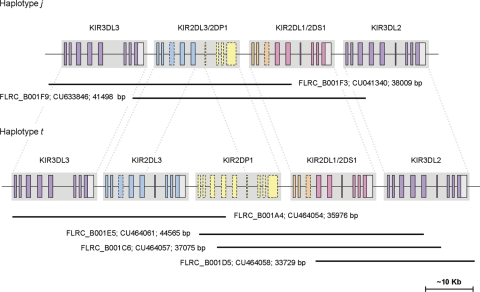
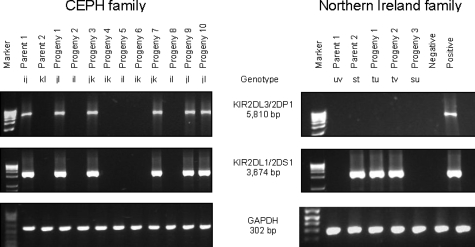
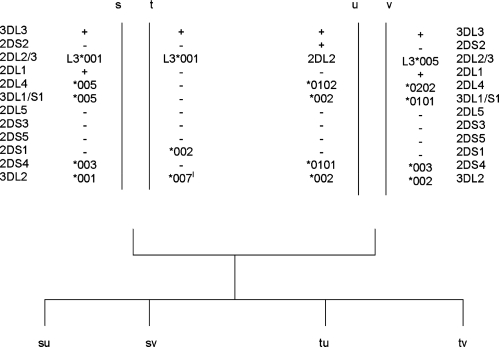
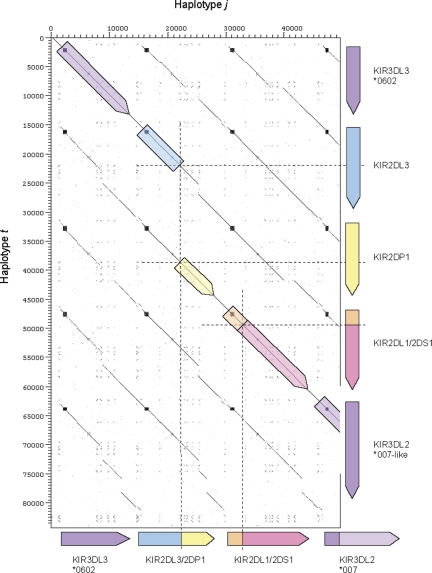
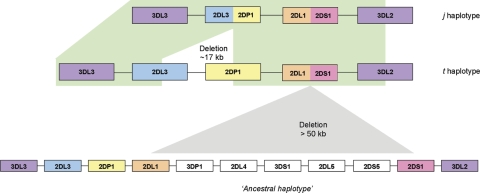
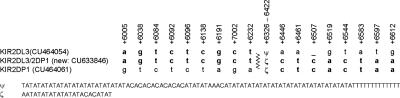
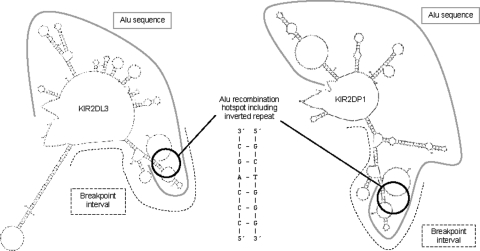
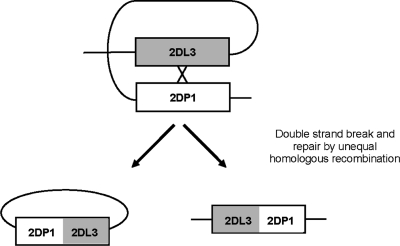
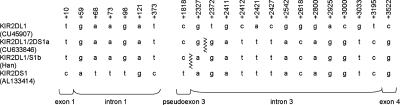
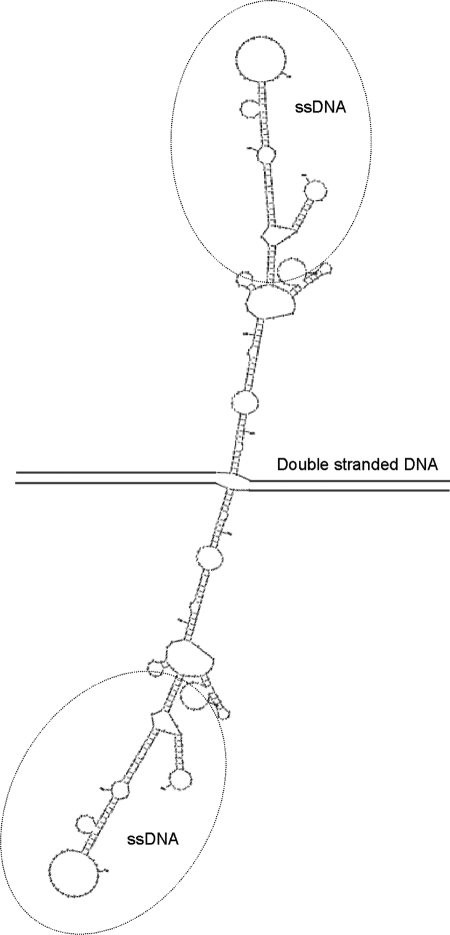
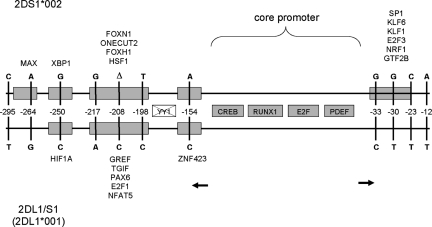
The fine-scale structure of the majority of copy number variation (CNV) regions remains unknown. The killer immunoglobulin receptor (KIR) gene complex exhibits significant CNV. The evolutionary plasticity of the KIRs and their broad biomedical relevance makes it important to understand how these immune receptors evolve. In this paper, we describe haplotype re-arrangement creating novel loci at the KIR complex. We completely sequenced, after fosmid cloning, two rare contracted haplotypes. Evidence of frequent hybrid KIR genes in samples from many populations suggested that re-arrangements may be frequent and selectively advantageous. We propose mechanisms for formation of novel hybrid KIR genes, facilitated by protrusive non-B DNA structures at transposon recombination sites. The heightened propensity to generate novel hybrid KIR receptors may provide a proactive evolutionary measure, to militate against pathogen evasion or subversion. We propose that CNV in KIR is an evolutionary strategy, which KIR typing for disease association must take into account.
大多数拷贝数变异(CNV)区域的精细结构仍然未知。杀伤免疫球蛋白受体(KIR)基因复合物表现出显著的 CNV。KIR 的进化可塑性及其广泛的生物医学相关性使得理解这些免疫受体如何进化变得非常重要。在本文中,我们描述了在 KIR 复合物中产生新基因座的单倍型重排。我们在 fosmid 克隆后完全测序了两种罕见的收缩单倍型。来自许多人群样本中的频繁杂交 KIR 基因的证据表明,重排可能很频繁,并且具有选择优势。我们提出了形成新的杂交 KIR 基因的机制,这得益于转座子重组位点处突出的非 B DNA 结构。产生新的杂交 KIR 受体的倾向可能提供了一种积极的进化措施,以抵御病原体的逃避或颠覆。我们提出 KIR 中的 CNV 是一种进化策略,KIR 用于疾病关联的基因分型必须考虑到这一点。