Hara Yuko, Shiraishi Atsushi, Ohashi Yuichi
Department of Ophthalmology, Ehime University Graduate School of Medicine, Shitsukawa, Toon, Ehime, Japan.
Mol Vis. 2009 Dec 2;15:2515-20.
Toll-like receptor 4 (TLR4), a member of the TLR family, is an important pattern recognition molecule that plays a role in the host's innate immune responses to lipopolysaccharide (LPS), a component of gram-negative bacteria. Contact lens wear is one of the risk factors for bacterial keratitis. The purpose of this study was to determine whether hypoxia or contact lens wear alters the TLR4 signaling pathways in human corneal epithelial cells (HCECs).
A simian virus 40-immortalized human corneal epithelial cell (SV40-HCEC) line was cultured under 20% O2 or 2% O2 and exposed to LPS. The expression of TLR4, interleukin-6 (IL-6), and IL-8 was determined using a real-time reverse transcription-polymerase chain reaction (RT-PCR), enzyme-linked immunosorbent assay (ELISA), and immunoblotting. Immunoblotting was also used to determine whether the nuclear factor kappa B (NFkappaB) was activated in the SV40-HCEs. HCECs were obtained from 17 healthy volunteers and 18 hydrogel soft contact lens (SCL) wearers using impression cytology (IC), and the expression of the mRNA of TLR4 was determined using real-time RT-PCR.
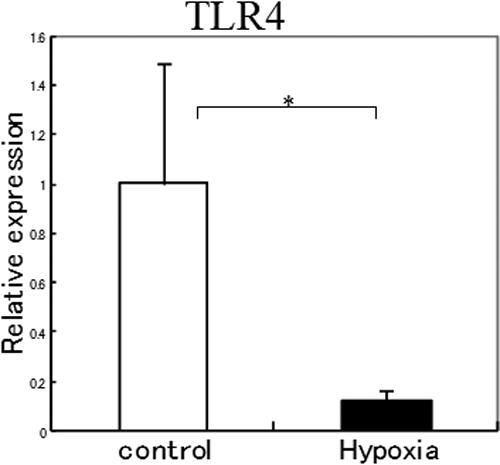
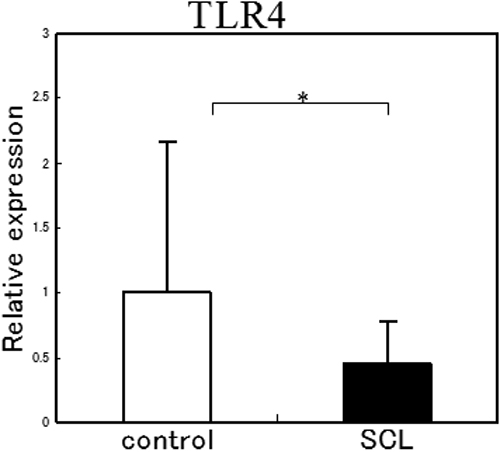
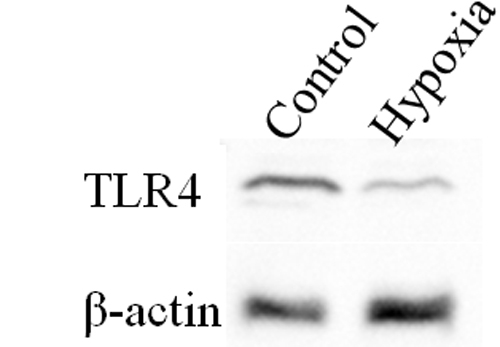
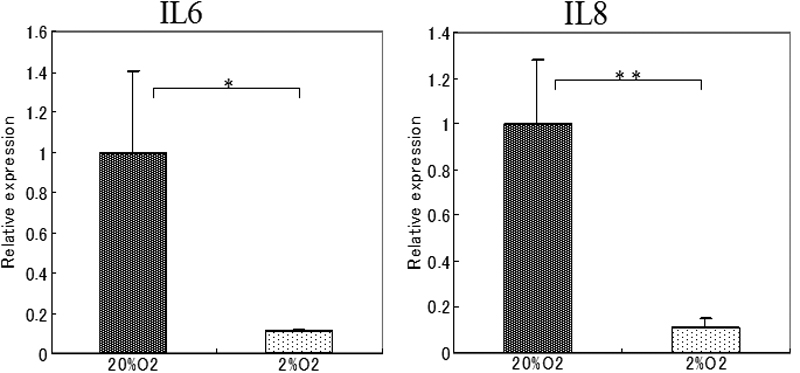
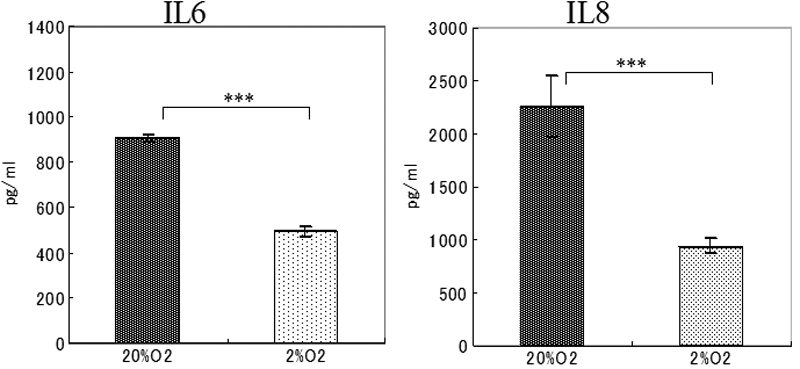
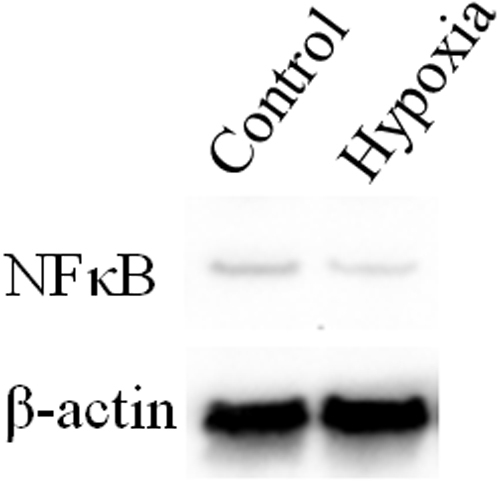
A reduction in the expression of the mRNA and protein of TLR4 was detected in SV40-HCECs cultured under hypoxic conditions. Hypoxia also attenuated both the LPS-induced expression of IL-6 and IL-8, and the activation of NFkappaB in SV40-HCECs. The expression of the mRNA of TLR4 was down-regulated in the HCECs of soft contact lens wearers.
These results indicate that hypoxia attenuates the TLR4 signaling pathway in HCECs, suggesting that the increase in the susceptibility to bacterial infections under hypoxic conditions may be related to the TLR4 signaling pathways.
Toll样受体4(TLR4)是TLR家族的一员,是一种重要的模式识别分子,在宿主对革兰氏阴性菌成分脂多糖(LPS)的固有免疫反应中发挥作用。佩戴隐形眼镜是细菌性角膜炎的危险因素之一。本研究的目的是确定缺氧或佩戴隐形眼镜是否会改变人角膜上皮细胞(HCECs)中的TLR4信号通路。
将猿猴病毒40永生化人角膜上皮细胞(SV40-HCEC)系在20%氧气或2%氧气条件下培养,并暴露于LPS。使用实时逆转录-聚合酶链反应(RT-PCR)、酶联免疫吸附测定(ELISA)和免疫印迹法测定TLR4、白细胞介素-6(IL-6)和IL-8的表达。免疫印迹法还用于确定核因子κB(NFκB)在SV40-HCEs中是否被激活。使用印模细胞学(IC)从17名健康志愿者和18名水凝胶软性隐形眼镜(SCL)佩戴者中获取HCECs,并使用实时RT-PCR测定TLR4 mRNA的表达。
在缺氧条件下培养的SV40-HCECs中检测到TLR4 mRNA和蛋白表达降低。缺氧还减弱了LPS诱导的IL-6和IL-8表达以及SV40-HCECs中NFκB的激活。软性隐形眼镜佩戴者的HCECs中TLR4 mRNA的表达下调。
这些结果表明,缺氧减弱了HCECs中的TLR4信号通路,提示缺氧条件下对细菌感染易感性增加可能与TLR4信号通路有关。